
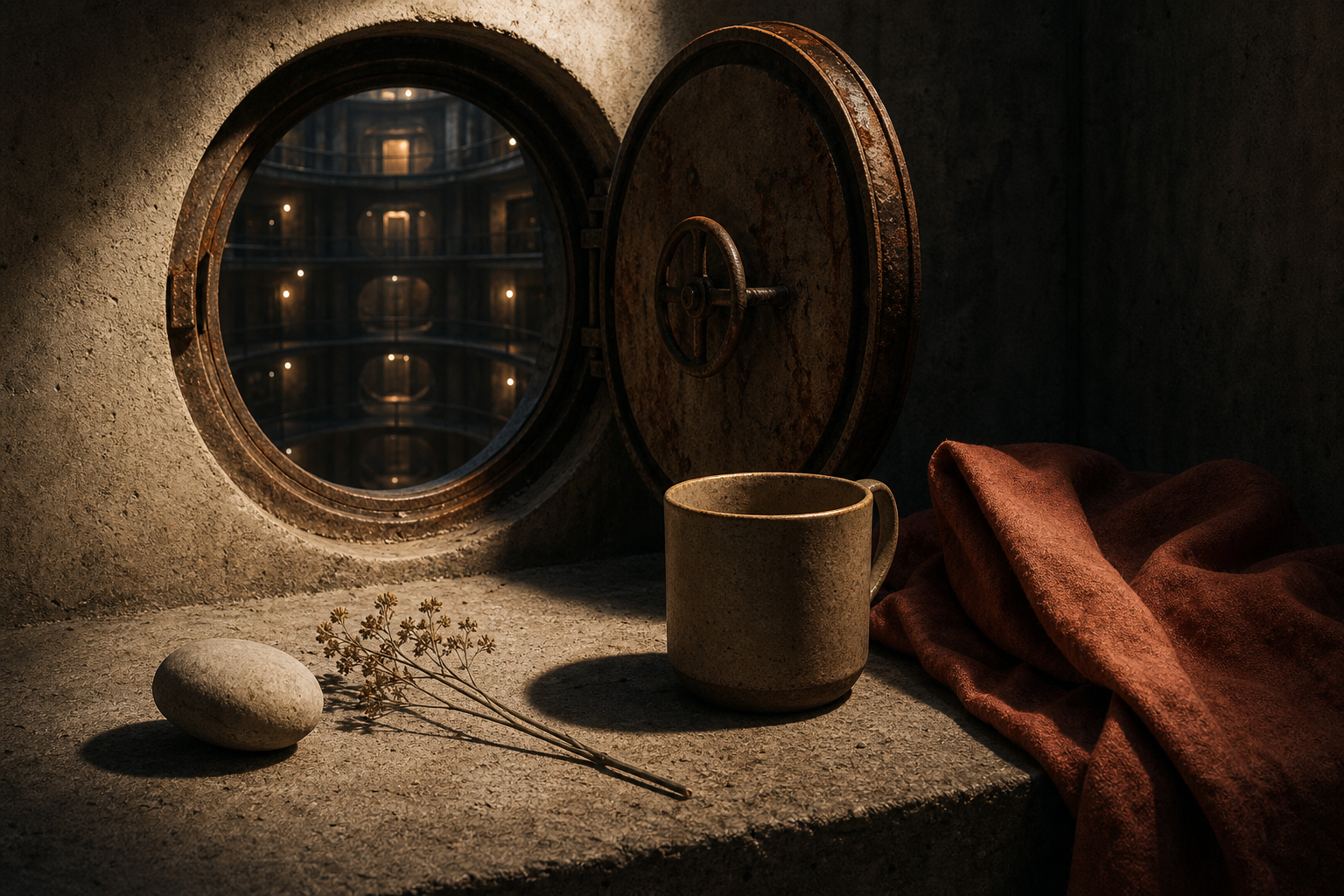
What is it about a sealed space and a shrinking future that keeps us watching? Silo answered by burying people underground and layering political paranoia beneath grey-green concrete, with Rebecca Ferguson moving through the dread at a steady walk. Reviewers have praised the show's political acuity even while conceding it is not always the most entertaining thing on television, and that tension is the point: it is confined, deliberate, and a little airless on purpose. According to recent coverage, the show keeps circling questions about who controls information and who gets to leave. But the sealed-space story does not have to sink. It can climb instead. If you have been sitting with that slow claustrophobia and want the same strain of confinement in a different key, there is a novel that takes the pressure and turns it domestic, watery, and strange.
Most coverage of Silo circles the hatch, the politics of the levels, and whether the pacing earns its patience. That is the show people are actually watching, so the recap loop makes sense. What falls out of it is the wider question the premise raises: how confinement itself becomes the horror. The walls do the work. Trapped people fracture along old fault lines because there is nowhere to put the tension. Silo keeps that fracture political and vertical, and it seldom lets the collapse feel intimate, like something happening at a kitchen table instead of a council chamber. Julia Armfield's Private Rites walks straight into that kitchen, and the intimacy is the part worth talking about over dinner.
Private Rites opens on rain that has fallen so long the land has rearranged itself. The water keeps climbing. Old rituals have crept back into a near-future that feels drowned rather than scorched, and into this waterlogged world come three estranged sisters, summoned home by the death of their father. He was a revered and cruel architect, and the glass house he built becomes the stage for everything that follows. Armfield is retelling King Lear, which sounds like the kind of literary gamble that could buckle under its own ambition. It mostly holds. Isla, Irene, and cynical Agnes carry the Lear inheritance of daughters measured against a father's love and found wanting, but the story stays specific to them instead of dutiful to Shakespeare.
Their bond is fragile before the will is read. A revelation inside it breaks that bond and pulls the three toward something bound up in their mother's disappearance years earlier, and in the strangers who have always watched the family a little too closely. The pleasure and the trouble here is the prose. Armfield writes lyrical literary horror, the kind where a sentence about weather turns quietly menacing, where grief and dread borrow the same vocabulary. If you came from Our Wives Under the Sea, you know the register. Water is never only water. That style can also slow a plot to a drift.
The sisters circle and re-circle the same old wounds, and there are stretches where that patience runs thin and you want the reveal to arrive faster than Armfield is willing to let it. The book asks you to sit in the discomfort, and it does not always earn every minute it keeps you waiting. The comparison to Silo becomes more than marketing in the shape of the confinement. Silo traps its people beneath the earth and sends the threat down from the system above them. Private Rites floods from below and seals the family inside a house, so the environmental collapse and the domestic collapse run on the same clock.
The rising water outside and the rising resentment inside are one pressure with two faces. There is also a queer center that the Lear frame rarely makes room for, which is part of why the retelling feels earned rather than borrowed. These are women whose desires and loyalties refuse to settle into the tidy patriarchal geometry Shakespeare set up. The father built the house and the myth. His daughters have to decide whether to live inside either one while the water decides how much time they have to choose.
So why does the sealed space grip us? Part of it is plain claustrophobia, the pull of watching people with nowhere to run. The better answer is that confinement strips away the excuses. It drives old resentment and unresolved grief into the open because there is no more room to dodge them. Silo does this with concrete and hierarchy. Private Rites does it with rain and inheritance and three sisters who never learned to forgive their father or each other. If that version of the trap sounds like your kind of dread, the water is waiting.