
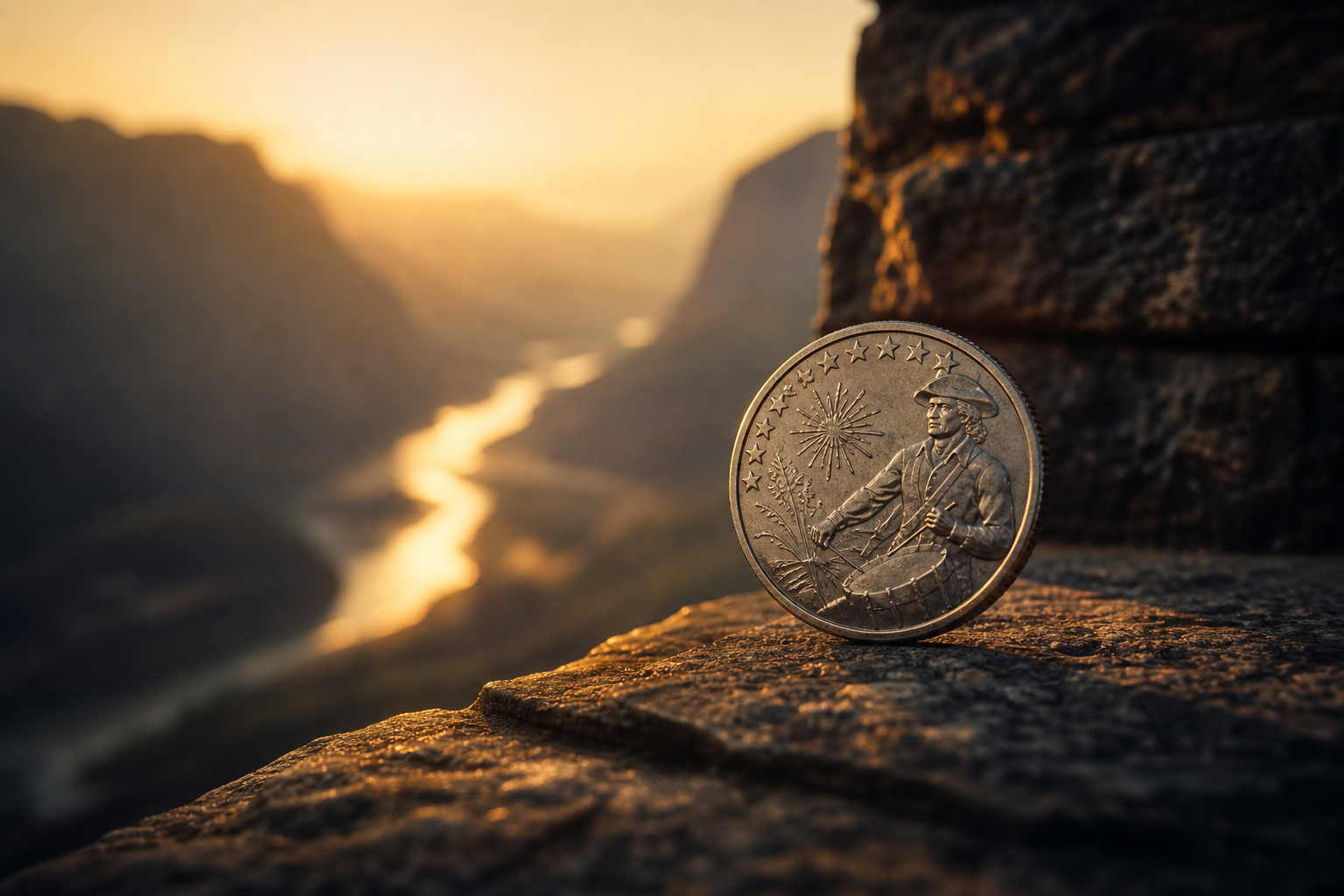
There are two ways to react to the news that the U.S. Mint will scatter 250,000 semiquincentennial Declaration of Independence quarters into circulation. One is to shrug: another commemorative coin, another marketing beat for America's 250th birthday. The other is to start checking your change with a suspicion you haven't felt since childhood, when a wheat penny in a handful of nickels felt like buried treasure. The second reaction is more fun, and it tracks how coin collecting actually works. These quarters won't arrive in a labeled box. They'll show up at random, mixed in with the ordinary coins you get buying coffee or feeding a meter. That unpredictability is the whole appeal. It turns a routine transaction into a low-stakes lottery, and it rewards the kind of attention most of us stopped paying to pocket change decades ago.
You could treat this as a simple binary: either you're a serious collector who tracks mint marks and mintage figures, or you're a normal person who spends quarters without a second thought. Most headlines about the July 4th coins assume you're the first type, or that you'd like to become one overnight. The interesting territory sits between those poles. Plenty of people enjoy the hunt without wanting to memorize grading scales or chase auction values. What they lack is a reason to look and a place to put what they find. The Mint supplies the reason by making these coins scarce and unpredictable. The place is where things get practical, and where a plain physical object does more work than you'd expect from something that costs less than lunch.
Warman's "National Park Quarters" is that plain object: a durable three-panel folder with 60 slots, built to house the America the Beautiful quarter series. It's cardboard and precise die-cut holes, and it exists to solve one problem, which is that a growing pile of quarters in a drawer is not a collection. It's just a pile. What the folder adds is structure and context. Each site gets its own labeled space, paired with geographic details and a short historical note, so the quarter commemorating a given park or landmark comes with a sentence or two about why that place ended up on money.
There are dedicated openings for both the Denver and Philadelphia issues, and that matters, because the same design struck at two different mints is what separates casual hoarding from actual collecting. The 60-slot count beats most competing folders, and the extra room is a quiet argument about how these things fill up. You don't finish a set like this in an afternoon. You finish it slowly, one lucky find at a time, and a folder that runs out of space halfway through undercuts the whole enterprise. My one reservation concerns the front cover, which shows the reverse images of the first five coins in the program, a Krause Publications touch meant to turn storage into display.
It's a nice detail. A folder is still a folder. If you're picturing an heirloom showpiece, adjust your expectations: this is a working tool for the hunt, and it's better for being honest about that. Compare it against the 2026 semiquincentennial coins and the timing gets useful, with one caveat. The folder is designed for the America the Beautiful national park quarters, not for the new Declaration of Independence issues the Mint announced in June 2026. The habit it builds transfers directly. If you're going to scan your change for the July 4th quarters, you'll want somewhere to sort and protect whatever you pull out, and you'll want the routine of tracking mint marks and specifications as you go.
The folder teaches that rhythm on the national park series, which is easier to find and less pressured than hunting a run of just 250,000 coins. Collecting rewards the person who has already decided to pay attention before the scarce thing appears. A folder like this is a low-commitment way to make that decision in advance, so that when an uncommon coin lands in your change, you catch it, and you have a spot ready instead of a drawer.
The verdict: this is a modest, well-judged object doing exactly what it claims, no more. It won't make you rich, and it won't survive as an heirloom, but it will turn the Mint's randomly circulated coins into a hunt you can actually complete. If the semiquincentennial news gave you a flicker of the old treasure-in-your-pocket feeling, this folder is a cheap way to act on it before that flicker fades back into indifference. Start with the national park quarters, since they're easier to find, and let the habit carry you toward the rarer stuff.