
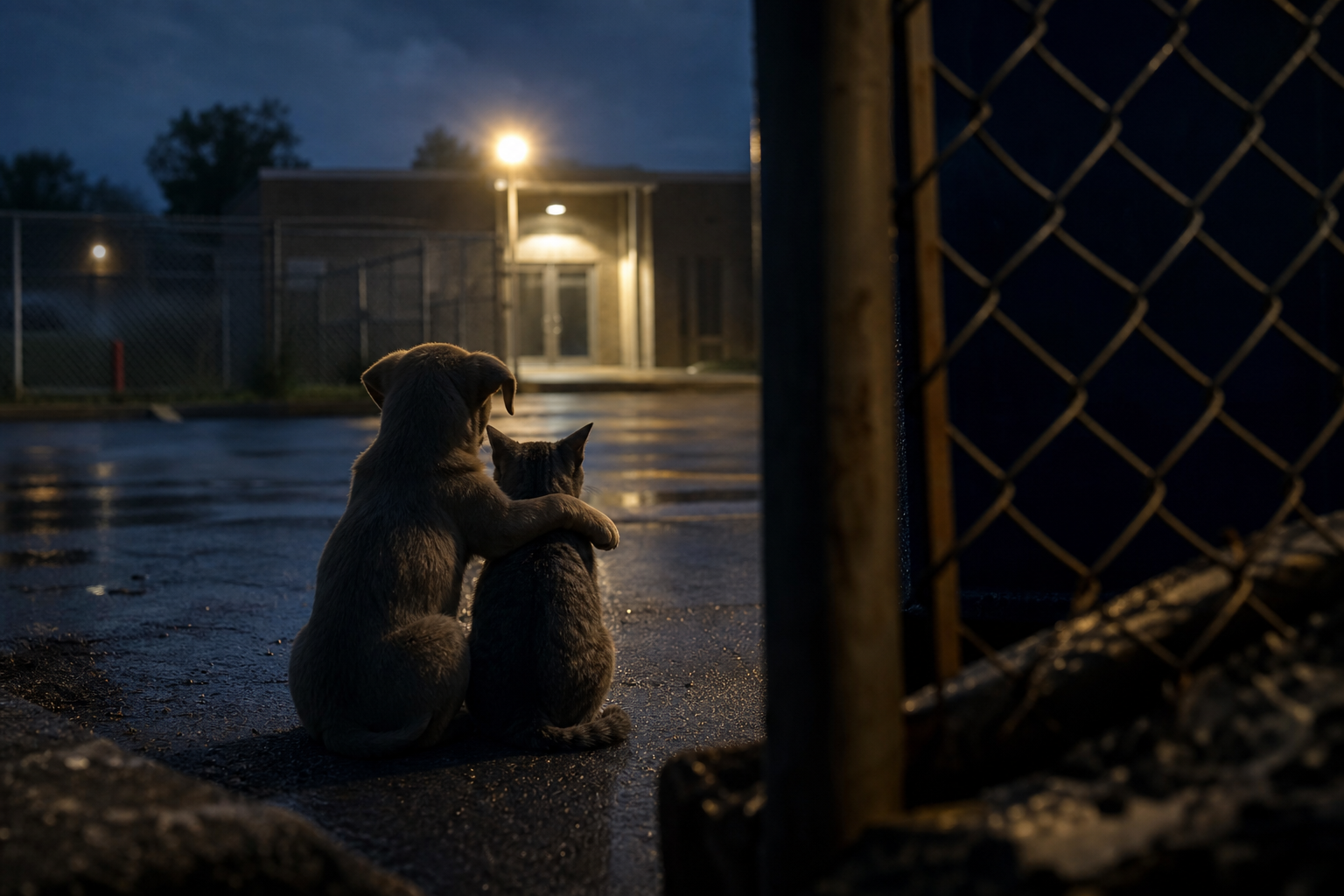
Boris turned up in a shelter parking lot with one paw draped over the abandoned cat beside him, and the photo did what photos do. The cynical reading writes the whole thing off: a frightened animal pressed against the nearest warm body, and we supplied the loyalty afterward. The warmer reading takes the paw at face value, as a six-month-old puppy who had decided the cat was his and saw no reason a parking lot should change that. I lean toward the second, and not out of sentiment. The gesture is too specific, too sustained, to wave away as accident. What is harder to dismiss is how often this exact pattern surfaces once you start watching for it, and how seldom it involves animals who share a species, a habitat, or any sensible reason to bother with each other.
Two stories tend to grow up around a clip like Boris and his cat. One treats it as a one-off worth a viral minute. The other inflates it into proof that every creature secretly yearns to befriend every other. The first undersells what you are looking at; the second oversells it badly. A single shelter video cannot tell you whether the bond was loyalty, fear, or plain habit. The better question lives between those poles: when two animals with no instinctual reason to connect form a fierce attachment anyway, what is actually going on? For that you want documented cases, with names and witnesses and follow-up, not a feel-good slogan.
Jennifer S. Holland, a writer for National Geographic, spent an entire book gathering those cases. Unlikely Friendships collects fifty documented pairings of animals who, by every rule of instinct, should have ignored or eaten each other and chose devotion instead. The draw here is the paper trail. Each bond comes with names, locations, and people who watched it happen. The range is what keeps the collection from feeling like one anecdote stretched thin. A dog going blind is steered through his own house and yard by a stray cat who simply refuses to leave. A mare adopts an orphaned fawn and mothers it.
A hippo and a tortoise become inseparable, which sounds like the opening of a joke until you sit with how little the two of them have in common. Holland is at her best when she pushes past the cute surface into the question of why these pairings happen. She traces each arc and offers the likely mechanics: a maternal instinct firing with no offspring to aim at, a hunger for company after loss, the way shared hardship seems to switch off the usual wariness. Many of her cases come straight out of rescue, abandonment, or grief, which is the thread tying all fifty back to a puppy in a parking lot.
The strangest entries are where the book earns its doubters. An Indian leopard pads into a village each night to sleep beside a calf and slips out before dawn. A lioness raises a baby oryx as her own. The predator is supposed to do the predictable thing and instead does the unaccountable one. Holland reports these without pretending she can fully explain them, and that restraint is the right instinct. The format does have a cost. Fifty stories in a row can blur into a parade of charming pairs when a handful of them clearly wanted a longer chapter and harder questions.
The leopard could carry an entire essay on its own; here it gets a few pages and a shrug at the mystery. I wanted Holland to slow down and push on the cases that resist her tidy explanations, rather than file them alongside the mare and the fawn. That said, her caution is also why the book holds up. She never claims Boris loved his cat the way you love a friend. She sets the cases side by side, predator and prey, mare and fawn, dog and guiding cat, and lets the accumulation do the arguing while you weigh it.
Unlikely Friendships will not settle what Boris felt for his cat, and it is the better for not trying. What it gives you is fifty cases that make the parking-lot scene look less like a fluke and more like one line in a long, well-witnessed record. If you want depth on the question the headline only points at, this is the honest place to begin. If you mainly wanted the video, the video was already plenty. The deciding factor is whether you are curious about the pattern running underneath it.