The Quiet Case for Knowing Exactly When the Blue Moon Rises
There are two ways to meet a blue moon, and most of us choose the one where we find out the next morning.
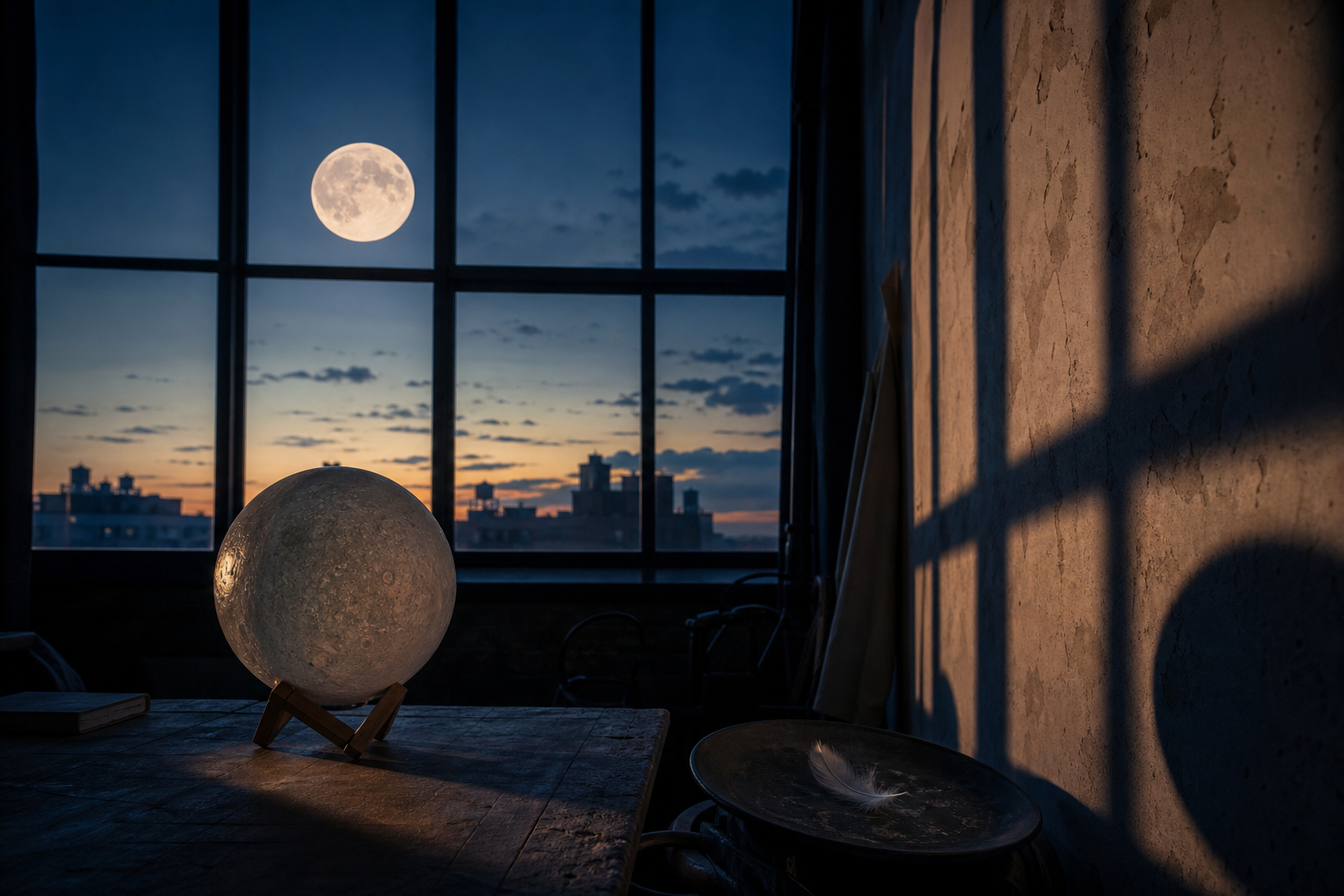
There are two ways to meet a blue moon. The first is the lazy way: you hear the phrase, you nod, you file it next to "harvest moon" and the version of "once in a blue moon" most of us deploy to describe how rarely we replace a phone. The second involves standing outside at a specific minute, knowing the second full moon of the month is climbing into view because you checked. One is a story you repeat. The other is an appointment you keep, and the only thing standing between them is whether you have the actual time written down somewhere you'll see it. Most of us live in the first version and assume the second belongs to people with telescopes and patience. It mostly belongs to people who own a card.
It would be easy to read this as a difference between two kinds of person. One feels the pull of the sky and clears an evening for it; the other finds out about a celestial event the next morning, from a friend's photo, with mild regret. Neither label holds up, because most people drift between them depending on whether the information arrived in time and in a usable form. A push notification at the wrong hour does nothing. A vague "sometime this weekend" does less. What separates a watched moon from a missed one is rarely interest. It's the distance between knowing something happens and knowing precisely when, somewhere you'll glance without trying. That distance is unglamorous, and it's the whole problem.
Kim Long's 2026 Moon Calendar Card does one thing and has clearly decided that one thing is enough. The front carries a graphic lunar calendar with realistic moon images for every month of 2026. The back lists the dates and times of every phase change, every eclipse, and the apogee and perigee points where the moon swings farthest from and closest to Earth. The blue moon viewing times sit on that reverse side, drawn from US Naval Observatory data, which is the closest thing amateur sky watching has to an unimpeachable source. The object itself is modest, ten inches by just under seven, sturdy enough to pin on a refrigerator or drop into a field kit without crumpling on its second outing.
Five cards come in the pack, which suggests a practical logic: one lives in the kitchen, one rides in the car, and the rest get handed to whoever asks where you found it. What the card understands better than most apps is the gap between data and timing. Your phone holds all of this and more, buried under settings and behind a search you won't run at the right moment. The card puts moonrise, moonset, and the exact minute of full phase in your eyeline. No battery, no login, no algorithm deciding the moon ranks below your unread email.
The card also has a real limit, and it doesn't hide it well. A printed card cannot adjust for your latitude, and lunar timings shift depending on where you stand. The Naval Observatory figures give you a precise reference, but precise for whom is a question the card hands back to you. A gardener in Maine and a fisher in Arizona read the same numbers and watch slightly different skies. For the headline events, the August 12 activity and the February 17 and March 3 markers, the variance stays small enough to ignore. If you're chasing the exact second of a minor phase change, that's a limitation worth knowing before you trust the print over your own ground.
The deeper appeal is older than any app cycle. People have pinned moon information to walls and tucked it into pockets for as long as farming and fishing have depended on it, and the categories Long works in, nature and the occult and astronomy, all descend from that same habit of watching the sky and writing down what it does. The card makes the practice cheap, durable, and available to anyone who'd rather check a fridge than scroll. That's a quieter ambition than most products allow themselves, and the restraint is the point.
Take it for what it is. This won't deepen your grasp of orbital mechanics or turn an idle evening into a calling. It's a printed schedule with good sourcing and a sensible size, built so May's blue moon and the rest of 2026's phases land in front of you before they happen rather than after. If that strikes you as too small a thing to bother with, fair enough. The distance between meaning to watch and actually watching has always been logistical, and this closes it for the price of a coffee. The moon will keep its schedule either way. The only open question is whether you'll be looking up when it does.
Why this book
So the question isn't whether the card impresses you. It won't, and it isn't trying to. The question is what you intend to do with the blue moon once you know it's coming. If the answer is nothing, if you're content to admire the photo someone else takes, you don't need this and shouldn't pretend otherwise. But if you've ever stood in a yard squinting at a sky you reached too late, the math shifts. Five dollars of card against a year of mistimed glances is not a hard sum. The decision rests on a small admission: your good intentions about the sky have a poor track record without something physical to hold you to them. A card on the fridge is a low form of commitment, and low commitments are the ones people actually keep. The expensive telescope gathers dust. The card gets read every time you reach for the milk.
Bridges by email
A news story and the book that goes with it, whenever we publish one.