The Salad Everyone Copied Is Really an Argument About the Noodle
A summer pasta salad went around recently on the strength of one opinionated choice: corn, miso, and ditalini, with the cook refusing every substitution. It sounds like a small preference.
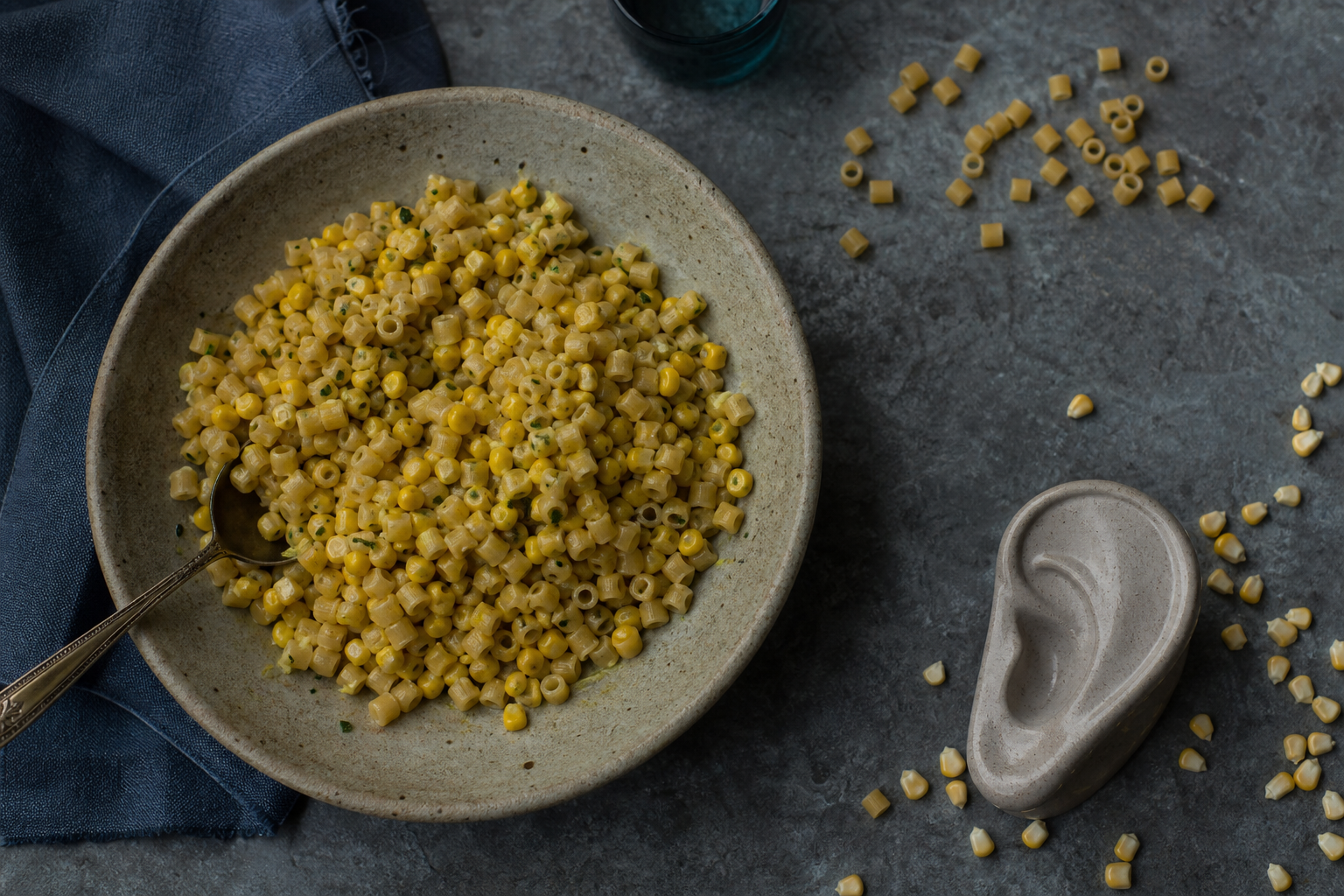
A summer pasta salad went around recently on the strength of one opinionated choice: corn, miso, and ditalini, with the cook refusing every substitution. It sounds like a small preference. It isn't. The whole dish leans on those little tubes staying chewy, catching dressing, and sitting at eye level with a corn kernel instead of sliding off a wide noodle. Cook them wrong and the salad turns to mush; cook them right and every bite carries a spoonful of the dressing you fussed over. That quirky flavor pairing is really an argument about form doing the work. And it points somewhere most trend coverage skips: the noodle itself, where it comes from, and why a box of dried ditalini is a different object than one you shaped in your own kitchen.
The coverage stops at the recipe. Buy the ditalini, boil it, toss it with corn and miso, call summer handled. That is fine as far as it goes. But nobody explains why that shape holds up in a cold salad while others collapse, or what happens inside the dough before it ever meets water. The chewiness that makes the dish work comes from flour choice, hydration, how the dough is kneaded and rested, and how the form is cut and dried. That is the missing piece: the method behind the mouthfeel. Once you understand how a small tube gets its bite, the salad stops being a recipe you follow and becomes a decision you make on purpose, with or without the box.
Aliza Green's Making Artisan Pasta treats the noodle as the thing to be understood rather than the thing to be bought. Green, a James Beard Award winner, built the book like a course you take standing next to her, moving from picking flour to mixing doughs to shaping a wide run of forms by hand. The publisher's own framing points straight at the summer scenario the trend rode in on: when you want cold, vegetable-forward pasta, the shape and texture of the noodle decide everything, and small forms like ditalini stay chewy, catch dressing, and sit right beside a corn kernel or a spoonful of miso.
The teaching runs on the plainest possible inputs: flour, water, sometimes egg. Steve Legato's photographs number in the hundreds, and they earn their space by showing what words fumble. You see the dough at the moment it has been kneaded enough, the way a cut edge should look, the point where a shape holds instead of slumping into the tray. Green's method also carries a cost worth naming. Making ditalini by hand for a weeknight salad is, by any honest measure, slower than opening a box. The book does not pretend otherwise, and I would push back on any framing that treats homemade as automatically better.
What the work buys you is control. When you cut and dry the tubes yourself, you set the wall thickness and the bite, and that is exactly the decision the corn-and-miso cook was so stubborn about. The range extends well past one tube. There are stuffed forms like ravioli, tortellini, and tortelloni, cut and rolled shapes, extruded shapes, even pot stickers and doughs ground from chickpeas and whole grains instead of only wheat. Green threads in the history behind these traditions in Italy and beyond, which keeps the instruction from reading like a parts list.
The useful part is the through-line from ingredient to result. The book connects flour, water, and hand pressure to the finished texture on the fork, so the chewiness in that viral salad becomes an outcome you can steer instead of a lucky accident. That is what the video skips and what the book spends its pages on. It is also what makes the single-shape rule sound less like a bit and more like someone who has thought hard about what a tube is supposed to do in a bowl of cold pasta.
If the corn-and-miso salad has you curious, the practical next step is small. Pick one shape, ditalini is a fair start, and make a single batch from flour and water so you can feel the difference between a tube you cut and one you poured out of a box. Green's book walks you through the dough, the resting, and the cutting without asking you to commit to a full repertoire. You may decide the box is fine for a Tuesday, which is a reasonable place to land. But you will know what the box gave up, and that knowledge is the thing worth having when the next summer noodle goes around.
Why this book
The transferable lesson has little to do with pasta specifically. The form of a thing often does more work than the flavors you notice first. The corn-and-miso salad gets attention for its pairing, but the pairing only lands because the ditalini holds its shape and grabs the dressing. Change the noodle and you change the dish more than swapping an ingredient would. Green's book keeps returning to that idea across every shape it covers: the same dough becomes a different eating experience depending on how you cut, fill, or dry it. Start seeing food this way and you catch it everywhere the trend cycle rushes past. A dish goes around for its novelty while the quieter structural choice underneath is the thing that actually made it work. Making Artisan Pasta is one long argument for paying attention to that underneath, a more durable habit than any single recipe.
Bridges by email
A news story and the book that goes with it, whenever we publish one.