
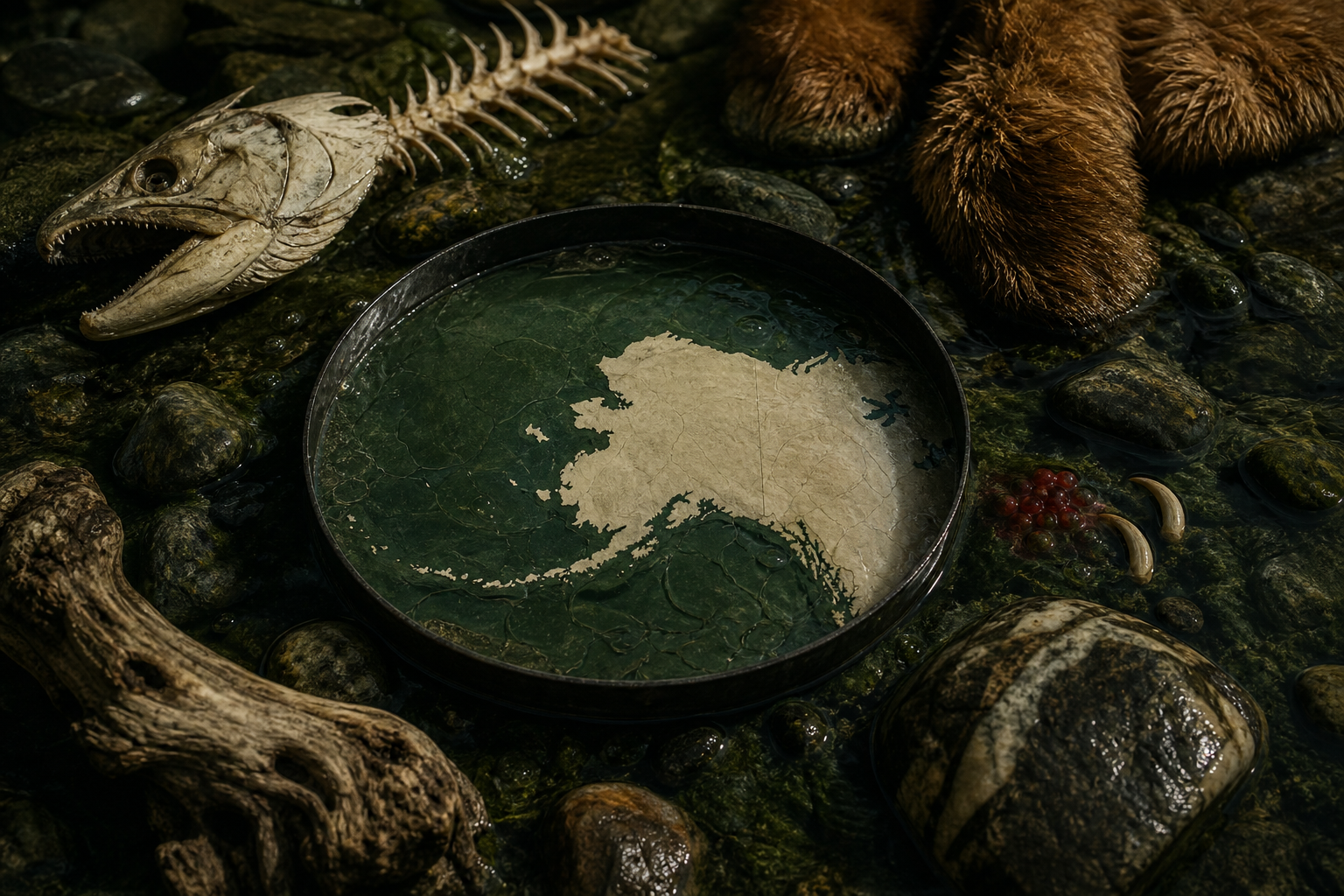
A mother bear and two cubs work the shallows of the Brooks River while, a few thousand miles south, someone refreshes a bracket on a laptop. That is the shape Fat Bear Week has taken in 2026, with the largest field the contest has ever run: brown bears in Katmai National Park and Preserve eating sockeye at a rate that would alarm a cardiologist, and the rest of us ranking the results. The appeal is easy to defend. By October you can tell individuals apart by the slope of a shoulder or a notched ear, and you hold firm opinions about body composition you did not have in June. The camera also puts you at eye level with an animal that can weigh as much as an upright piano and hold its ground in fast water, with every consequence of standing there quietly edited out. The bears are racing a deadline that arrives with the first hard freeze.
The contest measures one variable and measures it well. Fat is a survival ledger, the difference between waking in April and not waking at all. Behavior sits outside the frame. Nothing in a side-by-side photo tells you what a sow with cubs does when a subadult crowds her fishing seam, or how fast tolerance thins in a year when the run arrives late and small. The cams compound this by design: they point at the falls, the best restaurant in the park, where bears are busy and full and mostly indifferent to one another. Off camera is the rest of Alaska, the creek beds and alder thickets and gut piles left behind by hunters. Coastal brown bears live in all of it, and the animal that travels so well online is the version with a full stomach and good table manners.
Larry Kaniut's Alaska Bear Tales gathers what happens at closer range. It assembles firsthand encounter accounts from around the state, told mostly by the people who lived through them and, when they did not, pieced together from families and old clippings. The premise arrives without decoration: the same brown bears that fatten on salmon before winter are powerful, unpredictable, and dangerous up close. The link back to Katmai is metabolic. Late-summer bears are under pressure to gain weight, which is why they crowd the same hundred yards of river and tolerate neighbors they would otherwise drive off.
A thousand-pound male in September is running a single errand: the next four thousand calories. That pressure stays switched on when a person walks into the frame. A bear guarding a cached salmon, or a sow with two cubs and a thin margin, is doing arithmetic about calories and risk. Much of this book is what that arithmetic looks like when a human variable lands in it without warning. The tellings get their force from how ordinary they start. Someone is packing out a moose quarter. Someone is walking a familiar trail in poor light with the wind at their back.
There is usually a sentence about noise, a shout or a whistle or a shot fired into the dirt, and then the moment it becomes clear the noise is not working. After that the prose speeds up and goes plain, because people describing the worst four minutes of their lives rarely reach for adjectives. The pattern repeats often enough that you start reading for the hinge, the line where an ordinary afternoon stops being one. The collection has limits worth saying out loud. It is built almost entirely from encounters that went badly, so there is no denominator; the thousands of uneventful meetings between people and bears produce no story and appear nowhere in these pages.
Read straight through, the accumulation hardens into a catalogue of injuries. Some accounts arrive decades after the fact, sanded smooth by retelling. And the frontier reflex humming under parts of the book, that the answer to a bear is a larger caliber, sits awkwardly beside what rangers at Brooks Camp enforce: spacing, food discipline, and standing still on a platform while an animal walks past at conversational distance. The attention holds up. The accounts keep converging on the same short list of conditions: wind carrying your scent away from an animal you cannot see, bad light, a food source nobody spotted, a bear surprised at close range with no room to leave.
None of that is exotic knowledge, and none of it can come from a webcam, which works precisely by taking you out of the river. A ballot ranks what the salmon did to a body. Kaniut's tellers record what that body does when you turn up inside its afternoon.
By November the river empties. The bears climb to dens dug into hillsides, drop their heart rates, and spend six months living off what October built. The sow in the shallows carries two cubs through that winter on the same stored weight, which is the only scoring that counts, and the salmon settled it weeks before the first ballot opened. Alaska Bear Tales is the other half of the same animal, seen from ten feet instead of two thousand miles, and it is worth a few evenings if you want the version with consequences attached. Then go back to your bracket, knowing the champion is an apex predator who took the fishing seam she wanted and held it until the fish ran out.