Beer With a Painter, Extended: Philip Guston on the Building Blocks of Painting
What does a painter actually mean when they talk about the building blocks of painting? Keltie Ferris said it this year over beer in a Woodstock studio, and the honest answer takes longer than any profile allows.
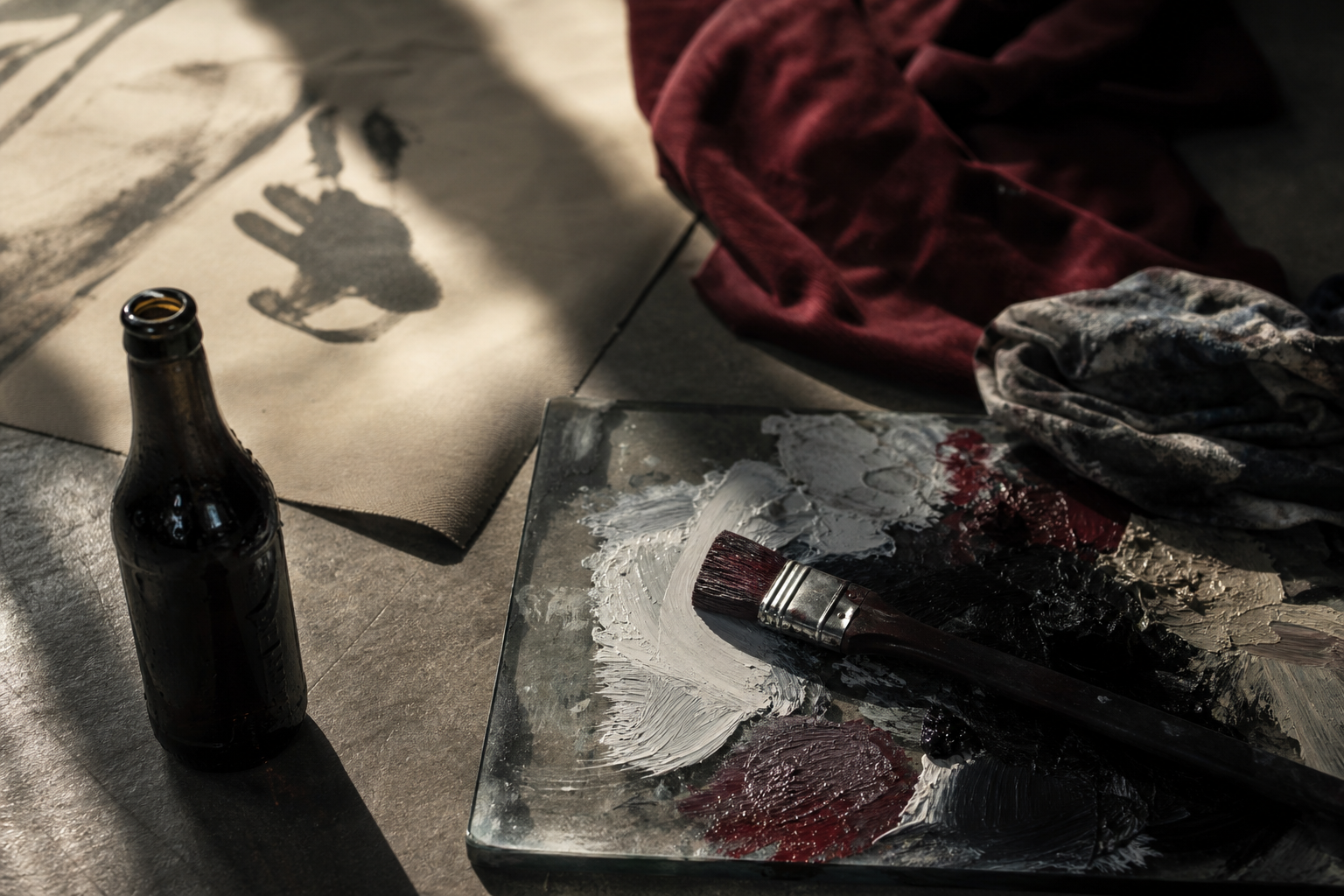
What does a painter actually mean when they talk about the building blocks of painting? When Keltie Ferris said it this year, over beer in a Woodstock studio, while describing gestural marks and monumental body prints, he was doing something older than the studio profile itself. He was talking shop after the work stopped. That loosened, slightly reckless honesty arrives once the brushes are down, and it is hard to catch in print. Most artist interviews stiffen into position statements. This one kept the beer in the frame, which is the whole trick. The question underneath stays simple and stubborn: how does someone who paints for a living describe the thing they do all day, when the vocabulary of art criticism keeps failing them?
The coverage around studio-visit profiles stops at the atmosphere. You get the drive upstate, the light, the artist's hands, a few quotable lines about process, then a tidy landing on the current show. What rarely survives the edit is the doubt, the reversals, the hours a painter spends staring at a canvas convinced it has gone wrong, then wronger, then somewhere unexpected. Ferris on building blocks is charming, but the profile can only wave at what that experimentation costs day to day. You are left with the beer and not the argument the beer loosened. For the fuller version of that studio conversation, the one that will not fold into a gallery announcement, you have to find a painter willing to publish the mess.
Philip Guston is that painter, and "I Paint What I Want to See" collects him thinking aloud across decades of talks, interviews, and short pieces. The book opens near a small prayer: 'Thank God for yellow ochre, cadmium red medium, and permanent green light.' That line hands you the register right away. Guston is grateful for pigment by name, the way a cook is grateful for salt. He talks iconography and abstraction in the same breath as the fact of a loaded brush. He circles metaphysics and mysticism, then drops back to gesture and surface.
The collection lets these swerves stand rather than sanding them flat, which is why it plays like eavesdropping. He is also candid in a way studio profiles rarely permit. He argues with fellow artists on the page, by name. He measures himself against the Renaissance masters, mostly finds himself wanting, and keeps measuring anyway. There is something bracing about watching a painter this celebrated refuse to grant himself a settled reputation. The doubt is the working condition, not a display of manners. The candor carries a real risk of curdling into self-mythology. A painter narrating his own daily rituals is still choosing which rituals to narrate, and Guston knew the value of the artist-as-thinker pose.
Some of these talks lean into it, and you should read him alert to the difference between honesty and a well-told story about honesty. He is too smart not to feel the pull of the second, which is exactly why the collection needed a sharper editorial hand at the seams where the pose takes over. The link to Ferris and his building blocks holds regardless. Both men are trying to describe the untranslatable middle of the work, the part between intention and result where the painting decides things you did not. Guston simply had more years to fail at that description, and the failures are the good part.
He returns to the gap between what he wanted to see and what the canvas gave back, and he never pretends to close it. That refusal is the honest center of the book. Temperature is what sets this apart from a standard monograph. These are warm documents, spoken more often than written, and the speech survives on the page. You follow him mid-thought, correcting himself, reaching for a word and grabbing the wrong one first. It is closer to the beer-and-studio texture a profile promises than most profiles ever deliver.
So what does a painter mean by the building blocks of painting? Probably that they cannot fully say, and that the saying is nearly as much the work as the painting is. Ferris gets a studio afternoon to circle it. Guston spent a career circling it and left the transcript. If the beer-and-painter trend has you curious about what happens after the interview stops being an interview, his is the room worth sitting in. Stay for the doubt. That is where he is best.
Why this book
So the trend is not really about beer, and it is not only about Ferris. It tracks a recurring hunger for the unguarded version of how painting works, delivered in the one setting where a painter might tell the truth about it. The studio visit sells access. What it hands over is atmosphere. Guston's collection is what happens when the access runs long and stays real, when the painter keeps talking past the point a profile would cut for length. Read Ferris on building blocks and then Guston on ochre and doubt, and the studio conversation starts to look like a genre with its own honesty and its own dodges. One is the fifteen-minute version with a photographer checking his watch. The other is the long night, guard down and staying down, the painter admitting how little he controls.
Bridges by email
A news story and the book that goes with it, whenever we publish one.