
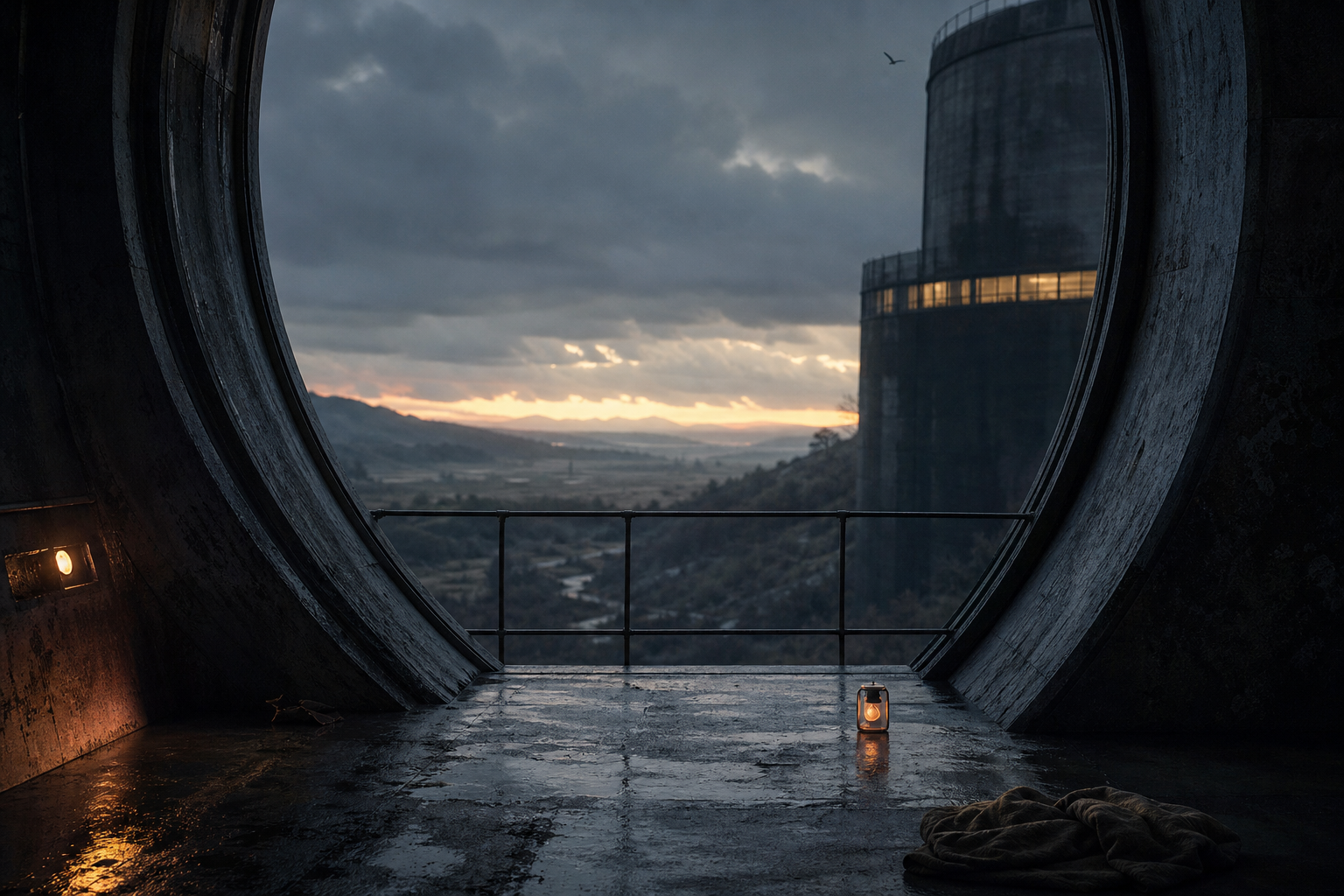
There are two ways to read the last ninety seconds of Silo season 3, episode 9. One: the show detonated its own board because a penultimate episode has to leave you gasping, and shock is cheaper than payoff. Two: everything that went off in those final moments had been wired since Judicial hauled Juliette in at the end of episode 8, with Sims and Camille each gripping a wire neither of them fully understood. The evidence favors the second. The captures and the breaking points arrived in sequence, and sequence is the one thing shock never bothers to arrange. That does not settle the group chat, because serialized mystery makes memory the deciding vote, and memory is a partisan witness. You think you remember what season 1 established; usually you are remembering the theory you liked best.
Weekly coverage sorts itself into two verdicts, both unsatisfying. Either the twist was earned and the recap becomes a victory lap, or it was manipulation and the recap becomes a complaint. The boring middle question goes unasked: what has this show actually put on screen, and in what order. Recap speed cannot answer that. The answer needs a record, and the record sits scattered across three seasons of corridors, salvaged tech, and names spoken once and never repeated. Television built this way creates a demand that weekly coverage was never designed to supply. The medium produced one serious answer to that demand, for a show messier than this one.
The LOST Encyclopedia, by Tara Bennett and Paul Terry, is the first and only licensed guide to that particular puzzle box, made in full collaboration with ABC Entertainment and ABC Studios, with a foreword by executive producers Damon Lindelof and Carlton Cuse. Past 400 pages and more than 1,500 images, it holds all six seasons in a single volume, from the characters down to the objects that kept turning up in the background of somebody else's scene. That is the whole ambition: a show famous for hiding meaning in set dressing, finally indexed, with the props and the people and the timelines filed in the same place.
Set that against the crowd-edited wiki, which is the default now. A wiki is faster and never finished, and its talk pages keep every argument about what a scene meant alive forever. A bound, authorized volume commits. Someone decided which relationships mattered enough to track, and the producers signed off on the decision. You gain authority and you lose the argument, which is a real trade and not a free upgrade. Laying six seasons out as entries has a side effect the publisher surely did not advertise. Once mythology sits flat on a page with a photograph and a paragraph under it, the difference between design and atmosphere stops being deniable.
Some threads carry real structural weight. Others turn out to be mood: recurring numbers, a hatch, an organization with a logo and an unsettling hum. Because the book is authorized, it declines to say which is which. The entries keep a straight face, giving the same measured half-page to a plot mechanism and to a piece of decoration that never meant anything. That evenhandedness is the volume's weakest choice, and the exposure happens anyway, which is the most useful thing about it and an odd sort of compliment. As an object it also simply looks good, which matters more than critics like to admit.
The image density means you spend as much time recognizing faces and rooms as reading definitions, and recognition is how serialized memory works. You do not recall the exposition; you recall the corridor. For anyone tracking Silo right now, the method is what transfers. The encyclopedia treats continuity as something checkable, and weekly viewing lets that habit go slack. When a finale turns on whether a character knew a thing in season 2, a feeling will not do the job. A record will.
Call the encyclopedia what it is: a licensed reference volume for a show that ended, made for people who cared enough to keep score. If you are the one insisting they set that up in season 1, it will vindicate you or humble you, and both results are worth having. Its value now is partly historical, proof that a serialized mystery can be catalogued at all, and evidence of what cataloguing does to one. Silo has a single episode left this season and a completed source text behind it, which gives it a better shot at surviving that kind of accounting than LOST ever had. Whether it does is the actual test, and the test is nearly here.