
The Origins of the Cuban Revolution Reconsidered
Series: Envisioning Cuba
A close account of how Cuba’s 1959–1961 rebellion became a social revolution.
Cuba’s First Revolutionary Years
Come here for
- Leader autonomy amid U.S.–Cuban conflicts
- Early Soviet assistance and changing revolutionary aims
Expect
- Three years traced through political and economic change
- Conflicts shaping both nations’ leaders after Batista’s overthrow
Where it sits
How strongly BookFrontier reads the book as belonging to each subject.
Nearest books
Matched by our semantic model. Ordered by what its readers also loved. Most of these share its genres: Cuban History, Revolutionary History and Cold War History.
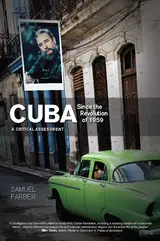 Cuba Since the Revolution of 1959Samuel Farber73% subject match
 Visions of Power in CubaLillian Guerra73% subject match
 Cuba's Revolutionary WorldJonathan C. Brown75% subject match
 Cuba and the U.S. EmpireJane Franklin73% subject match
 Cuban Revolution ReaderJulio García Luis72% subject match
 Fulgencio BatistaFrank Argote-Freyre72% subject match
 Cuba Libre!Tony Perrottet71% subject match
 Antiracism in CubaDevyn Spence Benson70% subject match
For younger readers: Leaving Glorytown, Coming Up Cuban, The Art of White Roses
Start with three books, and this one can be the first.
Members get a new edition every morning: a route out from their books to essays, research and talks, with the reason for each.
Sign upAbout this book
Analyzing the crucial period of the Cuban Revolution from 1959 to 1961, Samuel Farber challenges dominant scholarly and popular views of the revolution’s sources, shape, and historical trajectory.
Continue reading
Unlike many observers, who treat Cuba’s revolutionary leaders as having merely reacted to U.S. policies or domestic socioeconomic conditions, Farber shows that revolutionary leaders, while acting under serious constraints, were nevertheless autonomous agents pursuing their own independent ideological visions, although not necessarily according to a master plan.
Exploring how historical conflicts between U.S. and Cuban interests colored the reactions of both nations' leaders after the overthrow of Fulgencio Batista, Farber argues that the structure of Cuba’s economy and politics in the first half of the twentieth century made the island ripe for radical social and economic change, and the ascendant Soviet Union was on hand to provide early assistance. Taking advantage of recently declassified U.S. and Soviet documents as well as biographical and narrative literature from Cuba, Farber focuses on three key years to explain how the Cuban rebellion rapidly evolved from a multiclass, antidictatorial movement into a full-fledged social revolution.
Publisher details
Publisher categories
- Cuban History
- Communism & Socialism
- Authors
- Samuel Farber
- Publisher
- The University of North Carolina Press
- Published
- March 13, 2006
- Format
- Paperback
- Reading lane
- Cuban History