
Book
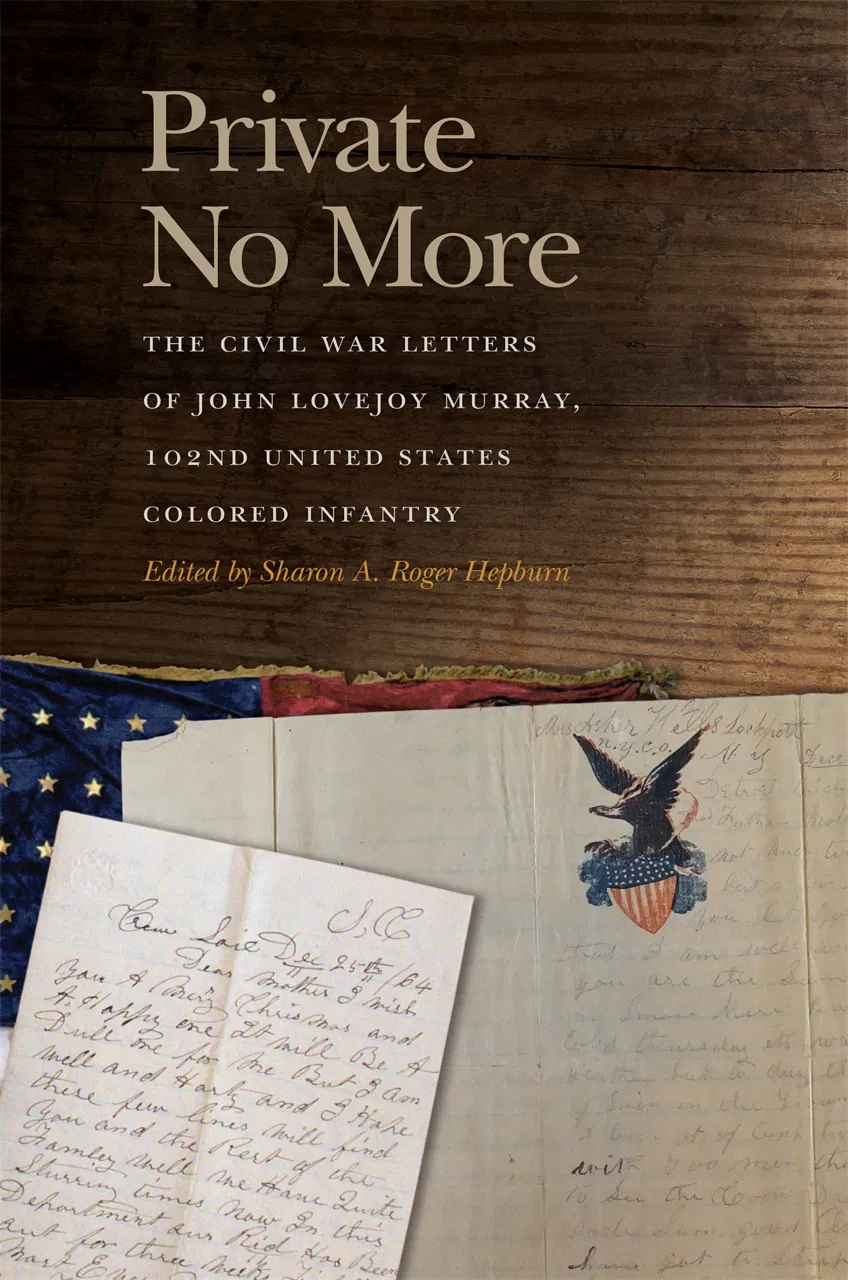
Private No More
The Civil War Letters of John Lovejoy Murray, 102nd United States Colored Infantry
Sharon A. Roger Hepburn
University of Georgia Press · Print & ebook · March 15, 2023
Reading lane: Civil War Era
The John Lovejoy Murray collection of letters contains insights into the experiences of an African American soldier and his regiment during the Civil War.
At a Glance
Who It's For
Book Details
- Authors
- Sharon A. Roger Hepburn
- Publisher
- University of Georgia Press
- Published
- March 15, 2023
- Format
- Print & ebook
- Theme
- Civil War Era · Civil Wars
- Reading lane
- Civil War Era
Affinity
Publisher Categories
19th-Century America
Civil War Era
Black History
African American Studies
About This Book
The John Lovejoy Murray collection of letters contains insights into the experiences of an African American soldier and his regiment during the Civil War. John Lovejoy Murray, a private in Company E, 102nd USCT, died of disease in a Charleston hospital on April 12, 1865. Through John Murray’s letters, readers can experience the war through the eyes of a literate northern Black soldier. His is the story of the soldiers who did not receive accolades for their heroic actions in...
Read full description
Similar Books
The Divided Family in Civil War America
Amy Murrell Taylor · The University of North Carolina Press
Affinity signal
Civil War Era
19th-Century America

Lincoln's Peace
Michael Vorenberg · Knopf Doubleday Publishing Group
Affinity signal
Civil War Era
Civil Wars
Capital Dames
Cokie Roberts · HarperCollins
Affinity signal
Civil War Era
19th-Century America

Hymns of the Republic
S. C. Gwynne, Robert Petkoff · Scribner
Affinity signal
Civil War Era
Civil Wars

Klan War
Fergus M. Bordewich, Landon Woodson · Knopf Doubleday Publishing Group
Affinity signal
Civil War Era
Civil Wars

The Rest I Will Kill
Brian McGinty · WW Norton
Affinity signal
Civil War Era
19th-Century America
George Templeton Strong: Civil War Diaries (LOA #396)
George Templeton Strong, Geoff Wisner · Library of America
Affinity signal
Civil War Era
Civil Wars

Killing Lincoln
Bill O'Reilly, Martin Dugard · Henry Holt and Co.
Affinity signal
Civil War Era
Civil Wars