
Book
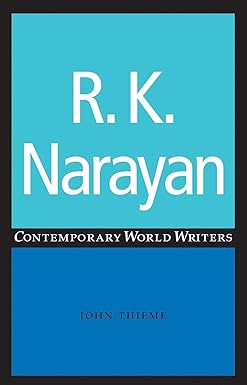
R. K. Narayan
John Thieme
Manchester University Press · Print & ebook · November 1, 2007
Reading lane: Indic Literary Criticism
A discovery pick for readers interested in R.
Disclosure: Some outbound links are affiliate links. If you buy through them, we may earn a commission. It doesn't affect which books we include. Learn more in our disclosure policy.
At a Glance
Who It's For
Book Details
- Authors
- John Thieme
- Publisher
- Manchester University Press
- Published
- November 1, 2007
- Format
- Print & ebook
- Theme
- Indic Literary Criticism · African Literary Criticism
- Reading lane
- Indic Literary Criticism
Affinity
Publisher Categories
Indic Literary Criticism
About This Book
R.K. Narayan’s reputation as one of the founding figures of Indian writing in English is re-examined in this comprehensive study of his fiction, which offers detailed readings of all his novels. Arguing against views that have seen Narayan as a chronicler of “authentic” Indianness, John Thieme locates his fiction in terms of its specific South Indian contexts and cultural geography and its non-Indian intertexts. The study also considers the effect that Narayan’s writing for...
Read full description
Similar Books
R. K. Narayan
Geoffrey Kain · Michigan State University Press
Shared affinity
Indic Literary Criticism
African Literary Criticism
LITERARY CRITICISM / Modern / 20th Century

Prose of the World
Saikat Majumdar · Columbia University Press
Shared affinity
Indic Literary Criticism
African Literary Criticism
LITERARY CRITICISM / Modern / 20th Century

Untouchable Fictions
Toral Jatin Gajarawala · Fordham University Press
Shared affinity
Affinity match is still building for this title.
Chinua Achebe
Jago Morrison, John Thieme · Manchester University Press
Shared affinity
Indic Literary Criticism

V. S. Naipaul's Journeys
Sanjay Krishnan · Columbia University Press
Shared affinity
Affinity match is still building for this title.

The Mahatma Misunderstood
Snehal Shingavi · Anthem Press
Shared affinity
Affinity match is still building for this title.

The Modernity of Sanskrit
Simona Sawhney · University of Minnesota Press
Shared affinity
Affinity match is still building for this title.

The World of Agha Shahid Ali
Tapan Kumar Ghosh, Sisir Kumar Chatterjee · State University of New York Press
Shared affinity
Affinity match is still building for this title.