

Book
Tonal Intelligence
The Aesthetics of Asian Inscrutability During the Long Cold War
Sunny Xiang
Columbia University Press · Print & ebook · December 15, 2020
Reading lane: Asian American Literary Criticism
Why were U.S.
Disclosure: Some outbound links are affiliate links. If you buy through them, we may earn a commission. It doesn't affect which books we include. Learn more in our disclosure policy.
At a Glance
Who It's For
Book Details
- Authors
- Sunny Xiang
- Publisher
- Columbia University Press
- Published
- December 15, 2020
- Format
- Print & ebook
- Theme
- Asian American Literary Criticism · LITERARY CRITICISM / Subjects & Themes / Culture, Race & Ethnicity
- Reading lane
- Asian American Literary Criticism
Affinity
Publisher Categories
Asian American Literary Criticism
LITERARY CRITICISM / Modern / 20th Century
LITERARY CRITICISM / Modern / 21st Century
About This Book
Why were U.S. intelligence organizations so preoccupied with demystifying East and Southeast Asia during the mid-twentieth century? Sunny Xiang offers a new way of understanding the American cold war in Asia by tracing aesthetic manifestations of “Oriental inscrutability” across a wide range of texts. She examines how cold war regimes of suspicious thinking produced an ambiguity between “Oriental” enemies and Asian allies, contributing to the conflict’s status as both a “rea...
Read full description
Similar Books

Narrating Nationalisms
Jinqi Ling · Oxford University Press
Shared affinity
Asian American Literary Criticism
LITERARY CRITICISM / Subjects & Themes / Culture, Race & Ethnicity
Chinese Literary Criticism

Asian American Fiction After 1965
Christopher T. Fan · Columbia University Press
Shared affinity
Asian American Literary Criticism
LITERARY CRITICISM / Subjects & Themes / Culture, Race & Ethnicity
Chinese Literary Criticism

Cities of Others
Xiaojing Zhou · University of Washington Press
Shared affinity
Asian American Literary Criticism
LITERARY CRITICISM / Subjects & Themes / Culture, Race & Ethnicity
Chinese Literary Criticism

Transpacific Imaginations
Yunte Huang · WW Norton
Shared affinity
Asian American Literary Criticism
LITERARY CRITICISM / Subjects & Themes / Culture, Race & Ethnicity
Chinese Literary Criticism
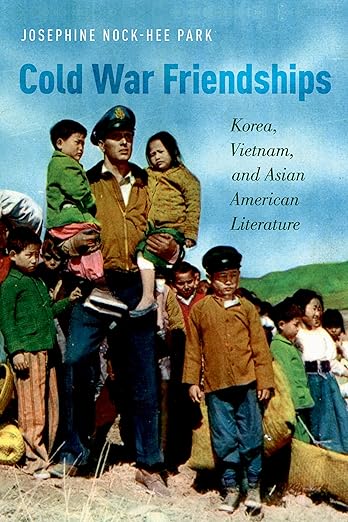
Cold War Friendships
Josephine Nock-Hee Park, Josphine Nock Park · Oxford University Press
Shared affinity
Affinity match is still building for this title.
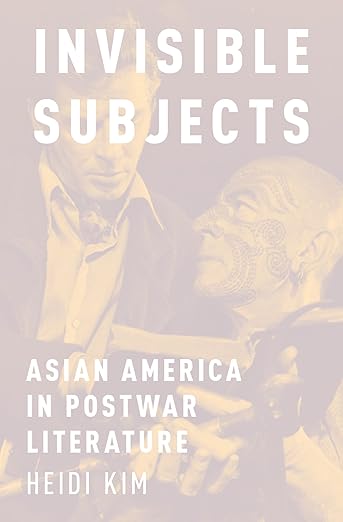
Invisible Subjects
Heidi Kim, Heidi Kathleen Kim · Oxford University Press
Shared affinity
Affinity match is still building for this title.
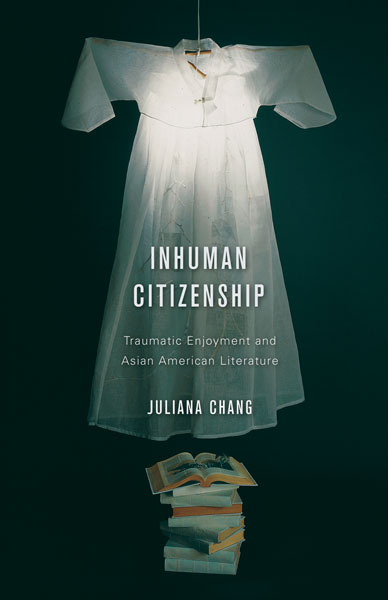
Inhuman Citizenship
Juliana Chang · University of Minnesota Press
Shared affinity
Affinity match is still building for this title.
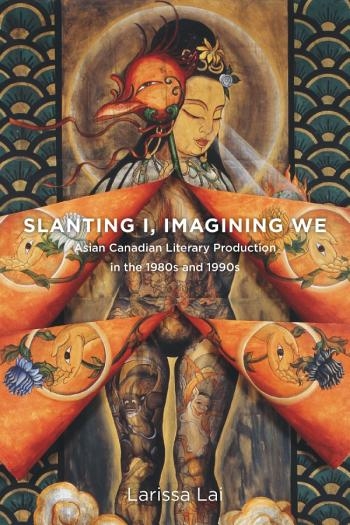
Slanting I, Imagining We
Larissa Lai · Wilfrid Laurier University Press
Shared affinity
Affinity match is still building for this title.