
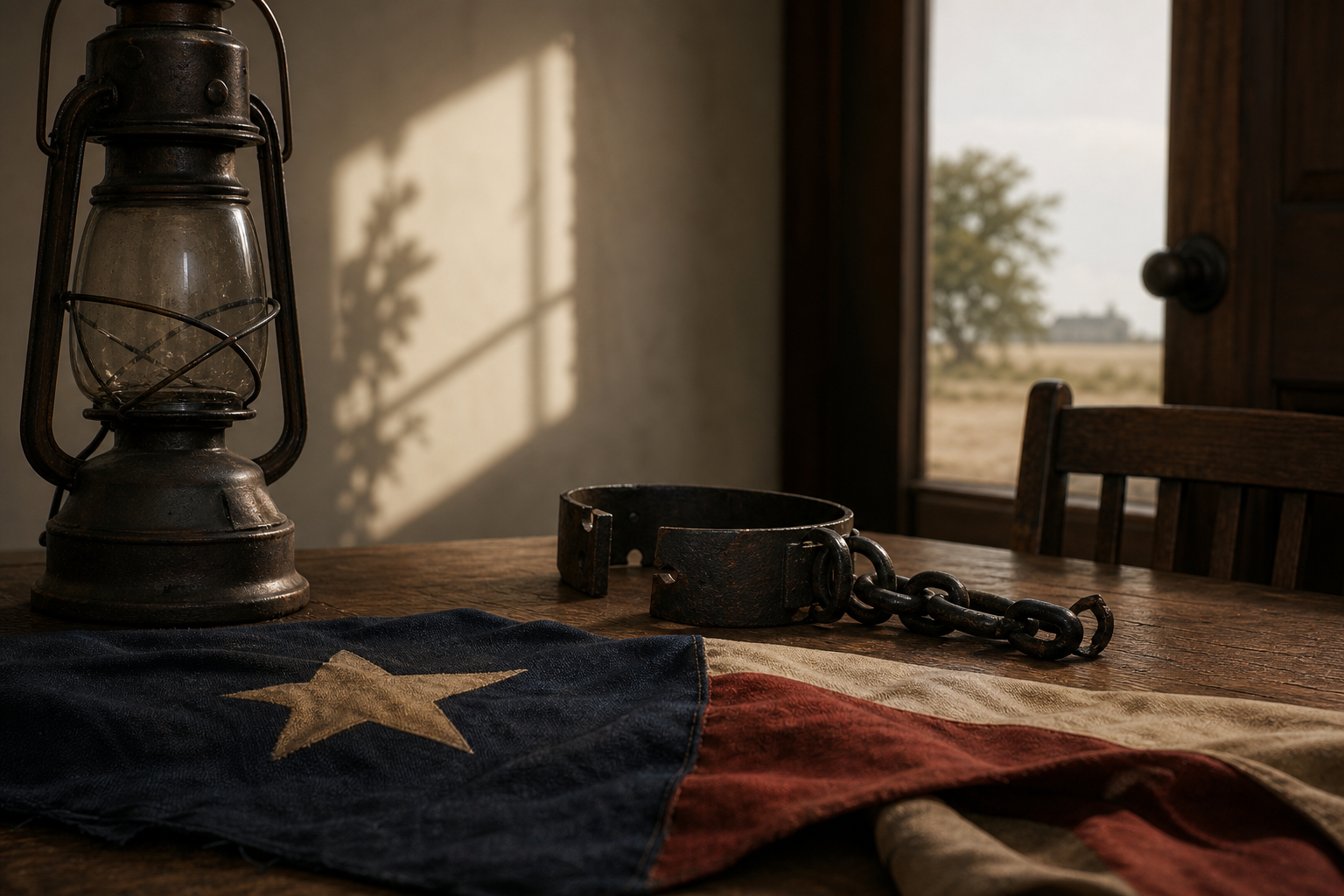
On June 19, 1865, a Union officer rode into Galveston and read out an order that should have arrived two and a half years earlier. The Emancipation Proclamation had declared the enslaved people of Texas free back in 1863, but a declaration only matters where someone can enforce it, and Texas sat far beyond the reach of Union guns. The news traveled at the speed of a marching army. When it finally landed, people danced in the streets. That gap between a paper freedom and a real one is the part most calendars leave out. The holiday on the 2026 schedule marks the morning the law and the lived reality caught up to each other, in one Gulf Coast city, on a single summer day.
The current search wave is mostly logistical. People want to know whether Juneteenth is a federal holiday in 2026 (it is, signed into law in 2021), and whether the office is closed. Fair questions, dull answers. The holiday-calendar coverage tends to skip the economic machinery underneath that 1865 morning. Emancipation in Texas was a moral correction, yes, and it was also the forced unwinding of an enormous labor system, the sudden conversion of human property into wage earners, sharecroppers, and people bargaining for the first time over what their work was worth. The headlines give you the date. They rarely explain why freedom in Texas arrived late, who profited from the stalling, and what the newly free walked into the next morning.
Arlisha Norwood's "The History of Juneteenth" is built for kids ages 6 to 9, which means it has roughly forty pages to explain one of the more tangled chapters in American history without losing a second-grader. That is a real constraint, and the book takes it seriously. It walks through the who, what, where, when, why, and how, then hands over a short quiz, a polite way of admitting that comprehension is the whole job here. The structure leans on a visual timeline that marks the milestones from the Proclamation to that June morning in Galveston to the federal recognition that came much later.
Timelines do useful work with young children. They make cause and sequence visible, so the two-and-a-half-year delay stops being an abstraction and becomes a measurable gap a kid can put a finger on. The book is strongest at the moment of arrival. The enslaved people of Texas hear they are free, and the story lets them celebrate. Norwood, who holds a doctorate in history, does not pretend the dancing closed the matter. Her framing nods toward the long question of what freedom would mean once the singing stopped. My friction with the format is a gentle one.
A book for six-year-olds can show the joy of June 19 and the cruelty of the delay, but it has little room for the reckoning underneath. Freedom meant repricing an entire labor system overnight. Former enslavers scrambled to keep workers on plantations through contracts and coercion, while freed people tried to set a value on labor that had never carried a price tag. Most picture books, this one included, can gesture at that and not much more. The arithmetic of emancipation is hard to fit between illustrations. That is a ceiling, not a flaw, and it is fairer to say so plainly than to pretend a 6-to-9 title can hold the full weight of Reconstruction.
What the book does is plant the seed. It hands a child the date, the place, the delay, and the celebration, and trusts that the harder questions arrive later, on their own schedule. For its intended age, that is the right ambition. The illustrations carry real warmth, and its shelving as both African American history and a children's history title matches what is on the page. A teacher reaches for this kind of book in February or June, and it does that specific work without overreaching.
If Juneteenth comes up this weekend and someone asks whether it is a federal holiday, you can say yes, since 2021, and then say the more interesting thing. The date marks the morning freedom arrived in the last place still holding out, not the day it was first declared. Norwood's book makes that gap visible for a child in about forty pages. The lesson scales up cleanly. A freedom written into law and a freedom actually delivered are two different events, and the distance between them is the story worth telling.