
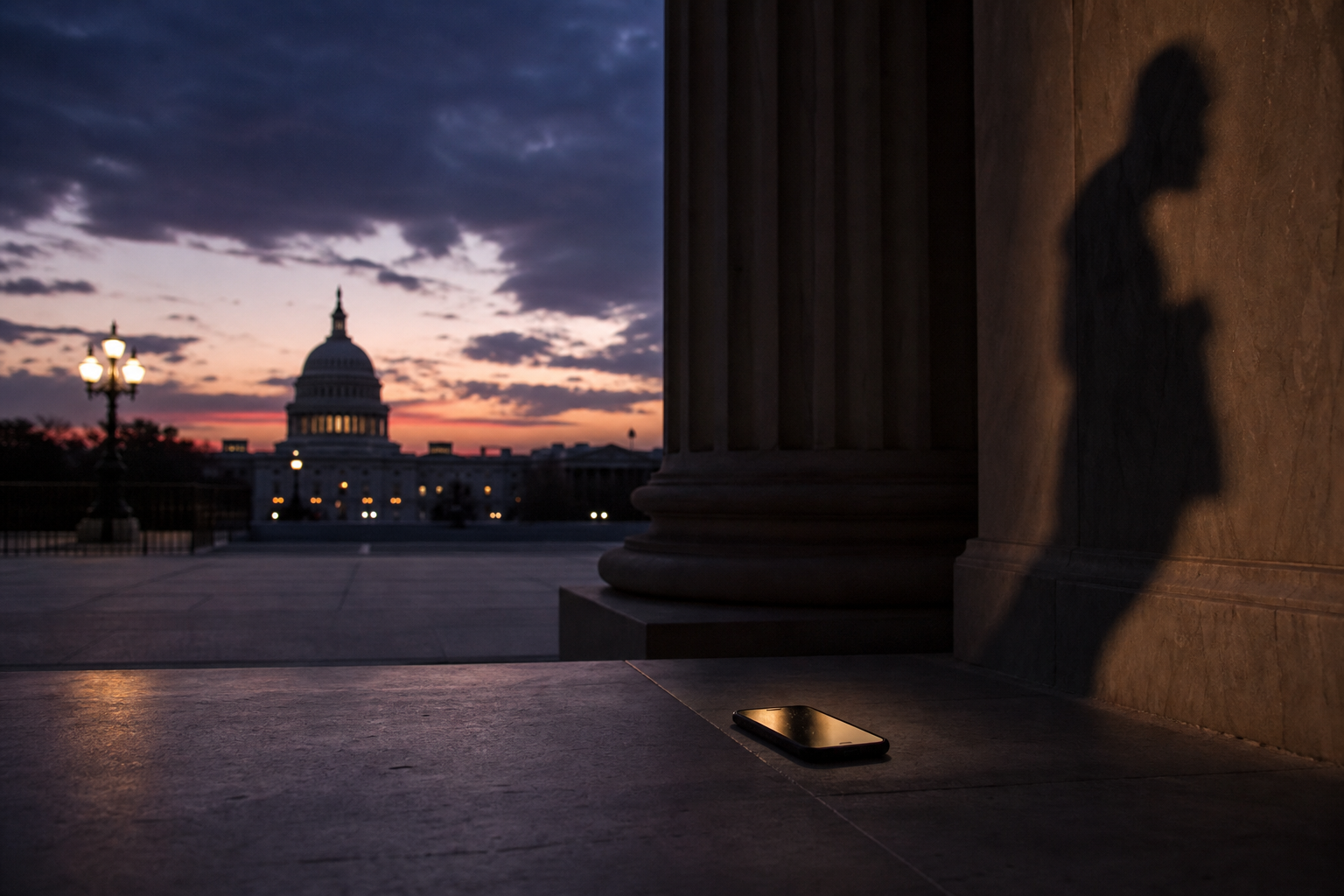
An early morning social media post, and suddenly the President's own Senate allies were reading about their demotion in real time, same as everyone else. That was Wednesday. Trump blindsided Capitol Hill Republicans with a few sentences typed before most of them had finished their coffee, while the administration quietly circulated terms of a preliminary Iran deal that nobody on the Hill seemed to have signed off on either. The familiar pattern held: the surprise, the scramble, the lawmakers improvising loyalty in front of cameras. You can watch this and file it under another bad news cycle for a fractious party. The better question is why a president keeps doing this to people who are supposed to be on his side, and why those people keep absorbing it. The answer has been building for years, mostly out of view.
Most coverage of this stops at the count: which senators grumbled, who drew a primary threat, how the vote math shifts. That tells you the weather, not the climate. The recurring story gets treated as personality, a president who enjoys blindsiding people, when the deeper question is structural. Why does a party keep folding around a single figure even when his moves cost individual members real political skin? Day-of reporting cannot answer that, because the fracture predates any given Wednesday. It formed inside closed-door fights over how much power one office should hold, fights that happened long before they leaked into press conferences. To see the mechanism instead of the symptom, you want someone who sat in those rooms and watched colleagues choose silence. That is a different kind of source than a leaked text from an anonymous aide.
Miles Taylor is an odd narrator for this, because he was one of the people choosing silence, then loudly chose otherwise. As a senior Trump administration official, later revealed as the "Anonymous" author of the 2018 op-ed and the bestseller A Warning, he watched executive power become the thing that split his own party. Blowback is his account of how that happened from the inside, built on interviews with dozens of former aides and government leaders, not on memory alone. His central claim is that the Republican fracture is older and quieter than the public versions suggest.
Before the open clashes came loyalty tests, factional knife-fights, and arguments over how far a president's authority should reach. Taylor traces these to specific disputes inside the administration, the kind that never made the evening news because everyone involved had reasons to keep them buried. He writes it with the pacing of a thriller, which is both the appeal and the catch. Contested presidential powers, national security controversies, a president turning on his own people: these read like fiction, and Taylor knows it, presenting them as documented reality. The momentum is real. So is the danger that thriller pacing flatters the man holding the pen.
When the person explaining how dissent gets suppressed is also explaining why he stayed quiet for so long, you get analysis and self-justification in the same breath, and the book handles the first far better than the second. Taylor does not pretend his hands are clean. Blowback is also a memoir about the cost of speaking out, the unmasking, what it did to him, what it confirmed about a system where uncomfortable truths get punished. That candor steadies the more breathless chapters. It also gives him a stake in the conclusion, which is worth holding in mind as you read his diagnosis of everyone else.
The useful part, the part that connects straight to Wednesday's post, is his argument about what intra-party conflict actually signals. Suppressed dissent does not vanish; it goes underground and resurfaces as the brittle, jittery loyalty you see when senators learn their orders from a phone screen. Taylor treats consolidating authority as an institutional hazard, not merely a personality quirk, and he names allies who calculated that public agreement was cheaper than private objection. That is the recurring move behind the headlines: the president acts alone, the party absorbs it, and each absorption makes the next one easier.
Read Blowback if you want the years of closed-door history behind a single morning's post, told by someone who was in the room and is willing to count his own part in the cost. Treat his thriller framing and his self-portrait with the skepticism they earn. What stays with you is the plainer mechanism underneath the noise: a party that practiced silence until silence became the only move it knew. Wednesday is what that looks like from outside.