
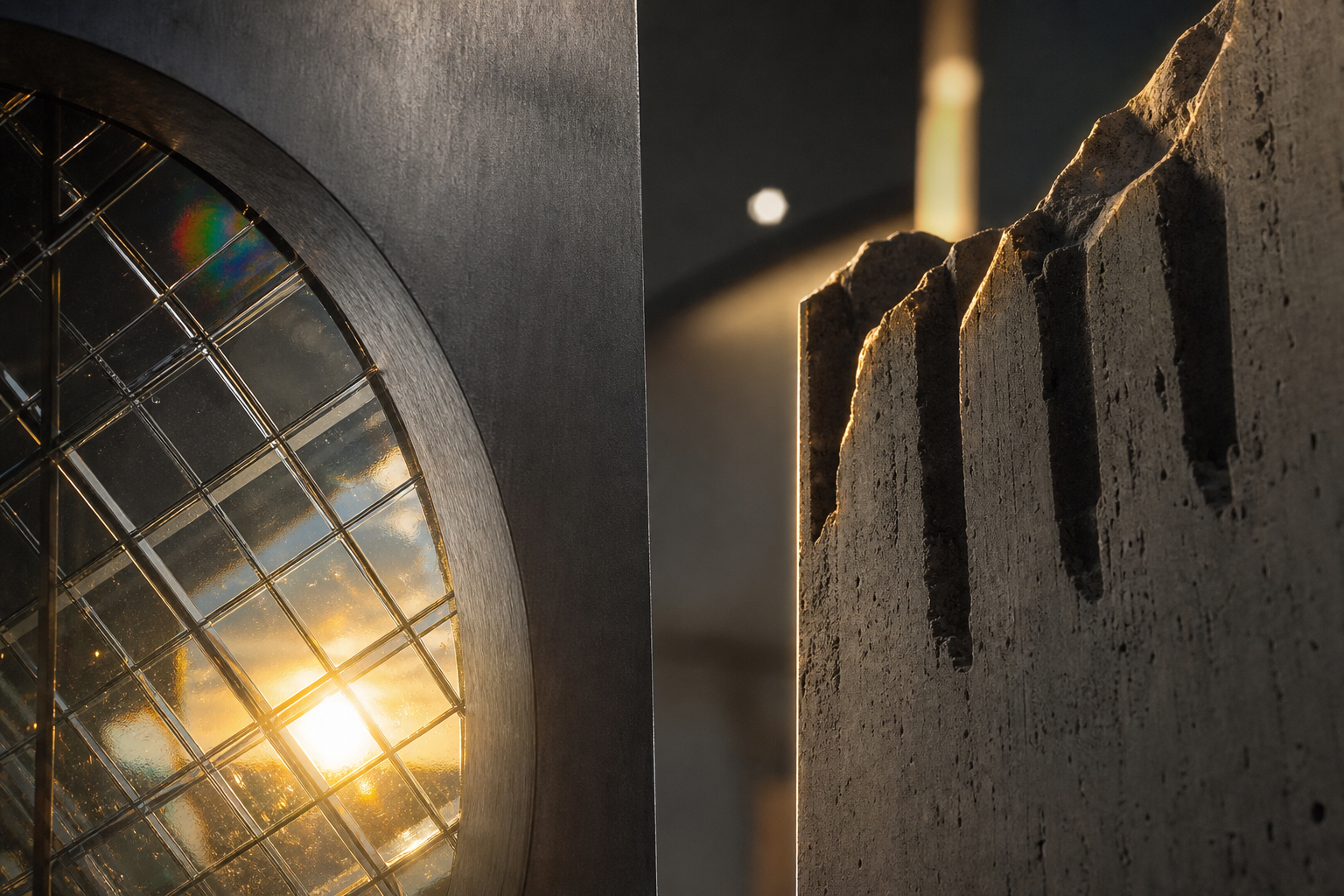
A presidential legacy is built mostly out of language, long before anyone pours the concrete. The $850 million center rising on Chicago's South Side has been called timeless, which is a heavy word for a structure whose mortar is barely set. The Obama Presidential Center has commissioned original work from thirty artists, plus the memorabilia and personal objects that nudge a museum toward something closer to a shrine. That work of legacy-building is deliberate, and you can watch it happen in real time. The quieter thing worth chasing sits underneath it. Before the bronze and the curated artifacts, there were words spoken into stadium air and into the small rooms where policy actually gets made. The Center will hold the objects. The harder question is whether the words still stand up when you read them flat on a page, stripped of the cadence that once carried them across a crowd.
Coverage of the Center runs on spectacle. Thirty commissioned artists, a price tag, a skyline shot, the phrase "a tale of two presidents" doing a great deal of unspecified work. All of that tells you what the building wants to be. It tells you almost nothing about what the building is meant to commemorate, which is eight years of argument, persuasion, and the occasional defeat repackaged as a teachable moment. A museum can mount a podium on a wall. It cannot easily display the thing that made the podium matter. Name the constraint and it becomes obvious: you can walk a full gallery and still leave knowing very little about how Obama actually talked, what he claimed, and where the rhetoric outran the record. For that, you need the speeches themselves, not the gift-shop distillation of them.
Carol Kelly-Gangi's "Barack Obama: Quotable Wisdom" is a slim, thematically arranged collection pulled from twenty years of speeches, interviews, essays, books, and the occasional social media post. It is exactly the kind of object that ends up stacked near a museum exit, and I mean that as a compliment. The format does one job cleanly. It clears away the lighting and the crowd and leaves you with the sentences, sorted by subject, so you can read his thinking on healthcare beside his thinking on race without a stadium roar separating the two. Read that way, the famous lines earn the attention.
"Democracy isn't a spectator sport. America isn't about 'yes he will.' It's about 'yes we can.'" On the page you can see the joinery: the small pivot from the singular to the plural is where the persuasion actually lives. Grouped across passages on the American Dream, on equality and inclusion, on terrorism, a consistent style comes through. Empathetic, idealistic, partial to the long arc bending toward justice. That consistency is also the book's honest problem. A quotation collection flatters by design. It keeps the soaring framing and quietly drops the drone program, the deportation numbers, and the distance between "yes we can" and what a divided Congress would actually permit.
You get the orator at his most distilled, which is to say at his least contested. The jokes survive the edit. The hard compromises mostly do not. So use it as one half of the conversation. Its value is in showing you the raw material of the legacy the Chicago Center is now setting in stone. The commissioned art and the curated objects will hand you the mood. This hands you the actual claims, the empathy and the idealism in their first words, which you can then set against everything the design chooses to leave out.
There is a wry payoff in reading the inspirational lines one after another. Hope, repeated across enough pages, starts to look less like a feeling and more like a chosen instrument, and watching a skilled speaker keep returning to the same source tells you something true about how persuasion works. The book does no analysis for you. It sets the evidence side by side and trusts you to catch it.
The Center will open on Juneteenth, the art will go up, and the official story will settle into something visitors move through in under two hours. The language outlasts all of it, because words travel where buildings cannot follow. Keep this collection on the shelf as the primary source the museum will tactfully arrange itself around. Read the lines, study the construction, then go track down the speeches the editor passed over and the years the rhetoric eventually had to answer for. Whatever turns out to be timeless here, it was never going to be the concrete.