Bam Adebayo Asked Her Father. A'ja Wilson's Book Explains Why That Landed.
Bam Adebayo sat down with ESPN and told a story most sports interviews never get near: the day he asked A'ja Wilson's father, Roscoe, for permission to marry her.
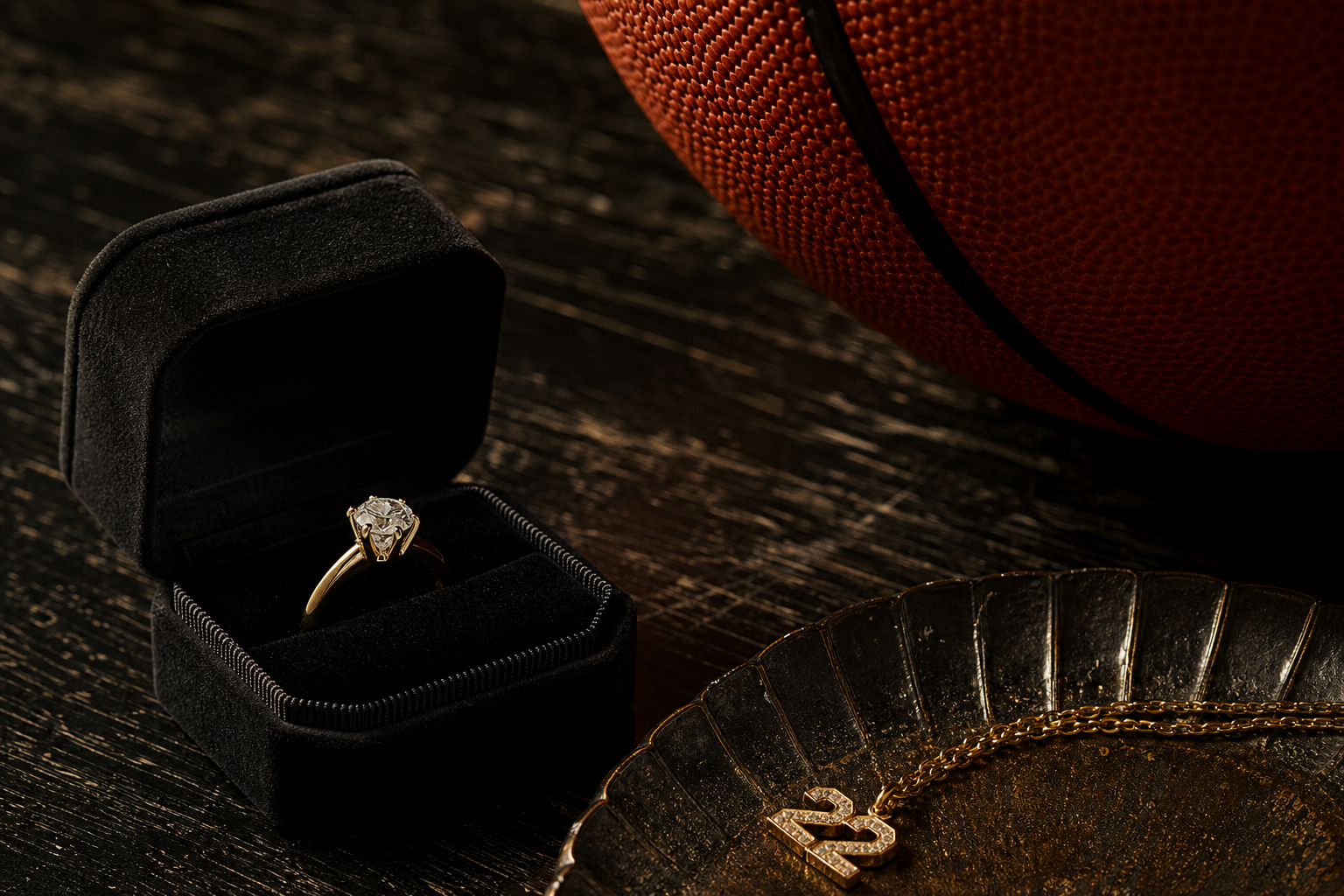
Bam Adebayo sat down with ESPN and told a story most sports interviews never get near: the day he asked A'ja Wilson's father, Roscoe, for permission to marry her. He called it one of the most terrifying conversations of his life, and the clip traveled fast, mostly on the strength of a scene people recognize from their own family lore, or from wanting one. What gets lost in the reshares is the woman at the center of it. Wilson is a four-time MVP with Olympic gold and titles in Las Vegas, and here she stood as the daughter, the girlfriend, the person whose father held a kind of veto. The champion who is also somebody's kid: that doubling is the tension her own book keeps circling.
The coverage stops at the sweet part. Man asks dad, dad approves, internet swoons. Fair enough. But nobody in the recap cycle works through the question underneath it: how does a Black woman who has been told, over and over, that she is too loud and too much end up in a relationship built on being asked for rather than assumed? That outcome is not a fairy-tale detail. It is the result of a person deciding, across years, which voices to keep and which to shed. A highlight clip shows you the gesture. It cannot show you the long private work that made her someone able to receive that gesture standing up straight.
Wilson's "Dear Black Girls" is the written-out version of that work. It hit the New York Times bestseller list on release, and Gabrielle Union blurbed it as required reading for every Black girl. The form is direct address: letters aimed at girls with an apostrophe in their names, girls whose hair gets interrogated at the lunch table, girls sorted early into too loud and too emotional. The founding scene arrives in fourth grade. Wilson, at a mostly white school in South Carolina, is told she has to stay outside for a classmate's birthday party. She was a child being taught, in a small and deniable way, where the line sat.
The book keeps returning to moments like that, not to wallow, but to track how a person learns to distrust the room's verdict on her. What keeps it from turning into a locker-room pep talk is the specificity. The accolades are real, and she names them, but the weight sits in the space between the trophies and the feeling of being swept under the rug anyway. Gold medals do not cancel the daily math of being doubted. She lets both facts sit side by side without pretending the first one settles the second. I would push back on one thing.
The letter format, warm as it is, sometimes irons hard specifics into lessons that arrive a beat too clean. When a scene slides straight into its takeaway, you can feel the gift-book machinery kick in, the version of A'ja Wilson designed to fit on a nightstand next to a candle. The keyword tags around it, the gift positioning and the Black History Month slotting, tell you the market it was built to serve. A memoir written to encourage young girls has commercial pressure that can smooth the edges you most want left rough, and here and there it does.
The throughline survives that pressure. Wilson keeps insisting that being true to yourself is not a prize you collect after winning. It is the thing that makes winning survivable, and it travels to girls who will never touch a basketball. Read against the Adebayo clip, the book accounts for the woman in it better than the clip does. A person who spent years refusing to apologize for taking up space is a person who can be courted with real ceremony instead of settled for.
If the trend surfaces at dinner, you can do better than replaying the ESPN clip. Set the fourth-grade birthday scene next to the four-MVP present and let the distance between them carry the talk. If you want to go past talking, the book is short and plainly written, and it rewards being read line by line rather than skimmed for uplift. Start with the letters, notice where the scenes go concrete and where they go tidy, and decide for yourself which A'ja Wilson you believe: the one at the podium, or the girl who learned early to distrust the room.
Why this book
The part that transfers has nothing to do with sports. It is about what a public ritual signals. The permission-asking reads as tender because it treats a woman as someone worth formally approaching, and that reading only holds if she already carries herself as unavailable for casual dismissal. Self-regard shows up in how other people are required to behave around you. That is the lesson worth lifting out of both the clip and the book. You do not perform confidence to earn affection. You build a settled sense of your own worth, quietly and across years, and the people near you calibrate to it. "Dear Black Girls" is a field guide to that slow construction, written by someone who had to manage it under stadium lights and after a childhood of small exclusions. The proposal is the epilogue. The girl kept outside the birthday party is the origin, and the distance between those two scenes is the whole point.
Bridges by email
A news story and the book that goes with it, whenever we publish one.