
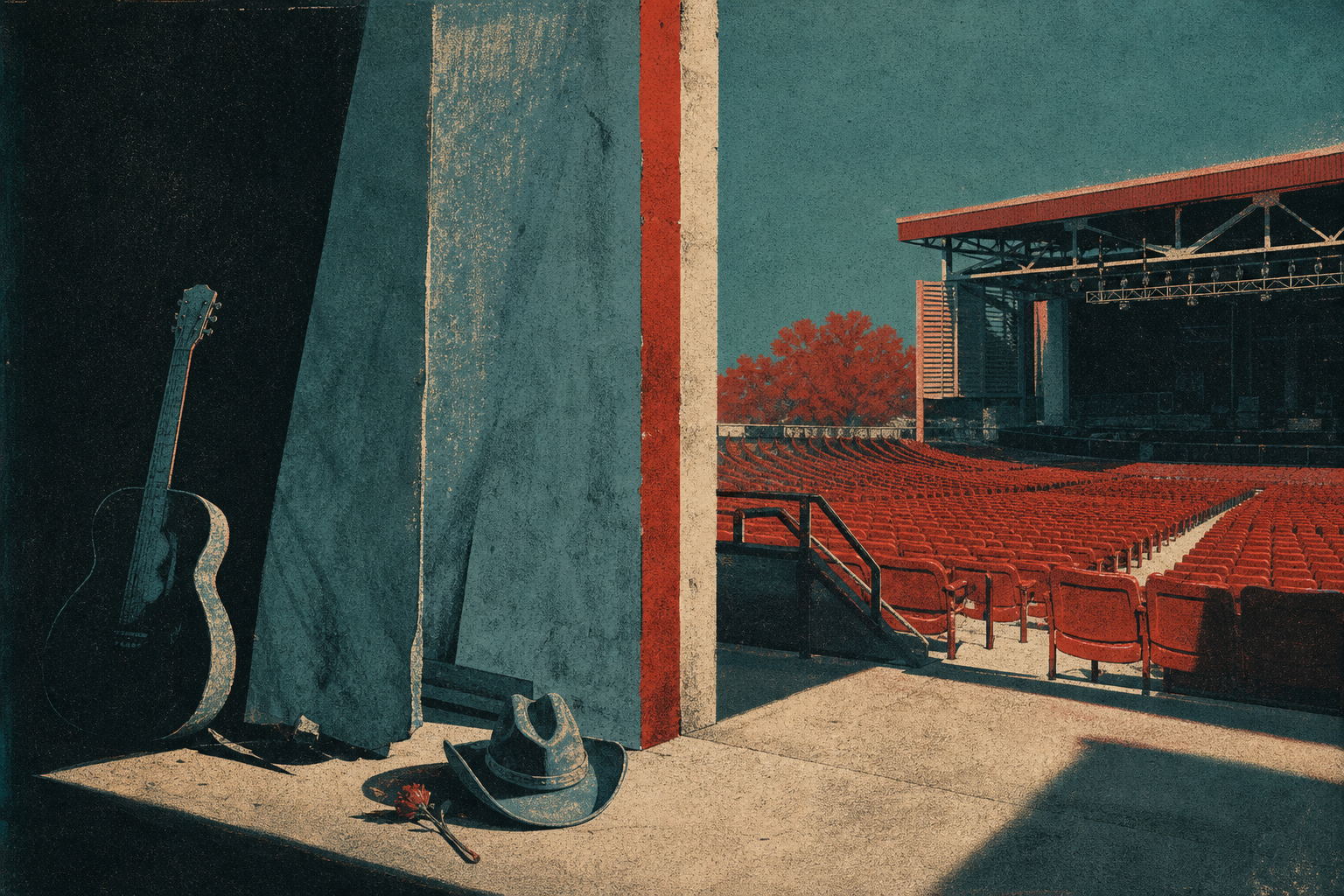
Picture the lull at Ascend Amphitheater on a Friday night in September. The Cumberland is sliding past in the dark, the band is retuning, and a few thousand people are weighing whether another beer is worth the line. Shaboozey brought his Outlaws Never Die tour there on September 18, 2026, playing behind The Outlaw Cherie Lee & Other Western Tales, a record whose title promises characters and a plot before you hear a note. The recaps will log the set list, from the opening "Til Sunday" through "High Noon," because that is what recaps are for. What follows you to the parking lot after a show like this is often smaller: the stretch where the singer stops singing and starts talking, and for a minute a few thousand strangers lean in as if the story were meant for each of them alone.
The chatter around Shaboozey tends to split into two conversations. One tallies his reach in streams and chart runs. The other reopens the border dispute over whether he counts as country, a debate Nashville has been staging since roughly the invention of the pedal steel. Neither gets near what he is building. The clue sits in that album title. Calling a record a set of western tales stakes a claim on the narrator's chair, the old country role where the singer guides you through a story as well as carrying the hook. That role has a craft behind it, and coverage mostly misses the craft because it happens in the pauses. A folk singer who spent decades working it out in bars can show you how it runs up close.
Todd Snider could stand alone with a guitar and talk for five minutes before a song, and the talk would be the thing people repeated afterward. I Never Met a Story I Didn't Like sets that stage voice down on paper, collecting the shaggy-dog detours and loose monologues that made his live sets worth a road trip. If you know "Beer Run," "Talking Seattle Grunge Rock Blues," or "Play a Train Song," you already know the register. The jokes arrive sideways, and the punchline is usually on him. That self-mockery is the method. Snider's persona, the "Alright Guy" who "Can't Complain," works by lowering his own status until you trust him.
Once he has confessed to being a slacker and a screwup, a man who may have wandered into the wrong bar, he has earned the right to say something sharp about the people in the room or the country outside it, and the remark sounds like it came from the next stool over. The publisher reaches for Will Rogers, and the comparison holds. Rogers also got away with political barbs by playing the rube who happened to be paying attention. Past the jokes, the book goes into drugs, alcohol, and addiction, and into Snider's relationship with his father, the history that sat under the easy charm the whole time.
Some of the funniest passages on these subjects work because he refuses to pretend any of it was harmless. That history also explains the timing. Someone who has spent years making hard stories funny for strangers learns exactly how long a room can hold its breath. The jacket lines Snider up beside Dylan, Tom Petty, and John Prine, and that is at least two names too many. Prine is the honest match, a songwriter who treated a small, odd detail as the whole point. Petty wrote anthems for cars with the windows down; Snider wrote songs that stop to tell you who was driving.
Dylan and Petty are on the cover to sell books. Print also costs these stories something. A shaggy-dog tale lives on the pause, the shrug, and the half-second before the turn, and the page strips all of that out. Expect a handful of pieces that sit flat without his delivery, the way a friend's retelling of a great bit always lands a beat late. What survives is a working theory of the live show that musicians rarely bother to write down. In Snider's version, the talk between songs sets the terms for everything else. It tells you who the singer thinks he is and whether the persona onstage is a costume or a confession. The songs are what you came for, and the stories are the contract that tells you how to hear them.
The Nashville recap tells you what Shaboozey played. Snider's book makes the case that the talk around those songs is where a country act tells you what they mean and how much of the swagger to believe. A few of the stories go quiet on the page without his timing, and the argument running beneath them still holds: the minutes between the hits are where a performer decides whether to be a character or a narrator. If that stretch of a show is the part you remember, I Never Met a Story I Didn't Like is a warm, funny, occasionally bruised record of how one songwriter made those minutes his life's work.