
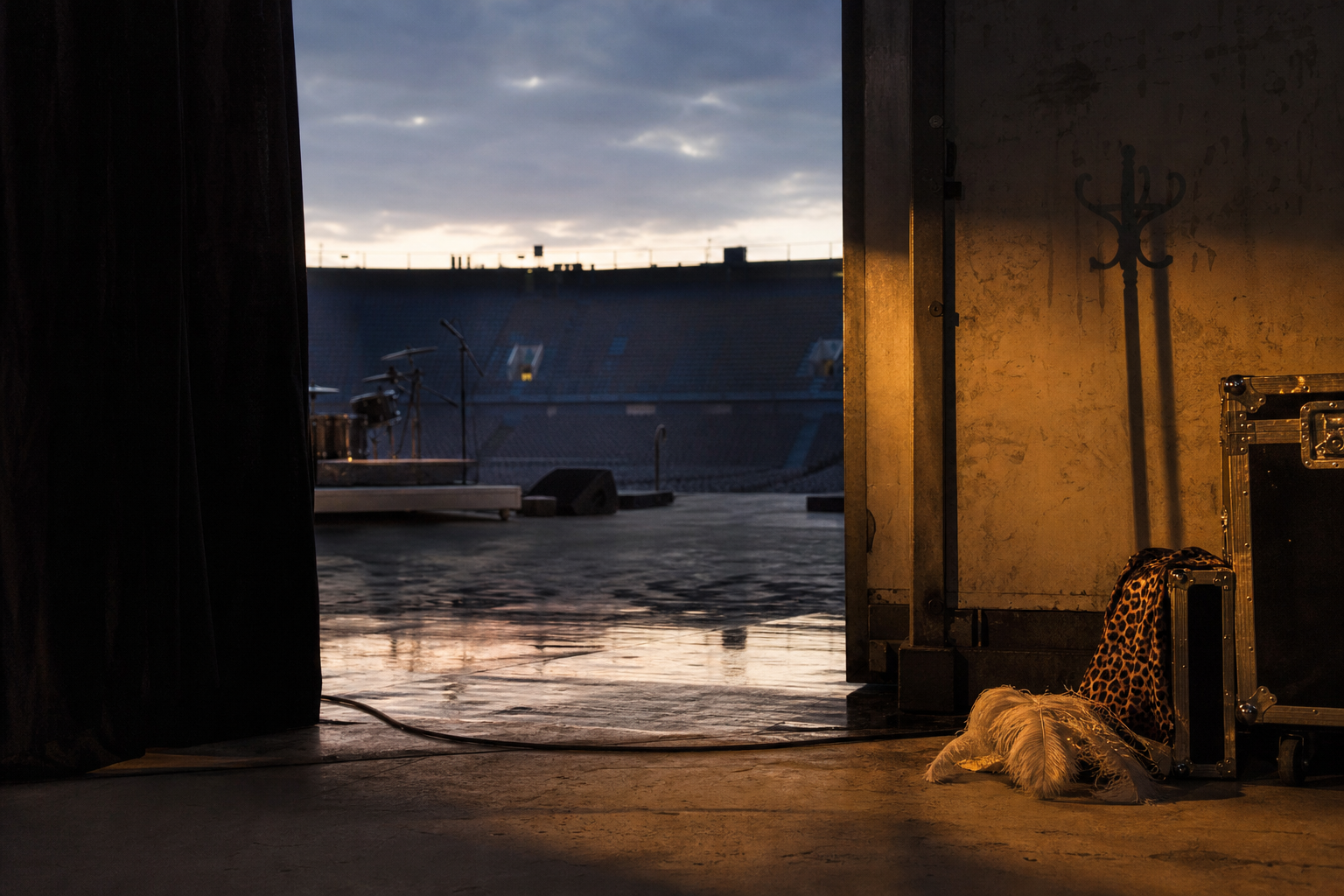
Rod Stewart is eighty-one, and on Monday, Sept. 28, he told fans in an Instagram video, as reported by USA Today and the Los Angeles Times, two things that refuse to sit comfortably together. "I'm not retiring," he said, "but this will be the last rock and roll tour." He also called it his "last tour ever, ever." The Los Angeles Times headline rounded that up to a third "ever," and the extra word fits the mood. People rarely repeat a word three times when they trusted it the first time. The obvious response is an eye roll, since rock has staged plenty of farewells that turned out to be intermissions.
The eye roll misses the man, though. According to The Guardian, Stewart has been touring since the early 1960s, when he set out across Europe with a harmonica. A voice that has been worked that hard for that long does not reset between sets. A performer his age likely knows how many flights, hotel mornings and encores the 2027 dates will cost him. His sentence sounds like someone bargaining out loud with his own body.
Most coverage treats the farewell tour as a sales device, and it plainly is one. "Last chance" moves tickets, and a promoter can print it on a poster long before anyone has decided anything. Stewart's Final Encore tour, which the Los Angeles Times reports will run through the U.K. and Europe from April through July 2027, will be booked the way everything is booked, with dates, venues and a merch table. The whole arrangement quietly assumes the performer will arrive at the final night intact. Bodies keep a different calendar. I would go further and say the farewell tour is close to the only retirement plan the music business knows how to sell, and it only works if the ending stays voluntary. Stewart's hedge makes more sense once you see what happens when it doesn't.
In 2018, at sixty-nine, Ozzy Osbourne was doing the farewell tour exactly as the business intends. The arenas were sold out, the reviews were warm, and crowds around the world were roaring his name back at him. It was an official ending, sold in advance, and within weeks it was gone. Last Rites, written with Chris Ayres, picks up where the headlines stopped. A finger infection put him in hospital. From there things escalated to near-total paralysis from the neck down, and finally to cancelling the tour and stepping out of public life entirely. It is hard to think of a more ordinary trigger for a more total collapse.
The Prince of Darkness, whose legend rests on surviving things that should have finished him several times over, was undone by something that began in a hand. The memoir's real subject is what came after, told in the unfiltered voice you would expect from him. He writes about fear without dressing it up. He describes the slow, punishing work of learning to stand, and then of trying to perform again. He is candid about what those years cost his marriage to Sharon, and the decades of substance struggles sit alongside the health battles rather than in a separate chapter of his life.
Rehabilitation, as he tells it, sounds like a daily argument with limbs that have stopped taking instructions, and the book does not pretend the argument was fair. I part company with the book on its jacket line. Asked whether he would change anything, he answers "f*** no," because clean and sober he wouldn't be Ozzy. It is a great line and a slippery one. A memoir that spends real pages on what his addictions did to the people around him cannot fully cash that bravado, and the tension is left sitting there unresolved. The arc also bends firmly toward triumph, closing on the Back to the Beginning concert, streamed worldwide, where he reunited with his Black Sabbath bandmates one final time.
Knowing that he died in 2025, you may find that ending tidier than the body underneath it ever was. The shape of his last years still says something the farewell-tour business never advertises. His real goodbye arrived after the scheduled one had already fallen apart, and he had to rebuild it from a hospital bed, on terms nobody had printed on a poster.
Last Rites is worth your time if the Stewart headline made you smirk and then, a beat later, wince a little. It is Ozzy at his least guarded, and you will not agree with every boast in it. The book is at its best when the boasting stops and a man past seventy is simply trying to stand up again, which is the part no farewell tour puts on the poster. Every one of these tours eventually ends with somebody alone in a hotel room, taking stock of their knees. Ozzy wrote down what that felt like when the ending arrived early and without asking. Stewart, for now, still gets to choose his.