While Bethesda Plans Fallout 5, Go Back to the Sketches That Built Fallout 4
Bethesda just laid out a multi-year roadmap, remasters included, and the whole series is back under the lights.
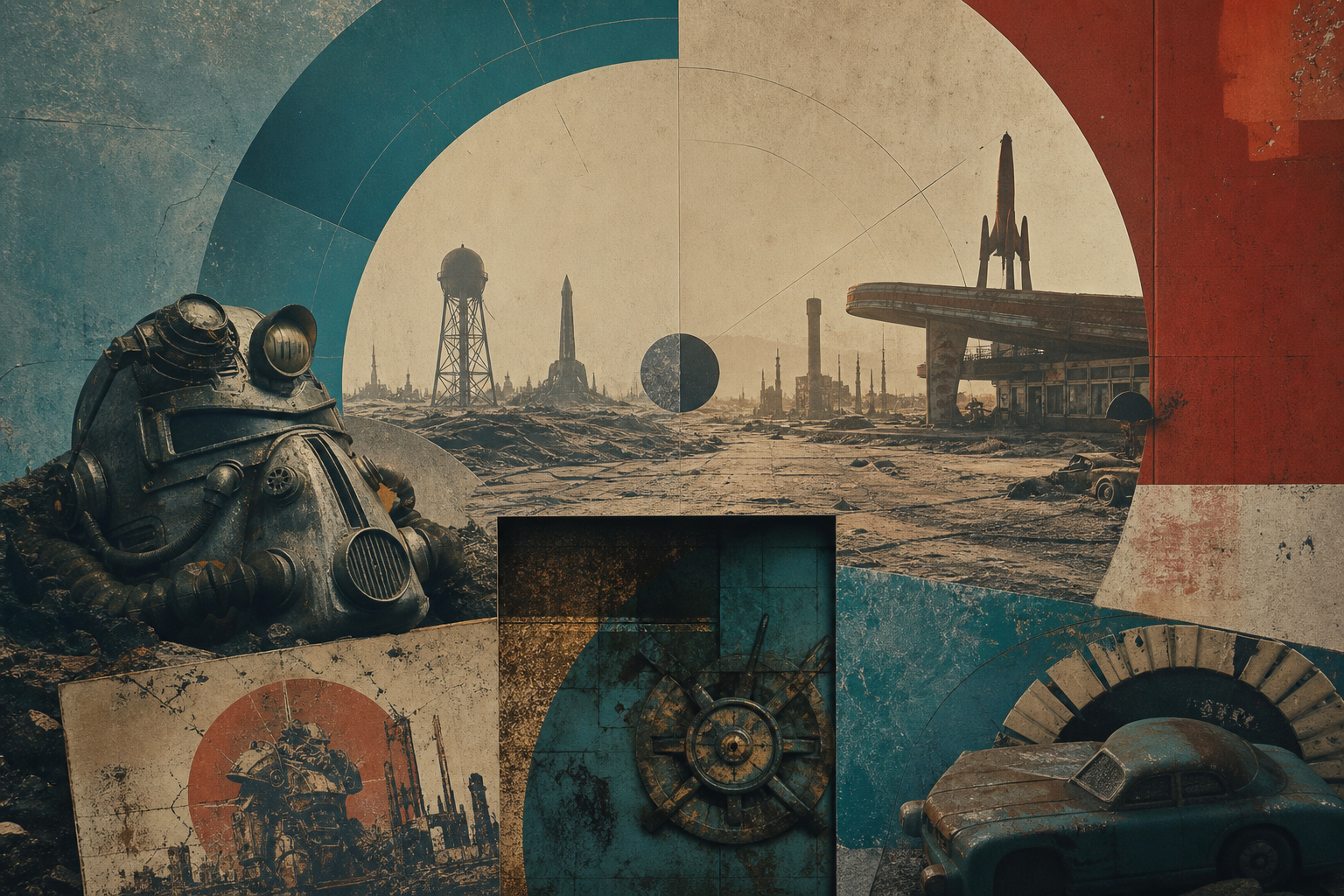
Bethesda just laid out a multi-year roadmap, remasters included, and the whole series is back under the lights. The talk moves fast toward Fallout 5, toward what the next Wasteland will feel like, toward release windows nobody can pin down. Underneath all that speculation sits a plainer question that rarely gets asked: how does a Wasteland actually get built? I mean the daily work of deciding that a raider's armor should look welded from scrap, that a super mutant should read as pitiable and terrifying in the same glance. That question has an answer, and it predates the roadmap by years. The answer lives in the concept art, the studio notes, the sketches that got thrown out. Headlines chase what comes next. The sturdier material is about how the thing gets made at all.
We have an old habit in how we treat games as news. We cover the announcement, the trailer, the studio drama, then move on, leaving the actual craft as a rumor everyone assumes and nobody examines. Film spent decades doing the same thing. Coverage meant stars and box office until people started paying attention to storyboards, matte paintings, the working sketches that showed how a shot got imagined before it existed. That attention did not lower the mystique. It moved it, from the finished frame to the choices behind it. Games are somewhere in that same passage now. A roadmap tells you when things arrive and says almost nothing about why post-nuclear Boston looks the way it looks, why one ruin feels lived-in and another feels like a set. For that you go back to the drawing stage, before the pixels hardened.
The Art of Fallout 4 runs to 368 oversize pages, and its main argument, if a reference volume can hold one, is that the Wasteland is a set of decisions rather than an accident of tone. Environment paintings sit beside character studies, creature designs beside weapon and prop schematics. You get the ruins of Boston as painted possibility, several versions deep, before the game settled on the one you eventually walked through. The developer commentary threaded across the pages is what holds it together. The studio explains why the factions look the way they do, why a particular gun was drawn with that much visible wear, how the visual grammar of one Fallout carried into the next.
That thread connects directly to the current roadmap moment. When Bethesda talks about remastering earlier entries, it is talking about preserving a look that was worked out, sketch by sketch, in exactly this kind of material. The pattern the book makes plain is continuity of craft. A creature is not just a monster; it is a run of studies narrowing toward a silhouette that reads instantly from across a burned-out street. A settlement is not just a location; it is a set of choices about decay, about what forty years of rust does to a highway overpass.
The intermediate versions, the ones that got cut, tell you more about the finished game than the finished game does. Here is my one real complaint. Any first-party art book is partly a sales document, and this one tips promotional whenever the commentary turns triumphant. You will not find much about the arguments, the directions killed for bad reasons, the compromises forced by schedule or hardware. Discarded designs get framed as steps toward something inevitable rather than roads someone fought for and lost. That is the genre's built-in ceiling, and going in expecting it will save you some disappointment.
Even so, the schematics alone earn the shelf space. Prop drawings that spell out exactly how a pipe rifle was cobbled from junk carry an odd satisfaction, the pleasure of watching a made-up object get engineered as if a real machinist had to build it Monday morning. That care is the thing that survives across a series, and it is the thing a remaster is actually trying to protect. The roadmap is a promise about the future. This is a record of the working method that makes any of those promises worth keeping.
Roadmaps come and go, and half of any studio's announced calendar tends to shift before it lands. The concept art holds still. It is the fixed record of how a fictional world got argued into existence, one design decision at a time, and every future Fallout will be built by some version of the same process. If the current wave of announcements has pulled you back toward the series, here is a quiet way to spend the wait. Skip chasing the next date and sit with the drawings that show how the last great one got made.
Why this book
What has grown since Fallout 4 first shipped is the scale of ambition. Bethesda now talks about years of output at once, remasters and new entries laid side by side, a studio confident enough to publish its own calendar. The underlying labor has not moved an inch. A Fallout 5 will still begin as paintings and sketches and honest disagreements about how much rust is too much rust, the same as every entry before it. That is the reason to sit with a book like this while the news cycle spins forward. It pulls you off the release-date treadmill and onto the ground where the games are actually decided. You do not need to care about roadmaps to find the creature studies engrossing, though caring about roadmaps helps you see why they matter. If the renewed attention has you curious about the machinery under the franchise, this is the closest look you can hold in two hands.
Bridges by email
A news story and the book that goes with it, whenever we publish one.