
Choosing your first survey of early modern Europe and England
Choose a first survey by matching its geography, dates, approach, study support, and reading style to what you want to learn.
Edited by Chris · updated 2026-08-12
Start here
Which early modern history books are best for a first survey that balances Europe-wide coverage with a focused account of England?
Start with The European World 1500–1800 if you want an introductory foundation: it covers Europe from 1500 to 1800 across social, economic, religious, cultural, and political developments, with substantial study support. Choose Early Modern England instead when England-focused social history from 1550 to 1760 is your immediate goal. Choose Europe 1600-1789 when you want a Europe-wide survey organized around tensions among traditional communities, commercial and financial interests, and monarchical authority. Choose The Century of Revolution when you want a concise, vivid, and provocative account of the turbulent English Civil War era that includes ordinary men and women as well as kings and queens.
[4][2][1][3]The books
Recommended books

Europe-wide starting point
The European World 1500–1800
Begin here to build Europe-wide context. Its primary-source extracts, maps, discussion prompts, further reading, glossary, chronology, and index give you structured ways to work through the survey. The trade-off is geographic: follow it with Early Modern England if you then want England-focused social history.
- Best for
- You want an explicitly introductory survey of Europe from 1500 to 1800, covering social, economic, religious, cultural, and political developments with substantial study support.
- Not for
- Your immediate priority is an England-focused account.
England-focused second step
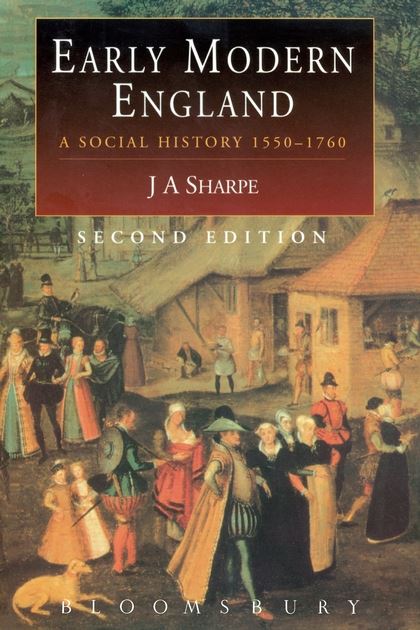
Early Modern England
Read it after The European World to move from a Europe-wide framework into England-focused social history across an overlapping early-modern period. Its trade-off is geographic: it supplies England-focused depth rather than Europe-wide coverage.
- Best for
- You want a social history of England from 1550 to 1760 that combines traditional concerns with newer historical questions.
- Not for
- You need Europe-wide geographic context in the same volume.

Interpretive Europe-wide survey
Europe 1600-1789
The book begins in 1600, leaving the sixteenth century outside its range. Within its stated period, it provides a coherent survey shaped by a sustained interpretation of communities, commercial and financial interests, and monarchical authority.
- Best for
- You want a coherent European survey of 1600–1789 organized around tensions among traditional communities, commercial and financial interests, and monarchical authority.
- Not for
- Your first survey must include the sixteenth century.
Concise English Civil War-era account
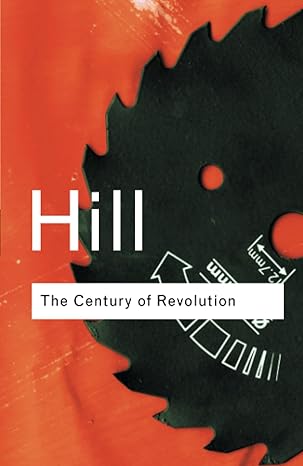
The Century of Revolution
You get a concise, vivid, and provocative depiction of the English Civil War era, with attention to ordinary people as well as rulers. The trade-off is its England-focused treatment rather than Europe-wide context.
- Best for
- You want a concise account of the turbulent English Civil War era that includes ordinary English men and women as well as kings and queens.
- Not for
- You need Europe-wide coverage.
Choose by what matters to you
Geographic scope and depth
Choose The European World 1500–1800 or Europe 1600-1789 for Europe-wide context. Choose Early Modern England or The Century of Revolution when you want England-focused depth.
[4][1][2][3]Chronological coverage
Match the dates to your interests: The European World covers 1500–1800, Europe 1600-1789 covers 1600–1789, and Early Modern England covers 1550–1760. The Century of Revolution treats the turbulent English Civil War era.
[4][1][2][3]Historical approach
The European World surveys social, economic, religious, cultural, and political developments. Europe 1600-1789 organizes its survey around tensions among traditional communities, commercial and financial interests, and monarchical authority. Early Modern England is a social history combining traditional concerns with newer historical questions. The Century of Revolution depicts ordinary English men and women as well as kings and queens.
[4][1][2][3]Learning support
If you want structured material alongside the narrative, The European World includes primary-source extracts, maps, discussion prompts, further reading, a glossary, a chronology, and an index.
[4]Introductory framing
If an explicitly introductory book matters to you, The European World is presented as an introduction to early modern history.
[4]Reading style
Choose The Century of Revolution if you want a concise, vivid, and provocative treatment of the English Civil War era.
[3]What to know before choosing
Useful context
- The European World 1500–1800 and Europe 1600-1789 provide Europe-wide context; Early Modern England and The Century of Revolution provide England-focused depth. [4][1][2][3]
- The European World covers 1500–1800, Europe 1600-1789 covers 1600–1789, and Early Modern England covers 1550–1760. The Century of Revolution treats the turbulent English Civil War era. [4][1][2][3]
- The European World is explicitly an introduction and includes primary-source extracts, maps, discussion prompts, further reading, a glossary, a chronology, and an index. [4]
- A practical two-book sequence is The European World for Europe-wide context, followed by Early Modern England for England-focused social history. [4][2]
Sources
- Europe 1600-1789BookFrontier · checked 2026-08-12
- Early Modern EnglandBookFrontier · checked 2026-08-12
- The Century of RevolutionBookFrontier · checked 2026-08-12
- The European World 1500–1800BookFrontier · checked 2026-08-12