
The Typographic Imagination
Reading and Writing in Japan’s Age of Modern Print Media
Series: Studies of the Weatherhead East Asian Institute, Columbia University
Trace how mass-market print reshaped reading, writing, and thought in modern Japan.
Japan’s Print Revolution
Come here for
- Bookseller trade circulars and language reform debates
- Socialist periodicals, Esperanto primers, and censorship documents
Expect
- Print’s roles as both commodity and medium for public discourse
- Connections among prose, politics, and print capitalism
Where it sits
How strongly BookFrontier reads the book as belonging to each subject.
Nearest books
Matched by our semantic model. Ordered by what its readers also loved. Most of these share its genre: Japanese Literary Criticism.
 The Textual TownsmanThomas Gaubatz62% subject match
 Origins of Modern Japanese LiteratureKojin Karatani58% subject match
 Translingual PracticeLydia H. Liu56% subject match
 BookishnessJessica Pressman55% subject match
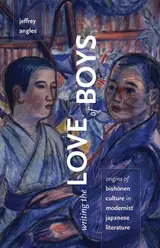 Writing the Love of BoysJeffrey Angles54% subject match
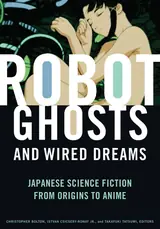 Robot Ghosts and Wired DreamsChristopher Bolton, Istvan Csicsery-Ronay, Jr.53% subject match
For younger readers: Diary of a Tokyo Teen, Tokyo Friends, Peach Boy And Other Japanese Children's Favorite Stories
Start with three books, and this one can be the first.
Members get a new edition every morning: a route out from their books to essays, research and talks, with the reason for each.
Sign upAbout this book
In the early twentieth century, Japan was awash with typographic text and mass-produced print. Over the short span of a few decades, affordable books and magazines became a part of everyday life, and a new generation of writers and thinkers considered how their world could be reconstructed through the circulation of printed language as a mass-market commodity.
Continue reading
The Typographic Imagination explores how this commercial print revolution transformed Japan’s media ecology and traces the possibilities and pitfalls of type as a force for radical social change.
Nathan Shockey examines the emergence of new forms of reading, writing, and thinking in Japan from the last years of the nineteenth century through the first decades of the twentieth. Charting the relationships among prose, politics, and print capitalism, he considers the meanings and functions of print as a staple commodity and as a ubiquitous and material medium for discourse and thought. Drawing on extensive archival research, The Typographic Imagination brings into conversation a wide array of materials, including bookseller trade circulars, language reform debates, works of experimental fiction, photo gazetteers, socialist periodicals, Esperanto primers, declassified censorship documents, and printing press strike bulletins. Combining the rigorous close analysis of Japanese literary studies with transdisciplinary methodologies from media studies, book history, and intellectual history, The Typographic Imagination presents a multivalent vision of the rise of mass print media and the transformations of modern Japanese literature, language, and culture.
Publisher details
Publisher categories
- Japanese Literary Criticism
- 20th-Century Literary Criticism
- Authors
- Nathan Shockey
- Publisher
- Columbia University Press
- Published
- June 27, 2023
- Format
- Print & ebook
- Reading lane
- Japanese Literary Criticism