
Translingual Practice
Literature, National Culture, and Translated Modernity—china, 1900-1937
This study traces how translated words and ideas shaped modern Chinese literature and national culture.
Words Across Cultures
Come here for
- The historical exchange among China, Japan, and the West
- Questions about equivalence, translation, and native agency
Expect
- Attention to May Fourth literary discourse
- Coverage of China from 1900 to 1937
Where it sits
How strongly BookFrontier reads the book as belonging to each subject.
Nearest books
Matched by our semantic model. Ordered by what its readers also loved. Most of these share its genre: Chinese Literary Criticism.
 China in a Polycentric WorldYingjin Zhang70% subject matchAlso shares Comparative Literature
 Transpacific ImaginationsYunte Huang67% subject matchAlso shares Comparative Literature
 Western Literature in China and the Translation of a NationS. Qi66% subject matchAlso shares Comparative Literature
 The Big Red Book of Modern Chinese LiteratureYunte Huang65% subject match
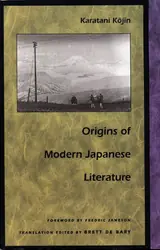 Origins of Modern Japanese LiteratureKojin Karatani65% subject match
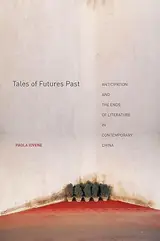 Tales of Futures PastPaola Iovene63% subject match
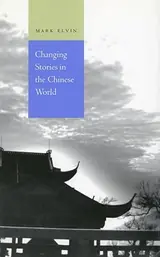 Changing Stories in the Chinese WorldMark Elvin63% subject matchAlso shares Chinese History
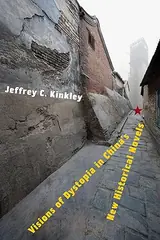 Visions of Dystopia in China’s New Historical NovelsJeffrey C. Kinkley63% subject match
For younger readers: China: Land of Dragons and Emperors, Imperialism, Sweet and Sour
Start with three books, and this one can be the first.
Members get a new edition every morning: a route out from their books to essays, research and talks, with the reason for each.
Sign upAbout this book
Are languages incommensurate? If so, how do people establish and maintain hypothetical equivalences between words and their meanings? What does it mean to translate one culture into the language of another on the basis of commonly conceived equivalences?
This study—bridging contemporary theory, Chinese history, comparative literature, and culture studies—analyzes the historical interactions among China, Japan, and the West in terms of "translingual practice."
Continue reading
By this term, the author refers to the process by which new words, meanings, discourses, and modes of representation arose, circulated, and acquired legitimacy in early modern China as it contacted/collided with European/Japanese languages and literatures. In reexamining the rise of modern Chinese literature in this context, the book asks three central questions: How did "modernity" and "the West" become legitimized in May fourth literary discourse? What happened to native agency in this complex process of legitimation? How did the Chinese national culture imagine and interpret its own moment of unfolding?
Publisher details
Publisher categories
- Chinese Literary Criticism
- Authors
- Lydia H. Liu
- Publisher
- Stanford University Press
- Published
- January 1, 1995
- Format
- Print & ebook
- Reading lane
- Chinese Literary Criticism