
The Swerve
How the World Became Modern
A readable sweep that turns a familiar historical moment into a fresh way of seeing modernity.
Fresh Perspective
Come here for
- accessible, layered historical thinking
- book-club friendly provocation
Expect
- insight over exhaustive detail
- easy entry, then more underneath
Where it sits
How strongly BookFrontier reads the book as belonging to each subject.
Nearest books
Matched by our semantic model. Ordered by what its readers also loved. Most of these share its genre: Renaissance History.
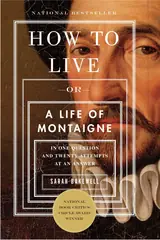 How to LiveSarah Bakewell53% subject match
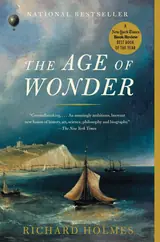 The Age of WonderRichard Holmes55% subject matchAlso shares History of Science
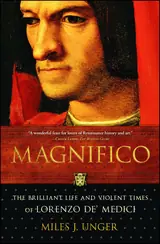 MagnificoMiles J. Unger55% subject match
 The Cheese and the WormsCarlo Ginzburg57% subject match
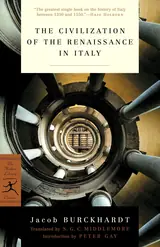 The Civilization of the Renaissance in ItalyJacob Burckhardt56% subject match
For younger readers: Galileo and the Magic Numbers, What Was the Renaissance?, The Renaissance Thinkers
Start with three books, and this one can be the first.
Members get a new edition every morning: a route out from their books to essays, research and talks, with the reason for each.
Sign upAbout this book
In the winter of 1417, a short, genial, cannily alert man in his late thirties plucked a very old manuscript off a dusty shelf in a remote monastery, saw with excitement what he had discovered, and ordered that it be copied. He was Poggio Bracciolini, the greatest book hunter of the Renaissance. His discovery, Lucretius’ ancient poem On the Nature of Things, had been almost entirely lost to history for more than a thousand years.
Continue reading
It was a beautiful poem of the most dangerous ideas: that the universe functions without the aid of gods, that religious fear is damaging to human life, that pleasure and virtue are not opposites but intertwined, and that matter is made up of very small material particles in eternal motion, randomly colliding and swerving in new directions. Its return to circulation changed the course of history. The poem’s vision would shape the thought of Galileo and Freud, Darwin and Einstein, and—in the hands of Thomas Jefferson—leave its trace on the Declaration of Independence.
From the gardens of the ancient philosophers to the dark chambers of monastic scriptoria during the Middle Ages to the cynical, competitive court of a corrupt and dangerous pope, Greenblatt brings Poggio’s search and discovery to life in a way that deepens our understanding of the world we live in now.
“An intellectually invigorating, nonfiction version of a Dan Brown–like mystery-in-the-archives thriller.” —Boston Globe
Publisher details
Publisher categories
- Renaissance History
- Authors
- Stephen Greenblatt
- Publisher
- WW Norton
- Published
- September 4, 2012
- Format
- Print & ebook
- Reading lane
- Renaissance History