
The Cheese and the Worms
The Cosmos of a Sixteenth-century Miller
A miller’s trial opens onto the lively friction between books, oral culture, and authority.
- Themes
- Sixteenth-century popular culture, Religious and social conflict, Oral and written culture
Ideas Under Pressure
Come here for
- A close view of popular culture through one unusual reader
- The strange, memorable cosmos Menocchio made from what he read
Expect
- Trial records read as a window onto social and religious conflict
- A layered study of how written and oral cultures meet
Where it sits
How strongly BookFrontier reads the book as belonging to each subject.
Nearest books
Matched by our semantic model. Ordered by what its readers also loved.
 The SwerveStephen Greenblatt57% subject matchShares Renaissance History
 QLuther Blissett51% subject match
 Stories from the City of GodPier Paolo Pasolini, Walter Siti50% subject match
 A Short History of the Middle Ages, Fifth EditionBarbara H. Rosenwein45% subject match
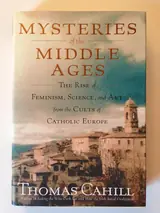 Mysteries of the Middle AgesThomas Cahill51% subject match
For younger readers: The Phantom Tollbooth, Leonardo's Shadow, Galileo and the Magic Numbers
Start with three books, and this one can be the first.
Members get a new edition every morning: a route out from their books to essays, research and talks, with the reason for each.
Sign upAbout this book
The now-classic tale of a sixteenth-century miller facing the Roman Inquisition.
The Cheese and the Worms is an incisive study of popular culture in the sixteenth century as seen through the eyes of one man, the miller known as Menocchio, who was accused of heresy during the Inquisition and sentenced to death. Carlo Ginzburg uses the trial records to illustrate the religious and social conflicts of the society Menocchio lived in.
Continue reading
For a common miller, Menocchio was surprisingly literate. In his trial testimony he made references to more than a dozen books, including the Bible, Boccaccio's Decameron, Mandeville's Travels, and a "mysterious" book that may have been the Koran. And what he read he recast in terms familiar to him, as in his own version of the creation: "All was chaos, that is earth, air, water, and fire were mixed together; and of that bulk a mass formed—just as cheese is made out of milk—and worms appeared in it, and these were the angels."
Ginzburg’s influential book has been widely regarded as an early example of the analytic, case-oriented approach known as microhistory. In a thoughtful new preface, Ginzburg offers his own corollary to Menocchio’s story as he considers the discrepancy between the intentions of the writer and what gets written. The Italian miller’s story and Ginzburg’s work continue to resonate with modern readers because they focus on how oral and written culture are inextricably linked. Menocchio’s 500-year-old challenge to authority remains evocative and vital today.
Publisher details
Publisher categories
- Religious Lives
- Historiography
- Renaissance History
- Authors
- Carlo Ginzburg
- Publisher
- Johns Hopkins University Press
- Published
- October 15, 2013
- Format
- Print & ebook
- Reading lane
- Religious Lives