
The Development of Greek and the New Testament
Morphology, Syntax, Phonology, and Textual Transmission
Caragounis examines Greek’s development and how later forms clarify New Testament language and transmission.
Greek Through Time
Come here for
- How later Greek illuminates New Testament morphology and syntax
- The role of pronunciation in communication and textual transmission
Expect
- Morphological and syntactical analysis
- Discussion of Greek pronunciation and the language’s historical continuity
Where it sits
How strongly BookFrontier reads the book as belonging to each subject.
Nearest books
Matched by our semantic model. Ordered by what its readers also loved. Most of these share its genre: Biblical Language Study.
 The Morphology of Biblical GreekWilliam D. Mounce64% subject match
 Read It in GreekLouis Wm Countryman63% subject match
 Advances in the Study of GreekConstantine R. Campbell61% subject match
 Basics of Biblical Greek GrammarWilliam D. Mounce61% subject match
 The New Linguistic and Exegetical Key to the Greek New TestamentCleon L. Rogers, Jr., Cleon L. Rogers III60% subject match
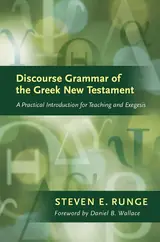 Discourse Grammar of the Greek New TestamentSteven E. Runge59% subject matchAlso shares New Testament Interpretation
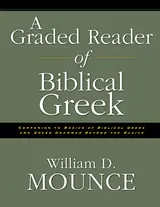 A Graded Reader of Biblical GreekWilliam D. Mounce58% subject match
 English Grammar to Ace New Testament GreekSamuel Lamerson58% subject match
Start with three books, and this one can be the first.
Members get a new edition every morning: a route out from their books to essays, research and talks, with the reason for each.
Sign upAbout this book
The introduction of the Erasmian pronunciation in 1528 had two dire consequences: Greek was divided into ancient and modern - a division that led to the neglect of the later periods of the language, and the pronunciation applied made impossible the detection of many communicatory aspects and obscured many text-critical problems. The author argues for the unity of the Greek language from Mycenaean times to the present.
Continue reading
The New Testament appears during the time of transition (335 B.C. - A.D. 565) from ancient to Modern Greek. Morphological and syntactical analysis shows that at many important points the New Testament can be elucidated by later Greek, up to Neohellenic. Contents include: Introduction, The unity and evolution of the Greek language, The relevance of later Greek for the Exegesis of the New Testament, The transition from Attic to Neohellenic in Morphology and the New Testament, Syntactical Developments, The significance of the developments for the exegesis of the New Testament, The historical Greek pronunciation and the dichotomy of the language, The acoustic dimension in communication, The impact of the historical Greek pronunciation on the transmission of the New Testament text, Summary and Conclusions. Read more
Publisher details
Publisher categories
- New Testament Interpretation
- Biblical Reference
- Biblical Language Study
- Authors
- Caragounis, Chrys C.
- Publisher
- Baker Publishing Group
- Published
- January 1, 2007
- Format
- Print & ebook
- Reading lane
- New Testament Interpretation