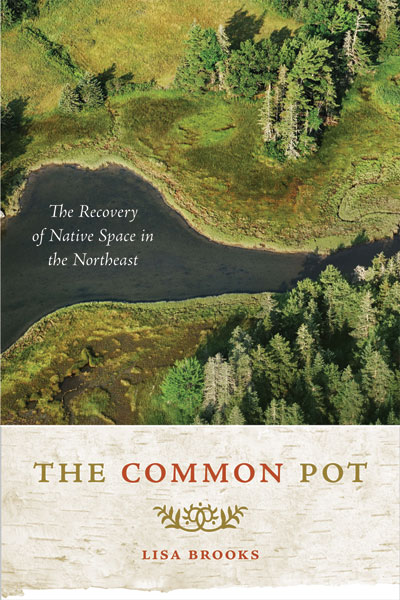
Lisa Brooks traces how Native leaders used writing to reclaim rights and land across the Northeast.
Writing and Native Space
Come here for
- Native leaders’ petitions, political tracts, speeches, councils, and histories
- The Common Pot as land, community, and shared sustenance
Expect
- Algonquian and Iroquoian texts reconsidered
- A reframing of Native space before and after colonization
Where it sits
How strongly BookFrontier reads the book as belonging to each subject.
Nearest books
Matched by our semantic model. Ordered by what its readers also loved. Most of these share its genre: Native American Studies.
 An Indigenous Peoples' History of the United StatesRoxanne Dunbar-Ortiz52% subject matchAlso shares Native American History
 Wisdom Sits in PlacesKeith H. Basso49% subject match
 Braiding SweetgrassRobin Wall Kimmerer48% subject match
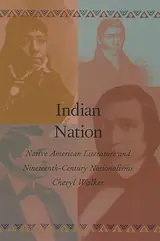 Indian NationCheryl Walker66% subject matchAlso shares Indigenous Lit Crit and Native American History
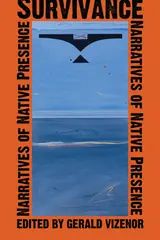 SurvivanceGerald Vizenor65% subject matchAlso shares Indigenous Lit Crit
 A New Continent of LibertyGeoff Hamilton63% subject matchAlso shares Indigenous Lit Crit
For younger readers: An Indigenous Peoples' History of the United States for Young People, Explore Native American Cultures!, Black Indians
Start with three books, and this one can be the first.
Members get a new edition every morning: a route out from their books to essays, research and talks, with the reason for each.
Sign upAbout this book
Illuminates the significance of writing to colonial-era Native American resistance
Literary critics frequently portray early Native American writers either as individuals caught between two worlds or as subjects who, even as they defied the colonial world, struggled to exist within it.
Continue reading
In striking counterpoint to these analyses, Lisa Brooks demonstrates the ways in which Native leaders—including Samson Occom, Joseph Brant, Hendrick Aupaumut, and William Apess—adopted writing as a tool to reclaim rights and land in the Native networks of what is now the northeastern United States.
“The Common Pot,” a metaphor that appears in Native writings during the eighteenth and nineteenth centuries, embodies land, community, and the shared space of sustenance among relations. Far from being corrupted by forms of writing introduced by European colonizers, Brooks contends, Native people frequently rejected the roles intended for them by their missionary teachers and used the skills they acquired to compose petitions, political tracts, and speeches; to record community councils and histories; and most important, to imagine collectively the routes through which the Common Pot could survive.
Reframing the historical landscape of the region, Brooks constructs a provocative new picture of Native space before and after colonization. By recovering and reexamining Algonquian and Iroquoian texts, she shows that writing was not a foreign technology but rather a crucial weapon in the Native Americans’ arsenal as they resisted—and today continue to oppose—colonial domination.
Publisher details
Publisher categories
- Indigenous Lit Crit
- Native American Studies
- Authors
- Lisa Brooks
- Publisher
- University of Minnesota Press
- Published
- October 2, 2008
- Format
- Print & ebook
- Reading lane
- Indigenous Lit Crit