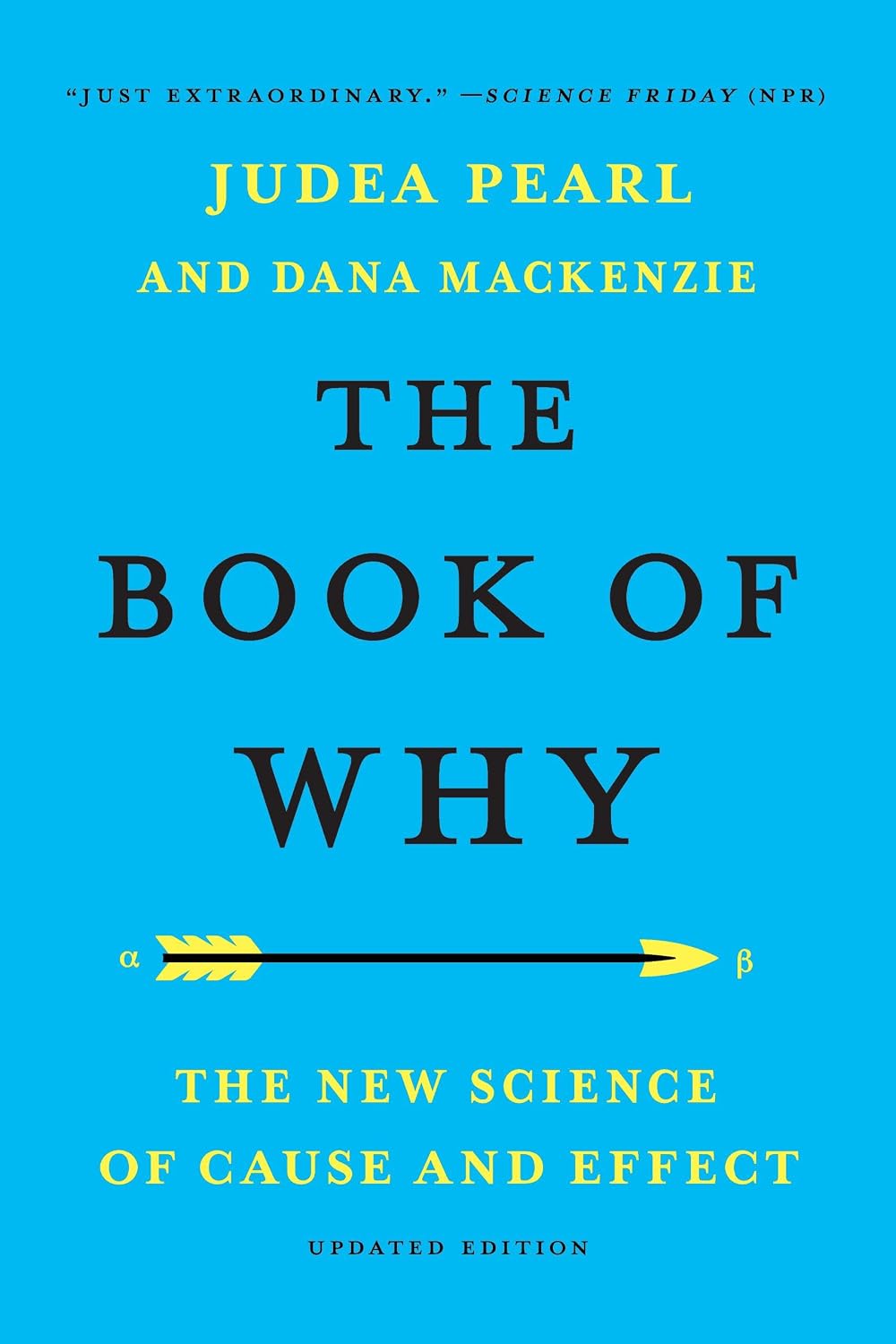
The Book of Why
The New Science of Cause and Effect
Explore how causal reasoning connects data to questions about what changes—and what might have been.
- Themes
- Cause and effect, Causal reasoning in AI, Counterfactual questions
Beyond Correlation
Come here for
- A clear-eyed look at why correlation alone cannot explain cause and effect
- Counterfactual questions and the role of causality in AI
Expect
- An introduction to cause and effect for lay readers and scientists
- Tools for thinking about the observable world and alternatives
Where it sits
How strongly BookFrontier reads the book as belonging to each subject.
Nearest books
Matched by our semantic model. Ordered by what its readers also loved.
 Something Deeply Hidden: Quantum Worlds and the Emergence of SpacetimeSean Carroll48% subject matchShares Science & Society
 The Beginning of InfinityDavid Deutsch57% subject matchShares Science & Society
 A Brief History of IntelligenceMax S. Bennett54% subject matchShares AI & Machine Learning
 More Everything ForeverAdam Becker50% subject matchShares AI & Machine Learning
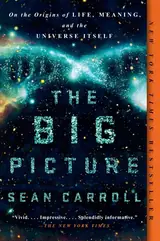 The Big PictureSean Carroll51% subject matchShares Science & Society
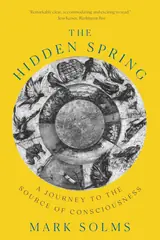 The Hidden SpringMark Solms48% subject match
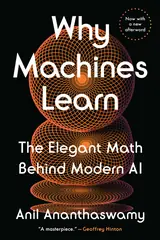 Why Machines LearnAnil Ananthaswamy55% subject matchShares AI & Machine Learning and Probability & Statistics
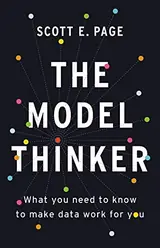 The Model ThinkerScott E. Page47% subject matchShares Probability & Statistics
For younger readers: Future Tense, Basher Science Mini: Artificial Intelligence, What is Artificial Intelligence?
Start with three books, and this one can be the first.
Members get a new edition every morning: a route out from their books to essays, research and talks, with the reason for each.
Sign upAbout this book
An argument for how understanding causality has revolutionized science and will revolutionize artificial intelligence.
"Illuminating." —New York Times
"Extraordinary." —Science Friday
“Correlation is not causation.” This mantra, chanted by scientists for more than a century, once led to a virtual prohibition on causal talk. Today, with causal analysis taking center stage in AI and other applications, the old taboos are a thing of the past.
Continue reading
The causal revolution, instigated by Judea Pearl and others, established causality on a firm scientific basis. Pearl showed how intuitive models can interface with data to help answer causal questions, such as whether a drug will cure an illness or, counterfactually, whether an illness would have persisted absent the drug. These models provide a blueprint for causal AI to learn and take responsibility for its mistakes.
Updated with a new preface and summary of recent advances, The Book of Why outlines the basics of cause and effect for lay readers and scientists alike, providing tools to explore the observable world and worlds that might have been.
Publisher details
Publisher categories
- Business Statistics
- AI & Machine Learning
- Computer Science
- Probability & Statistics
Show all 5 publisher categories
- Applied Science
- Authors
- Judea Pearl, Dana Mackenzie
- Publisher
- Basic Books
- Published
- October 20, 2026
- Format
- Print & ebook
- Reading lane
- Business Statistics