
Why Machines Learn
The Elegant Math Behind Modern AI
- Themes
- machine learning, mathematics, artificial intelligence
- Pacing
- Reflective
Who it’s for
- Readers interested in the mathematics behind AI and machine learning
- Adults seeking a narrative explanation of complex scientific concepts
Where it sits
How strongly BookFrontier reads the book as belonging to each subject.
Nearest books
Matched by our semantic model. Ordered by what its readers also loved. Most of these share its genre: AI & Machine Learning.
 Everything Is PredictableTom Chivers54% subject match
 The Thinking MachineStephen Witt56% subject match
 Deep Learning with Python, Third EditionFrancois Chollet, Matthew Watson57% subject matchAlso shares Machine Learning
 CodeCharles Petzold52% subject match
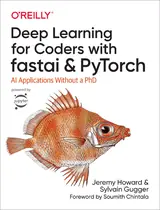 Deep Learning for Coders with fastai and PyTorchJeremy Howard, Sylvain Gugger56% subject matchAlso shares Machine Learning
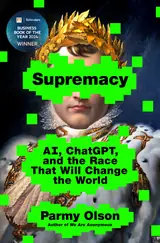 SupremacyParmy Olson62% subject match
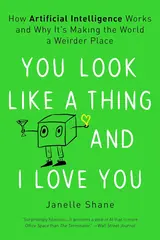 You Look Like a Thing and I Love YouJanelle Shane63% subject matchAlso shares Machine Learning
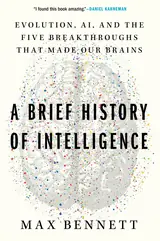 A Brief History of IntelligenceMax S. Bennett64% subject match
For younger readers: Future Tense, Basher Science Mini: Artificial Intelligence, STEM Starters for Kids Artificial Intelligence Activity Book
Start with three books, and this one can be the first.
Members get a new edition every morning: a route out from their books to essays, research and talks, with the reason for each.
Sign upAbout this book
A rich, narrative explanation of the mathematics that has brought us machine learning and the ongoing explosion of artificial intelligence
Machine learning systems are making life-altering decisions for us: approving mortgage loans, determining whether a tumor is cancerous, or deciding if someone gets bail. They now influence developments and discoveries in chemistry, biology, and physics—the study of genomes, extrasolar planets, even the intricacies of quantum systems.
Continue reading
And all this before large language models such as ChatGPT came on the scene.
We are living through a revolution in machine learning-powered AI that shows no signs of slowing down. This technology is based on relatively simple mathematical ideas, some of which go back centuries, including linear algebra and calculus, the stuff of seventeenth- and eighteenth-century mathematics. It took the birth and advancement of computer science and the kindling of 1990s computer chips designed for video games to ignite the explosion of AI that we see today. In this enlightening book, Anil Ananthaswamy explains the fundamental math behind machine learning, while suggesting intriguing links between artificial and natural intelligence. Might the same math underpin them both?
As Ananthaswamy resonantly concludes, to make safe and effective use of artificial intelligence, we need to understand its profound capabilities and limitations, the clues to which lie in the math that makes machine learning possible.
In a brand-new afterword exclusively in the paperback edition, Ananthaswamy dives into the Transformer architecture that makes large language models like ChatGPT possible and points to groundbreaking future directions enabled by the technology.
Publisher details
Publisher categories
- Computer Science
- Computer Vision
- Discrete Mathematics
- Authors
- Anil Ananthaswamy
- Publisher
- Penguin Publishing Group
- Published
- August 26, 2025
- Format
- Print & ebook
- Reading lane
- Computer Science