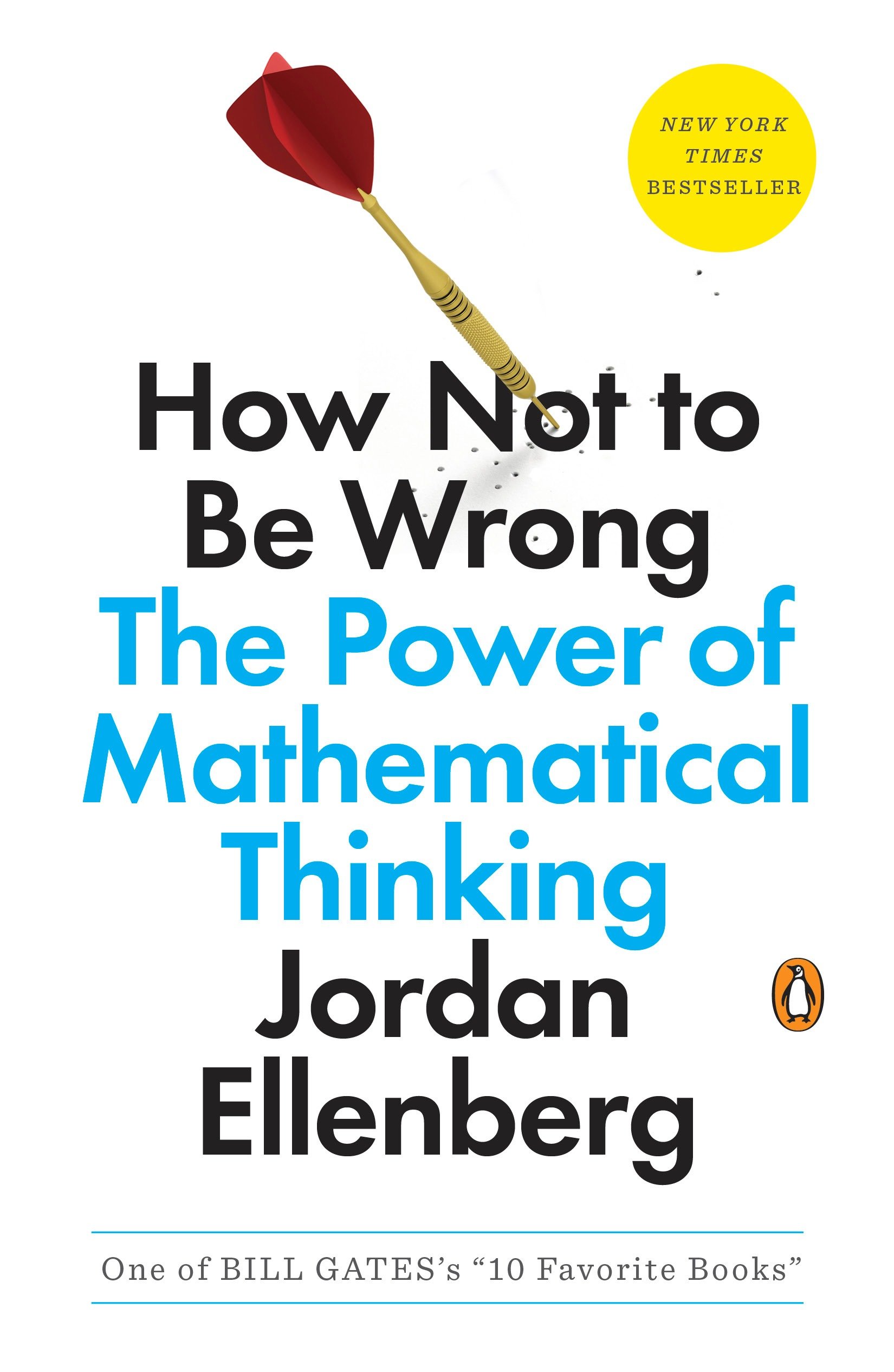
How Not to Be Wrong
The Power of Mathematical Thinking
A lively, accessible case for finding mathematical structure in the questions ordinary life throws up.
- Themes
- Mathematics in everyday life, Analyzing information mathematically, Accessible mathematical thinking
Math in Plain Sight
Come here for
- Everyday puzzles viewed through probability and mathematical reasoning.
- Connections spanning baseball, public opinion, psychology, and more.
Expect
- Clear explanations without mathematical jargon.
- A wide-ranging journey from practical questions to big ideas.
Where it sits
How strongly BookFrontier reads the book as belonging to each subject.
Nearest books
Matched by our semantic model. Ordered by what its readers also loved.
 Humble PiMatt Parker74% subject matchShares Mathematics Essays
 The Signal and the NoiseNate Silver57% subject matchShares Probability & Statistics
 The Joy Of XSteven Strogatz70% subject matchShares Mathematics Essays
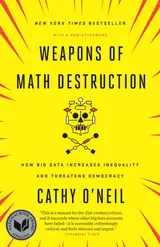 Weapons of Math DestructionCathy O'Neil61% subject match
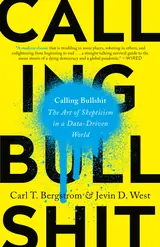 Calling BullshitCarl T. Bergstrom, Jevin D. West58% subject matchShares Statistics for Social Science
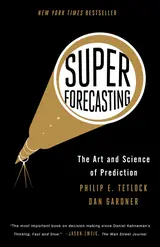 SuperforecastingPhilip E. Tetlock, Dan Gardner58% subject match
 The Misbehavior of MarketsMandelbrot, Benoit B., Hudson, Richard L.60% subject matchShares Probability & Statistics
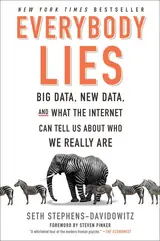 Everybody LiesSeth Stephens-Davidowitz60% subject match
For younger readers: Kiss My Math, Basher Science: Algebra and Geometry, Everyday STEM Maths - Maths In Action
Start with three books, and this one can be the first.
Members get a new edition every morning: a route out from their books to essays, research and talks, with the reason for each.
Sign upAbout this book
“Witty, compelling, and just plain fun to read . . ." —Evelyn Lamb, Scientific American
The Freakonomics of math—a math-world superstar unveils the hidden beauty and logic of the world and puts its power in our hands
The math we learn in school can seem like a dull set of rules, laid down by the ancients and not to be questioned.
Continue reading
In How Not to Be Wrong, Jordan Ellenberg shows us how terribly limiting this view is: Math isn’t confined to abstract incidents that never occur in real life, but rather touches everything we do—the whole world is shot through with it.
Math allows us to see the hidden structures underneath the messy and chaotic surface of our world. It’s a science of not being wrong, hammered out by centuries of hard work and argument. Armed with the tools of mathematics, we can see through to the true meaning of information we take for granted: How early should you get to the airport? What does “public opinion” really represent? Why do tall parents have shorter children? Who really won Florida in 2000? And how likely are you, really, to develop cancer?
How Not to Be Wrong presents the surprising revelations behind all of these questions and many more, using the mathematician’s method of analyzing life and exposing the hard-won insights of the academic community to the layman—minus the jargon. Ellenberg chases mathematical threads through a vast range of time and space, from the everyday to the cosmic, encountering, among other things, baseball, Reaganomics, daring lottery schemes, Voltaire, the replicability crisis in psychology, Italian Renaissance painting, artificial languages, the development of non-Euclidean geometry, the coming obesity apocalypse, Antonin Scalia’s views on crime and punishment, the psychology of slime molds, what Facebook can and can’t figure out about you, and the existence of God.
Ellenberg pulls from history as well as from the latest theoretical developments to provide those not trained in math with the knowledge they need. Math, as Ellenberg says, is “an atomic-powered prosthesis that you attach to your common sense, vastly multiplying its reach and strength.” With the tools of mathematics in hand, you can understand the world in a deeper, more meaningful way. How Not to Be Wrong will show you how.
Publisher details
Publisher categories
- Applied Math
- History & Philosophy of Math
- Logic
- Authors
- Jordan Ellenberg
- Publisher
- Penguin Publishing Group
- Published
- May 26, 2015
- Format
- Print & ebook
- Reading lane
- Applied Math