
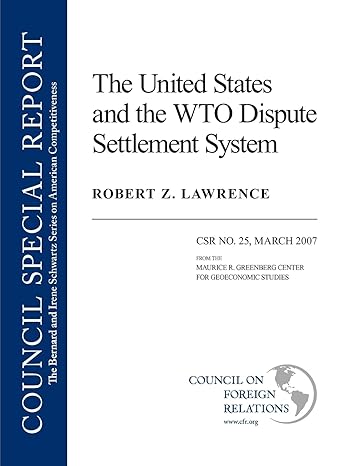
Book
The the United States and the WTO Dispute Settlement System
CSR No. 25, March 2007
Professor Robert Z Lawrence
Council on Foreign Relations Press · Print & ebook · June 1, 2007
Reading lane: Trade & Tariffs
The Doha negotiations have stalled since last summer, and, as the November elections in the United States highlighted, American advocates of economic nationalism are growing in strength.
Disclosure: Some outbound links are affiliate links. If you buy through them, we may earn a commission. It doesn't affect which books we include. Learn more in our disclosure policy.
At a Glance
Who It's For
Book Details
- Authors
- Professor Robert Z Lawrence
- Publisher
- Council on Foreign Relations Press
- Published
- June 1, 2007
- Format
- Print & ebook
- Theme
- Trade & Tariffs · International Economics
- Reading lane
- Trade & Tariffs
Affinity
Publisher Categories
Trade & Tariffs
About This Book
The Doha negotiations have stalled since last summer, and, as the November elections in the United States highlighted, American advocates of economic nationalism are growing in strength. Nevertheless, Robert Lawrence makes a case for the effectiveness of the World Trade Organization (WTO), particularly its dispute settlement system, and the benefits that would accrue to the United States and others from improving its effectiveness. These benefits include expanding world trad...
Read full description
Similar Books
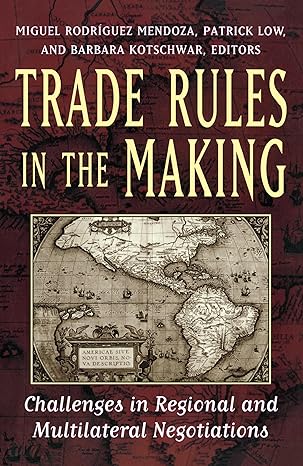
Trade Rules in the Making
Miguel Rodriguez Mendoza · Brookings Institution Press
Shared affinity
Affinity match is still building for this title.

World Trade and Investment Law Reimagined
Alvaro Santos, Chantal Thomas · Anthem Press
Shared affinity
Affinity match is still building for this title.

World Trade and Investment Law Reimagined
Alvaro Santos, Chantal Thomas · Anthem Press
Shared affinity
Affinity match is still building for this title.
Negotiating the World Economy
John S. Odell · Cornell University Press
Shared affinity
Affinity match is still building for this title.
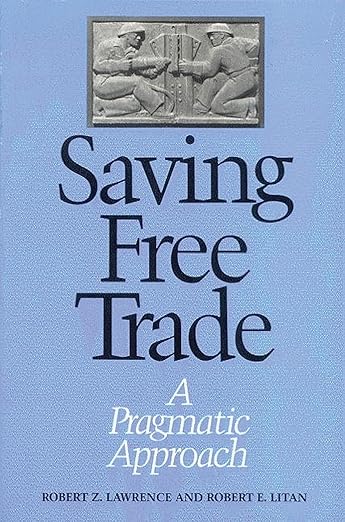
Saving Free Trade
Robert Lawrence, Robert E. Litan · Brookings Institution Press
Shared affinity
Affinity match is still building for this title.

No Trade Is Free
Robert Lighthizer · HarperCollins
Shared affinity
Affinity match is still building for this title.

Trade Policy Disaster
Douglas A. Irwin · MIT Press
Shared affinity
Affinity match is still building for this title.
The Economic Consequences of Mr Trump
Philip Coggan · Profile Books
Shared affinity
Affinity match is still building for this title.