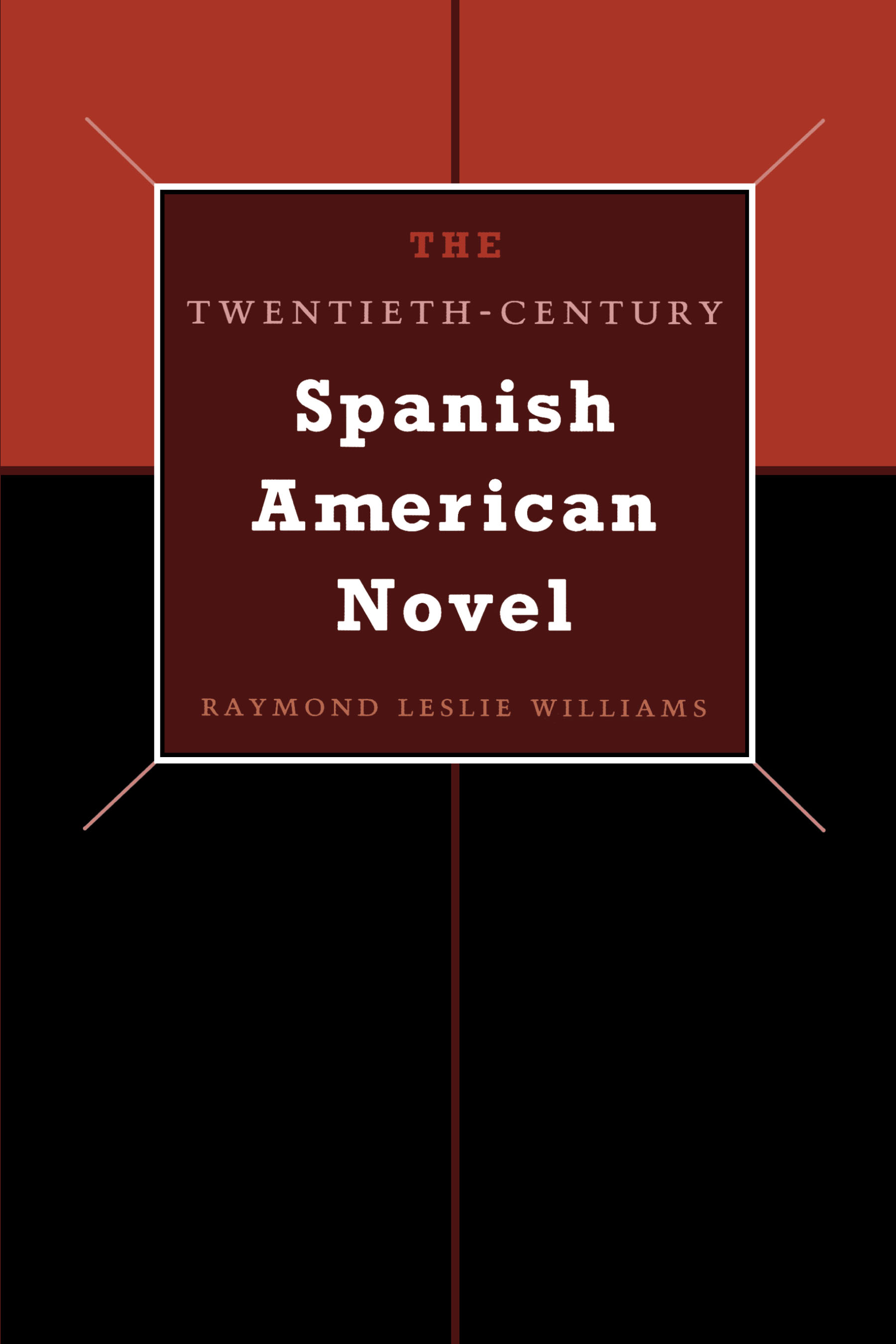
The Twentieth-century Spanish American Novel
University of Texas Press · Hardcover · December 1, 2004
A Choice Magazine Outstanding Academic Book Spanish American novels of the Boom period (1962-1967) attracted a world readership to Latin American literature, but Latin American writers had already been engaging in the modernist experiments of their North American and European counterparts since the turn of the twentieth century.
We earn from qualifying purchases.
- Who it’s for
- A century-wide study traces how Spanish American novels defined modernity across five distinct periods.
- Genres
- Caribbean & Latin American Criticism, 20th-Century Literary Criticism, Hispanic American Lit Crit
- Published
- University of Texas Press, December 1, 2004
Nearest books
Matched by what the books are about, then ordered by what their readers also loved. Most of these share its genres: Caribbean & Latin American Criticism and Hispanic American Lit Crit.
 Modernismo, Modernity and the Development of Spanish American LiteratureCathy L. Jrade76% match
 Twentieth-century Spanish American FictionNaomi Lindstrom73% matchAlso shares 20th-Century Literary Criticism
 Incomparable EmpiresGayle Rogers73% matchAlso shares 20th-Century Literary Criticism
 Gender and Nation in the Spanish Modernist NovelRoberta Johnson72% match
 A Turbulent Decade RememberedDiana Sorensen70% matchAlso shares 20th-Century Literary Criticism
 Latin American FictionPhillip Swanson70% matchAlso shares 20th-Century Literary Criticism
 Early Spanish American NarrativeNaomi Lindstrom68% match
 Erotic MysticismNancy LaGreca62% match
For younger readers: Emerald Lizard, Living Beyond Borders, De Colores and Other Latin American Folksongs for Children
Start with three books, and this one can be the first.
Members get a new edition every morning: a route out from their books to essays, research and talks, with the reason for each.
Join the waitlistAbout this book
A Choice Magazine Outstanding Academic Book Spanish American novels of the Boom period (1962-1967) attracted a world readership to Latin American literature, but Latin American writers had already been engaging in the modernist experiments of their North American and European counterparts since the turn of the twentieth century.
Continue reading
Indeed, the desire to be "modern" is a constant preoccupation in twentieth-century Spanish American literature and thus a very useful lens through which to view the century's novels. In this pathfinding study, Raymond L. Williams offers the first complete analytical and critical overview of the Spanish American novel throughout the entire twentieth century. Using the desire to be modern as his organizing principle, he divides the century's novels into five periods and discusses the differing forms that "the modern" took in each era. For each period, Williams begins with a broad overview of many novels, literary contexts, and some cultural debates, followed by new readings of both canonical and significant non-canonical novels. A special feature of this book is its emphasis on women writers and other previously ignored and/or marginalized authors, including experimental and gay writers. Williams also clarifies the legacy of the Boom, the Postboom, and the Postmodern as he introduces new writers and new novelistic trends of the 1990s.
Spanish American Modernity
A century-wide study traces how Spanish American novels defined modernity across five distinct periods.
Come here for
- Five periods organized around the changing desire to be modern
- New readings of canonical and marginalized writers
Expect
- Broad overviews of novels, literary contexts, and cultural debates
- Attention to women, experimental, gay, and other marginalized writers
Where it sits
| 20th-Century Literary Criticism | 65% |
|---|---|
| Hispanic American Lit Crit | 58% |
| Caribbean & Latin American Criticism | 52% |
Percentages are BookFrontier’s reading of the book.
Publisher categories
- Caribbean & Latin American Criticism
- Authors
- Raymond Leslie Williams, Raymond L. Williams
- Publisher
- University of Texas Press
- Published
- December 1, 2004
- Format
- Hardcover
- Reading lane
- Caribbean & Latin American Criticism