
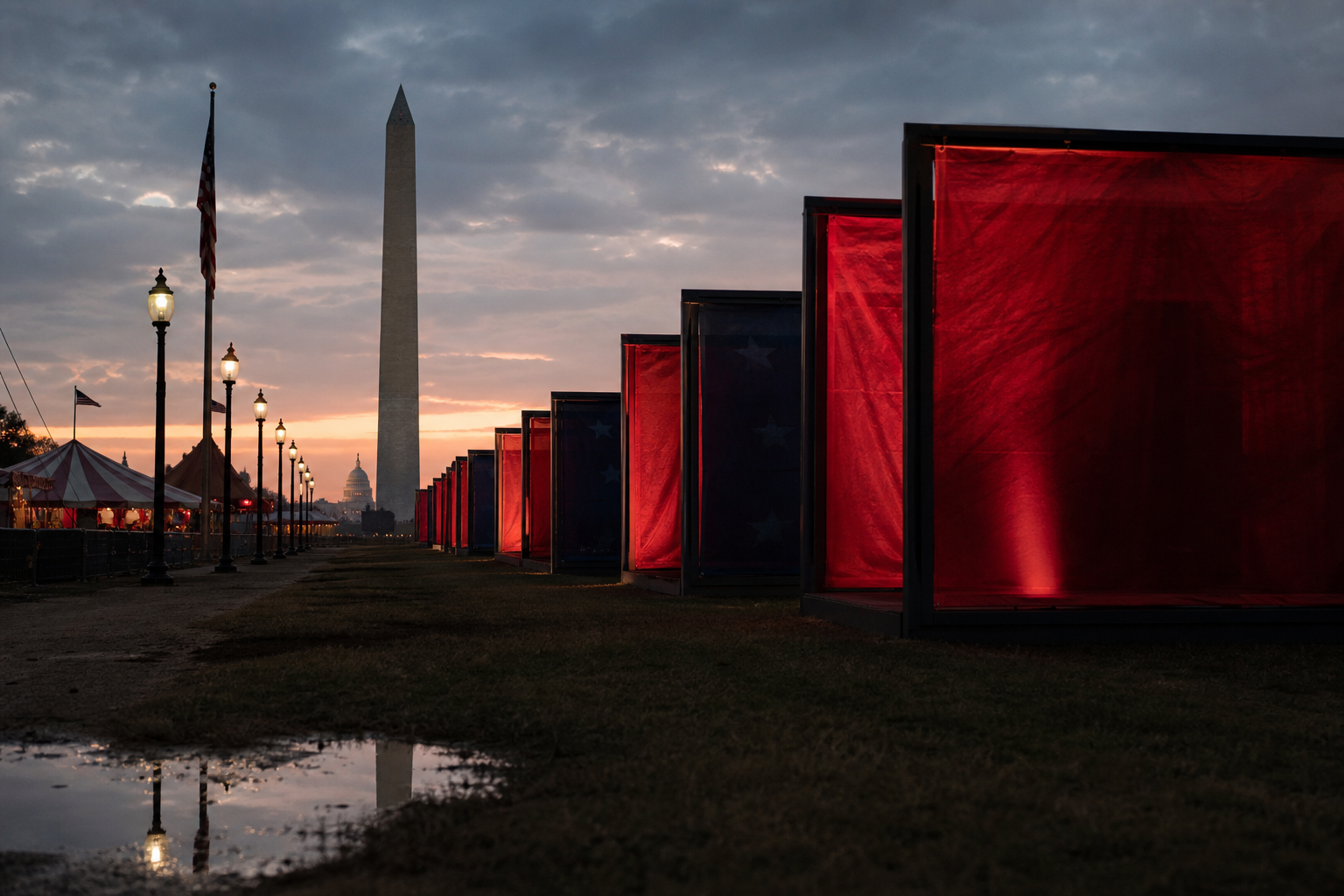
A tribute to the states, staged on the National Mall, tinged with extra red. That was the kickoff to the Great American State Fair, where exhibits celebrating the nation shared the grass with conservative themes, and the whole event arrived pre-dressed in a particular reading of the American story. Pageantry always tells you what it wants you to remember, and stays quiet about what it wants you to forget. When a spectacle wraps national memory in partisan colors, the useful question is whether the history behind the bunting holds up. Most of us can name the trend by now. Far fewer could say, offhand, where the celebrated version of the past drifts from the documented one. That gap is where a good history book earns its keep.
React to a spectacle like this and you argue on its terms. You get the framing, the flags, the curated selection of what counts as the real America, and you end up quarreling inside someone else's diorama. Say the fair leans on a story about immigration, or the New Deal, or the civil rights movement. Pushing back takes more than instinct. You need to know what the archives actually show, and where popular claims quietly slide away from the record. Headline coverage will not hand you that. It tells you the fair happened and describes the color scheme, but it skips the citations you would need to weigh the claims baked into the exhibits. For that you want historians who have already done the checking and are willing to show their work.
"Myth America," edited by Kevin M. Kruse and Julian E. Zelizer, sets itself that job. The book gathers a large group of historians to take on the most durable myths about the American past, the ones that circulate until they feel like plain common sense. Each essay picks a flashpoint and measures the popular version against archival research and mainstream scholarship. The range is wide. Contributors reassess the New Deal and the Great Society, the recurring panics around immigration, feminism, race, Reconstruction, and the long argument over who gets to define national identity. The through-line is method.
These are corrections with the receipts attached, aimed at claims that have hardened into partisan folklore. The pairing with a red-tinged state fair is almost too tidy. An exhibit celebrating the nation makes a claim about the past every time it decides what to feature and what to leave in the storage crate. "Myth America" is built to test exactly those claims, tracing how conservative narratives have reshaped public memory and then reappeared in the symbols of present politics. If the fair implies a clean story about immigration or race, the relevant essay will tell you what the documents say instead.
An honest objection is worth naming. A book assembled to dismantle conservative myths carries its own politics, and it applies far less pressure to comfortable liberal stories than it does to its chosen targets. The collection wears that target openly and defends its claims with sourcing you can check, which is a real strength, but do not mistake it for even-handedness. The value is not that the historians have no position. It is that they show the evidence and let you follow it. What you get, practically, is footing. When the next display insists that one version of America is the authentic one, you can ask what the record actually supports and answer with specifics instead of a general suspicion that something is off.
That is a quieter power than a viral rebuttal, and it wears better. The essays are short and readable, which matters if you want to finish the argument rather than admire it on a shelf.
Spectacles like the Great American State Fair will not get rarer in 2026, and each one makes its own quiet argument about what the country used to be. You can meet those arguments with irritation, which fades by morning, or with the documented past, which does not. "Myth America" is an unfussy way to stock up on the second. Read it not to have the last word at the fair, but to know which claims are worth the argument in the first place. The bunting will keep coming, and it helps to know what is under it.