
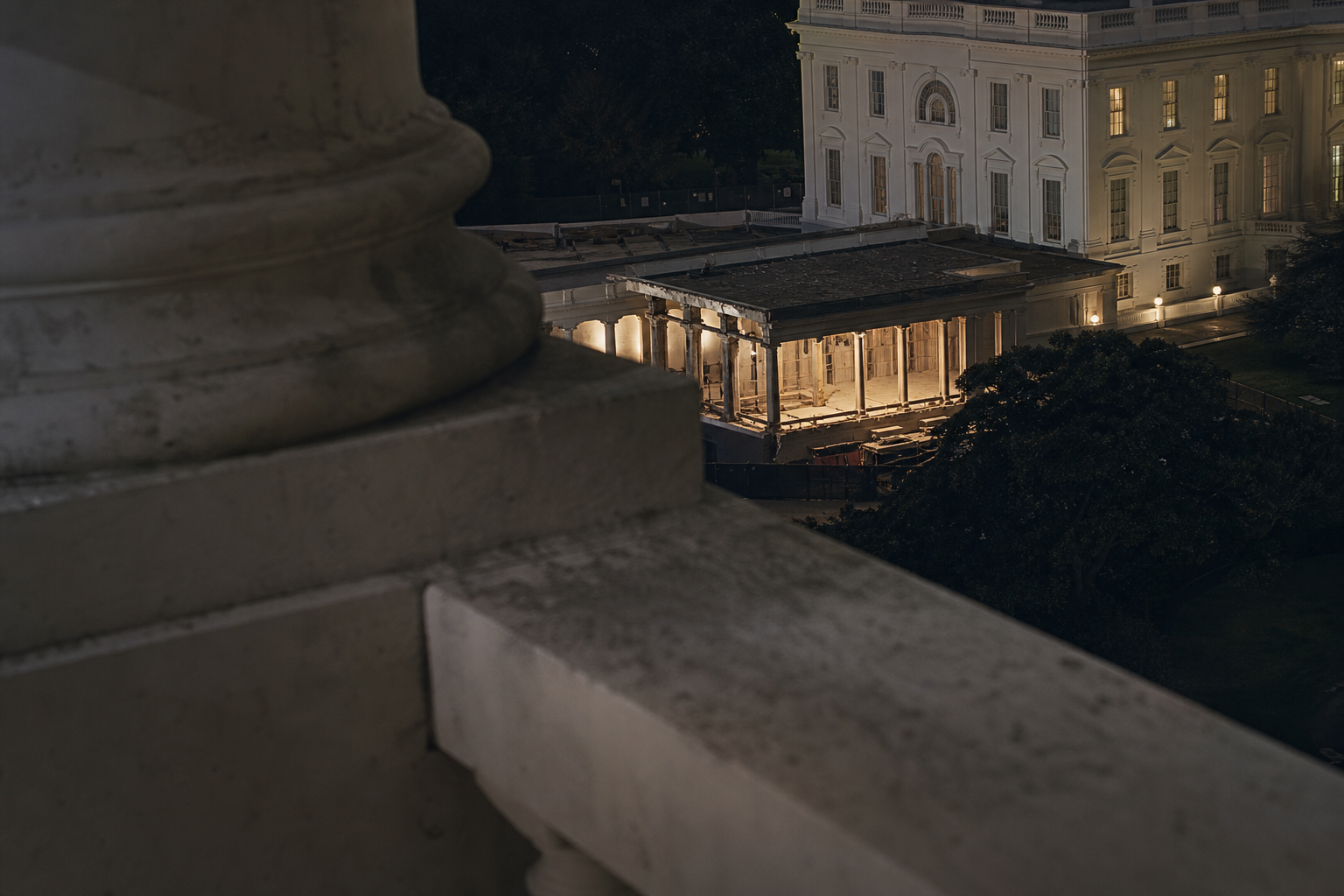
A $500 million no-bid contract for a new East Wing ballroom, with the president reportedly haggling over some of the costs himself. That is the story making the rounds, and its shape feels oddly familiar once you know where to look. Big changes to the White House happen fast, behind closed doors, with less outside scrutiny than you might expect for the most photographed house in America. The public sees the finished thing and assumes the process was as visible as the facade. It almost never is. If you want to understand how a building this symbolic gets remade with hardly anyone watching, skip the current news cycle and start with a bathroom floor that nearly gave way under Harry Truman in 1948.
Most coverage of the ballroom contract stops at the numbers. Five hundred million, no competitive bidding, the president in the room negotiating. Those facts matter, but they leave out the mechanism. How does a project of this scale on federal property get decided so quickly, and who actually holds the authority to sign off on remaking part of the executive residence? The reporting points toward the answers without showing the machinery that produced them. A case from seventy-odd years ago earns its keep here. The Truman reconstruction was larger, stranger, and better documented, and it ran through the same pressures at work today: engineering urgency, cost fights, and a stubborn question about who decides what happens to the building and who gets to watch it happen.
Robert Klara's The Hidden White House opens with an image that sounds invented and is not. In 1948, one of Truman's chairs punched through the floor of an upstairs room, and the president's bathtub was found to be slowly sinking into the ceiling below. A handpicked team of architects went in quietly to inspect, and what they found was a mansion held up mostly by habit and old timber. The Trumans decamped across the street to Blair House. Then the demolition crews arrived. What followed was demolition in everything but name. The interior was gutted to the outer walls, and a steel frame rose inside the surviving stone shell.
Klara tracks the decision to save the exterior while replacing nearly everything behind it, which is the detail that makes the whole episode uncomfortable. The public kept recognizing its house. Almost none of the original house was left standing. Klara is strong on the part the ballroom story only implies: cost and control. Congress spent real energy debating whether to bulldoze the place entirely and start clean, which would have been cheaper and, to some minds, more honest. Instead the choice was made to preserve the appearance and rebuild in secret, a decision that carried a price tag and a set of sign-offs settled far from any public gallery.
The archival material lets Klara show who signed what, and how much of it happened before anyone outside a small circle grasped the scope. The better thread runs underground. The reconstruction tucked a hidden warren of rooms and utility spaces beneath the mansion, and this was 1948 sliding into the Cold War. The residence was quietly hardening into a guarded installation while keeping its friendly white face for the tourists on Pennsylvania Avenue. Klara treats the place as a working institution rather than a monument, which is the right call and the source of his sharpest material.
His affection for the engineering does slow the reckoning. He documents the secrecy thoroughly and judges it lightly. You can finish the book admiring the steel frame and still wish he had pressed harder on the precedent it set: that remaking the people's house without the people watching became normal, defensible, even routine. That precedent is the line running straight to the present, and it deserves more argument than Klara gives it. The research still does most of the persuading. The book is at its best when it sets the paperwork and the timeline side by side and lets you count how few hands touched the decisions. It is history written close to the drawings and the invoices, which turns out to be the exact vantage point the current headlines are missing.
Read The Hidden White House before you settle on a firm opinion about the ballroom. It will not answer the current question, but it hands you a working example of how these decisions get made and how the public tends to find out late. When the next detail about the contract surfaces, you will know which parts to watch: the authority behind the signature, the cost negotiated in private, the distance between the visible building and the choices made out of sight. That is a sturdier place to stand than the headline, and a more interesting one.