The Man at the Keyboard: What 'Making Rent' Adds to the 30th Anniversary
On October 26, a group of people now well into middle age stood on the stage of the Richard Rodgers Theatre and sang about being young, broke, and freezing in the East Village, and by the look of the photos they still knew every cue.
On October 26, a group of people now well into middle age stood on the stage of the Richard Rodgers Theatre and sang about being young, broke, and freezing in the East Village, and by the look of the photos they still knew every cue. Broadway Cares billed the night as a one-night-only concert of the full show, staged as a benefit, and PEOPLE counted more than 60 performers joining original cast members for it. The man who wrote the songs was absent, as he has been from every Rent reunion. According to the book's publisher, Jonathan Larson died unexpectedly on the eve of the company's first public performance.
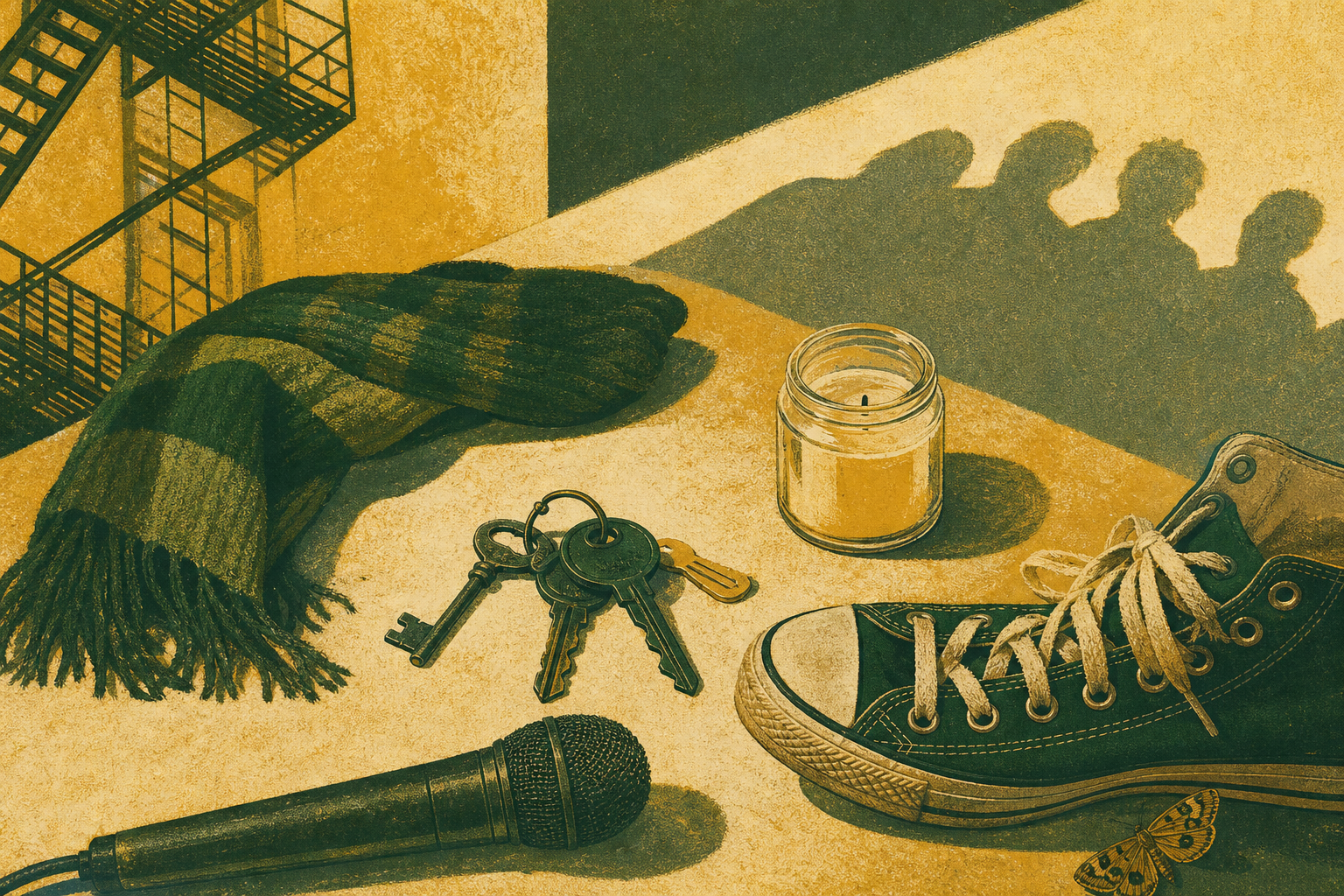
Anniversary coverage has since turned to his archive. The New York Times measured the show's life in four objects and quoted a loose-leaf memo Larson titled "Points," in which he wrote, "I want to build a new audience for musicals." The noun he chose deserves a second look. Audience is a word about who walks through the door and what they hear once they sit down, which makes his sentence a promise about sound and about strangers, and somebody had to keep it after he was gone.
Anniversary stories tend to travel through faces and relics: the cast reunites, the archive gives up its objects, and the arc closes neatly. What drops out is everything between the composer's page and the listener's ear. The same Times memo, as the paper quoted it, has Larson wanting to bridge "the gap between pop + theatre sounds," and that bridge was built by a band sitting onstage, playing what the publisher describes as a blend of grunge rock, power pop, gospel, and R&B. The players rarely make the reunion photos. A twenty-year-old in 1996 met this show through amplified guitars and a drum kit in plain view, which is how Larson's new audience first heard him. An archive keeps what someone wrote on loose-leaf and almost nothing of how hard the downbeat hit, or of the person who decided how hard it should.
Making Rent comes from Tim Weil, the show's musical director, written with Jennifer Ashley Tepper, with Neil Patrick Harris also listed among the authors. Weil's path through the production gives the book its spine. By the publisher's account he began as the audition accompanist and rose to musical director, which kept him beside Larson while the score was still being argued into shape. The book is pitched as a thirtieth-anniversary account of how the music was made and how it changed what Broadway would let itself sound like.
An accompanist hears a show before almost anyone else does. Singers auditioning for a rock score sing into the accompanist's keyboard first, and songs like "Light My Candle" and "Take Me or Leave Me" ask pop and rock voices to belt night after night without wrecking themselves. Someone has to build arrangements those voices can survive. A musical director makes those calls in small, unglamorous increments: a key lowered half a step, a tempo nudged, a ruling on whether the drums or the lyric wins a given bar.
Larson's death turned that job into something stranger. With the first public performance about to begin, Weil was left, in the publisher's phrase, to finesse a still-unfinished show, shaping a score whose author could no longer answer questions. Picture grieving a collaborator while making creative choices he never got to approve, knowing each of them will later be described as what Larson intended.
The book's largest claim deserves some resistance. A musical director's memoir will naturally put the music at the center, and the jacket's line that Rent would forever reshape musical theater is a big thing for an insider to say about his own show. The catalog listing tags the book alongside Spring Awakening, Next to Normal, Hamilton, and Hadestown, a lineage tidier than theater history usually allows. My suspicion is that Rent's most durable influence was commercial: it showed producers that a rock score could fill a Broadway house with people who had never bought a theater ticket, and producers learned that lesson faster than composers learned the musical one. Weil makes the musical case, and his evidence is worth weighing against that suspicion as you go.
What survives the argument is the book's real subject, a person at work in a rehearsal room. Weil was the one counting off songs that Larson heard in his head and never heard finished on that stage. The concert gathered dozens of voices for a single night, and Weil's account sits beside it as testimony from the musician who knew where each of those songs was supposed to breathe.
Thirty years on, the reunion photos tell a familiar and accurate story about a beloved cast and a composer who did not live to see opening night. Larson wanted a new audience for musicals, and the people who delivered it were mostly musicians whose names you would not recognize. Tim Weil was one of them, present, by the publisher's account, from the first audition to the night the work had to go on without its author. If the anniversary sends you back to the score this fall, his book makes good company for the trip. Every guitar part on that cast album still lands where somebody decided it should, and that somebody has finally written down why.
Why this book
If you caught the livestream Broadway Cares offered, or you simply put the cast album on while you cook, try listening past the singers for one song. In "La Vie Boheme," the band is doing much of the comedy, punching the jokes and racing the patter, and the number is hard to imagine with a conventional pit orchestra underneath it. In "Seasons of Love," a song that has scored more graduation slideshows than anyone could tally, the gospel roots sit right in the chord changes, and they sound different once you know someone made deliberate choices about them. That habit of listening shifts how the anniversary coverage reads. The Times piece asks what objects can tell you about a show's life. Weil's account points toward a second answer: a show stays alive in the habits of the people who play it and in the parts they hand to the next band. Larson's sentence about building a new audience sounds grand on loose-leaf. In practice it came down to whether a kid near the stage felt the bass in her chest, and Making Rent is written by the person sitting closest to the amplifiers when that happened.
Bridges by email
A news story and the book that goes with it, whenever we publish one.