
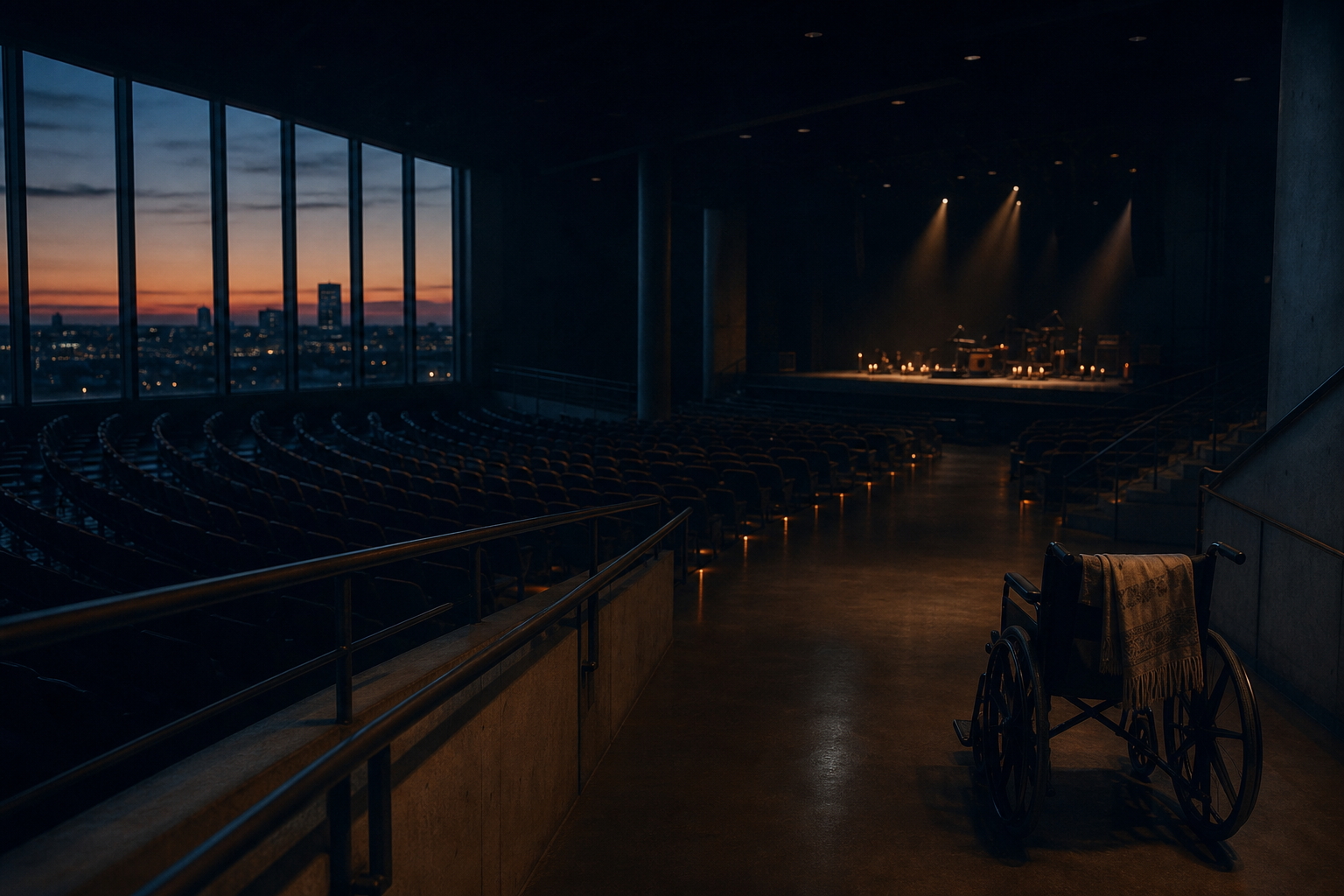
The applause Randy Travis receives in 2026 is applause for a catalog, and saying that out loud is the kindest available reading. Since the 2013 stroke left him largely unable to speak or walk, his appearances run on a different arithmetic: he arrives, the room stands, the band and guest vocalists carry the melody, and the night works anyway. Fans chant his name while his wife, Mary, wheels him off the stage. What they are cheering is a body of work they can hear in their own heads without any help from the monitors. That only holds if you know what the work was. A baritone that reset country radio in the mid-eighties does not survive compression into a thirty-second vertical video shot from row twelve, and the video is where most of this story currently lives.
Coverage of these nights hits a ceiling fast. A phone video can show a man being loved by a room; it cannot show why. The year 1986 sits outside the frame, when Storms of Life landed and handed the traditionalists a commercial argument they had been losing. The drinking years sit outside it too, along with the money going sideways and the hospital corridor where the prognosis included words like coma and vegetative state. What survives the crop is a single emotion, held for eight seconds, with a caption underneath. Cost is what separates a standing crowd from a sympathetic one, and cost does not photograph.
Forever and Ever, Amen, written with Ken Abraham, spends its opening stretch where most country memoirs do and then declines to hurry through it. Small-town beginnings, a kid who could sing before he could do much else, a drift toward Nashville that involved more dishwashing than destiny. None of it is surprising, and the book is right to let it accumulate slowly, because the ordinariness does the work: the man who would shortly sound like the last unvarnished voice in Nashville got there by driving, waiting, and singing to rooms that were not listening. The mid-eighties pages carry the real texture.
A baritone that sounded older than the man producing it arrived when country radio had sanded itself smooth, and in 1986 Storms of Life rearranged the format around him. He is specific about the song choices and about the executives who found his sound too old-fashioned for a business that would spend the next five years imitating it. That specificity is the memoir at its strongest, and it will surprise you most if you arrived here through the clips. The darker accounting gets more room than a Hall of Fame narrative usually allows. Alcohol runs through the book as a habit with consequences and a schedule, not a colorful anecdote.
Financial turmoil arrives with the dull specificity of paperwork. The temper gets its own reckoning, and the memoir is fairly plain about who was standing nearby when it went off. Then 2013: the stroke, the medical vocabulary families learn overnight, the paralysis, the long stretch in which recovery meant relearning things nobody bothers to name because nobody expects to lose them. Gospel holds the weight of the whole book. Amazing Grace functions as an event in the narrative rather than a recurring motif, a song he could reach for when ordinary speech would not come, and the later Country Music Hall of Fame induction reads as a public sentence completing a private one.
The recovery chapters contain the most disciplined writing here, partly because the milestones are so small: a syllable, a step, a phrase carried to the end of its line. The faith framing is sincere, and it also does a great deal of interpretive work on the author's behalf. Damage inflicted over many years gets sorted onto a single redemptive hinge, and an as-told-to collaborator is very good at smoothing that seam. The word miracle turns up where clinical detail would have been braver. The people hurt during the drinking years read like weather that passed rather than witnesses with accounts of their own, and a memoir this candid about the temper could have been far more candid about its aftermath.
I would rather name that limitation than talk around it. The friction does not sink the book. It sharpens what the book is good at, which is establishing scale. You finish it understanding that the voice on those records was an instrument, and that losing it cost something no amount of goodwill replaces. When a room rises in 2026, it is rising toward a discography that earned the response years before any of this happened.
There will be more of these nights, and the coverage will keep arriving in the same shape: a wheelchair at center stage, a room on its feet, a caption underneath. What you bring to that frame is the only variable you control. Forever and Ever, Amen is worth an evening if you want the decades that give those eight seconds their weight, and it rewards a little resistance, because the faith reading occasionally tidies up damage that deserved to stay untidy. Let the drinking years sit at full weight. Let the hospital months sit there unresolved. The voice that made all of this matter was real long before it became rare, and that is what the chanting is for.