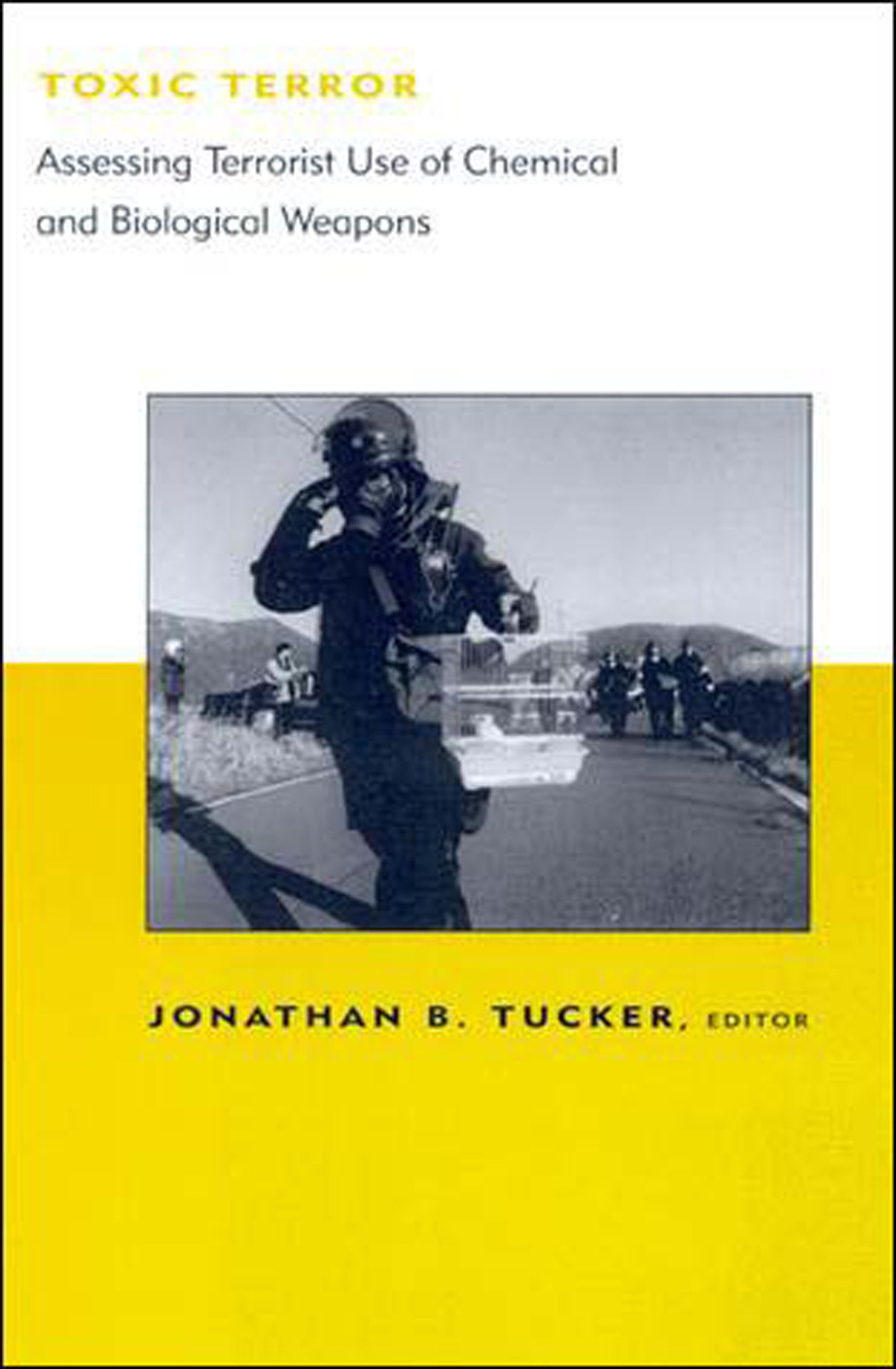
Toxic Terror
Assessing Terrorist Use of Chemical and Biological Weapons
Twelve historical case studies examine alleged terrorist acquisition or use of chemical and biological agents.
CBW Terrorism Cases
Come here for
- Twelve case studies spanning 1946 to 1998
- Comparisons of motivations and behavior across cases
Expect
- Cases researched through court documents, interviews, and declassified files
- Patterns linked to prevention and response strategies
Where it sits
How strongly BookFrontier reads the book as belonging to each subject.
Nearest books
Matched by our semantic model. Ordered by what its readers also loved. Most of these share its genre: Chemical & Biological Warfare.
 Biological WeaponsJeanne Guillemin67% subject matchAlso shares Security Studies
 A Higher Form of KillingRobert Harris, Jeremy Paxman68% subject match
 Terrorism, War, or Disease?Anne Clunan, Peter R. Lavoy75% subject matchAlso shares Terrorism & Counterterrorism
 Plague MakersWendy Barnaby70% subject matchAlso shares Terrorism & Counterterrorism
 War of NervesJonathan Tucker69% subject matchAlso shares Terrorism & Counterterrorism
 The Gathering Biological Warfare StormJim A. Davis, Barry R. Schneider66% subject matchAlso shares Terrorism & Counterterrorism and Security Studies
 Chemical WarfareBrown, Fredric66% subject match
 A History of Chemical WarfareK. Coleman66% subject match
Start with three books, and this one can be the first.
Members get a new edition every morning: a route out from their books to essays, research and talks, with the reason for each.
Sign upAbout this book
In-depth case studies of twelve terrorist groups and individuals who, from 1946 to 1998, allegedly acquired or employed CBW agents.
Policymakers, scholars, and the news media have been alarmed by the potential for chemical and biological weapons (CBW) terrorism, and the U.S. Congress has allocated billions of dollars for counterterrorism and "consequence management" programs.
Continue reading
Driving these concerns are the global spread of scientific knowledge and technology relevant to CBW terrorism and the vulnerability of civilian populations to chemical and biological attacks.
Notably lacking from the analysis, however, has been a careful assessment of the terrorists themselves. What types of terrorist groups or individuals are both capable of acquiring chemical and biological weapons and motivated to use them, and for what purposes? Further, what types of toxic agents would probably be produced, and how would they be delivered?
Answers to these questions would enable policymakers to prepare for the most likely contingencies. To this end, Toxic Terror provides in-depth case studies of twelve terrorist groups and individuals who, from 1946 to 1998, allegedly acquired or employed CBW agents. The cases were researched from primary sources, including court documents, interviews, and declassified government files.
By comparing the twelve cases, the book identifies characteristic motivations and patterns of behavior associated with CBW terrorism and provides an empirical basis for prudent, cost-effective strategies of prevention and response.
Publisher details
Publisher categories
- The Americas History
- Authors
- Jonathan B. Tucker
- Publisher
- MIT Press
- Published
- February 28, 2000
- Format
- Print & ebook
- Reading lane
- The Americas History