
The Second Founding
How the Civil War and Reconstruction Remade the Constitution
A clear, sustained look at how Reconstruction rewired constitutional life.
Constitution Rewritten
Come here for
- constitutional change after the Civil War
- clear historical explanation, not just date-stacking
Expect
- civic and political history
- authoritative, explanatory prose
Where it sits
How strongly BookFrontier reads the book as belonging to each subject.
Nearest books
Matched by our semantic model. Ordered by what its readers also loved. Most of these share its genres: Civil War Era and Black History.
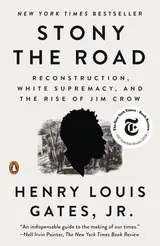 Stony the RoadHenry Louis Gates, Jr.65% subject match
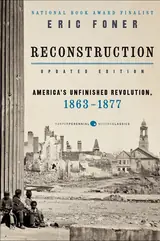 Reconstruction Updated EditionEric Foner72% subject match
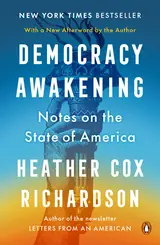 Democracy AwakeningHeather Cox Richardson58% subject match
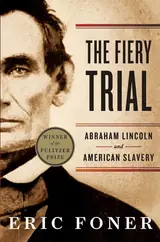 The Fiery TrialEric Foner62% subject match
 W.E.B. Du Bois: Black ReconstructionW.E.B. Du Bois, Eric Foner67% subject match
 The Zealot and the EmancipatorH. W. Brands56% subject match
For younger readers: Stolen Justice: The Struggle for African American Voting Rights, We Are Not Yet Equal, Whose Right Is It? The Fourteenth Amendment and the Fight for Equality
Start with three books, and this one can be the first.
Members get a new edition every morning: a route out from their books to essays, research and talks, with the reason for each.
Sign upAbout this book
From the Pulitzer Prize–winning scholar, a timely history of the constitutional changes that built equality into the nation’s foundation and how those guarantees have been shaken over time.
The Declaration of Independence announced equality as an American ideal, but it took the Civil War and the subsequent adoption of three constitutional amendments to establish that ideal as American law.
Continue reading
The Reconstruction amendments abolished slavery, guaranteed all persons due process and equal protection of the law, and equipped black men with the right to vote. They established the principle of birthright citizenship and guaranteed the privileges and immunities of all citizens. The federal government, not the states, was charged with enforcement, reversing the priority of the original Constitution and the Bill of Rights. In grafting the principle of equality onto the Constitution, these revolutionary changes marked the second founding of the United States.
Eric Foner’s compact, insightful history traces the arc of these pivotal amendments from their dramatic origins in pre–Civil War mass meetings of African-American “colored citizens” and in Republican party politics to their virtual nullification in the late nineteenth century. A series of momentous decisions by the Supreme Court narrowed the rights guaranteed in the amendments, while the states actively undermined them. The Jim Crow system was the result. Again today there are serious political challenges to birthright citizenship, voting rights, due process, and equal protection of the law. Like all great works of history, this one informs our understanding of the present as well as the past: knowledge and vigilance are always necessary to secure our basic rights.
Publisher details
Publisher categories
- 19th-Century America
- Civil War Era
- Congress & Legislatures
- Authors
- Eric Foner
- Publisher
- WW Norton
- Published
- August 25, 2020
- Format
- Print & ebook
- Reading lane
- 19th-Century America