
The Poison Squad
One Chemist's Single-minded Crusade for Food Safety at the Turn of the Twentieth Century
A vivid history of food safety, where chemistry, corporate power, and reform collide.
When Food Was Risky
Come here for
- The unsettling chemistry behind familiar foods
- A sustained fight over consumer protection
Expect
- Investigative history with vivid human stakes
- Reformers challenging industry and government resistance
Where it sits
How strongly BookFrontier reads the book as belonging to each subject.
Nearest books
Matched by our semantic model. Ordered by what its readers also loved.
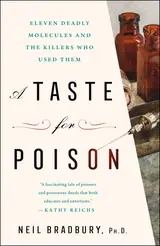 A Taste for PoisonNeil Bradbury, Ph.D.61% subject match
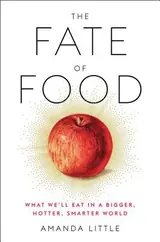 The Fate of FoodAmanda Little54% subject matchShares Agriculture & Food Systems
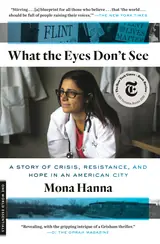 What the Eyes Don't SeeMona Hanna55% subject match
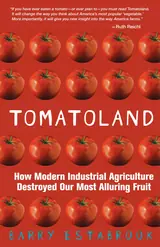 TomatolandBarry Estabrook53% subject matchShares Agriculture & Food Systems
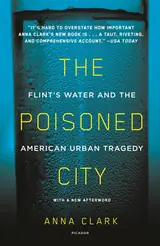 The Poisoned CityAnna Clark54% subject match
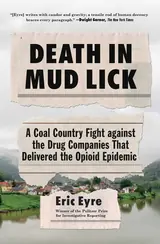 Death in Mud LickEric Eyre53% subject match
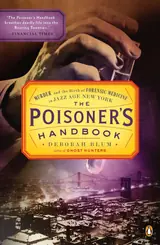 The Poisoner's HandbookDeborah Blum67% subject match
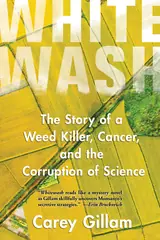 WhitewashCarey Gillam61% subject matchShares Agriculture & Food Policy and Agriculture & Food Systems
For younger readers: Terrible Typhoid Mary, An American Plague, Plague-Busters!
Start with three books, and this one can be the first.
Members get a new edition every morning: a route out from their books to essays, research and talks, with the reason for each.
Sign upAbout this book
A New York Times Notable Book • Inspiration for PBS's American Experience film The Poison Squad
“A detailed, highly readable history of food and drink regulation in the United States.” —Wall Street Journal
“Riveting. . . . [A] timely tale about how scientists and citizens can work together on meaningful consumer protections.” —Science
Continue reading
From Pulitzer Prize winner and New York Times bestselling author Deborah Blum, the dramatic true story of how food was made safe in the United States and the heroes, led by the inimitable Dr. Harvey Washington Wiley, who fought for change
By the end of nineteenth century, food was dangerous. Lethal, even. "Milk" might contain formaldehyde, most often used to embalm corpses. Decaying meat was preserved with both salicylic acid, a pharmaceutical chemical, and borax, a compound first identified as a cleaning product. This was not by accident; food manufacturers had rushed to embrace the rise of industrial chemistry, and were knowingly selling harmful products. Unchecked by government regulation, basic safety, or even labelling requirements, they put profit before the health of their customers. By some estimates, in New York City alone, thousands of children were killed by "embalmed milk" every year. Citizens--activists, journalists, scientists, and women's groups--began agitating for change. But even as protective measures were enacted in Europe, American corporations blocked even modest regulations. Then, in 1883, Dr. Harvey Washington Wiley, a chemistry professor from Purdue University, was named chief chemist of the agriculture department, and the agency began methodically investigating food and drink fraud, even conducting shocking human tests on groups of young men who came to be known as, "The Poison Squad."
Over the next thirty years, a titanic struggle took place, with the courageous and fascinating Dr. Wiley campaigning indefatigably for food safety and consumer protection. Together with a gallant cast, including the muckraking reporter Upton Sinclair, whose fiction revealed the horrific truth about the Chicago stockyards; Fannie Farmer, then the most famous cookbook author in the country; and Henry J. Heinz, one of the few food producers who actively advocated for pure food, Dr. Wiley changed history. When the landmark 1906 Food and Drug Act was finally passed, it was known across the land, as "Dr. Wiley's Law."
Blum brings to life this timeless and hugely satisfying "David and Goliath" tale with righteous verve and style, driving home the moral imperative of confronting corporate greed and government corruption with a bracing clarity, which speaks resoundingly to the enormous social and political challenges we face today.
Publisher details
Publisher categories
- Activist Lives
- 19th-Century America
- Agriculture & Food Policy
- Authors
- Deborah Blum
- Publisher
- Penguin Publishing Group
- Published
- September 24, 2019
- Format
- Print & ebook
- Reading lane
- Activist Lives