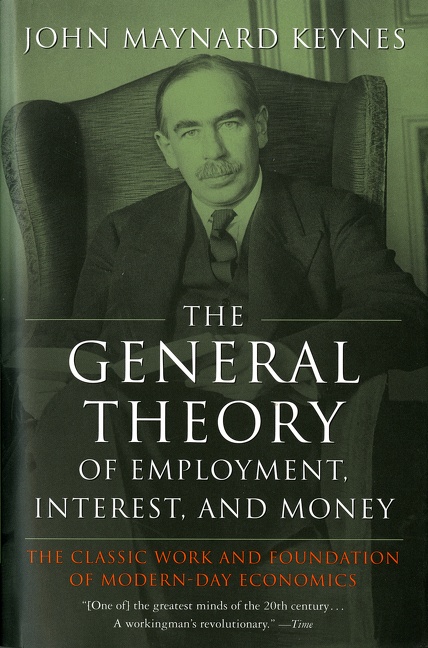
The General Theory Of Employment, Interest, And Money
A landmark challenge to self-correcting markets, still entangled in arguments about employment and public spending.
- Themes
- Keynesian economics, Employment and market self-correction, Government spending
Markets in Question
Come here for
- The case against markets reliably restoring full employment on their own
- A foundational argument in economic theory
Expect
- Economic arguments that remain contested long after the Great Depression
Where it sits
How strongly BookFrontier reads the book as belonging to each subject.
Nearest books
Matched by our semantic model. Ordered by what its readers also loved.
 The Economic Consequences of PeaceJohn Maynard Keynes64% subject match
 Bullshit JobsDavid Graeber45% subject match
 Lords of FinanceLiaquat Ahamed54% subject matchShares Money & Monetary Policy
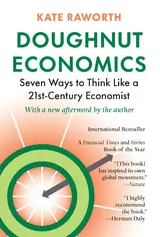 Doughnut EconomicsKate Raworth58% subject match
 Understanding Global TradeElhanan Helpman48% subject match
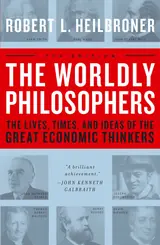 The Worldly PhilosophersRobert L. Heilbroner61% subject matchShares Economic Theory
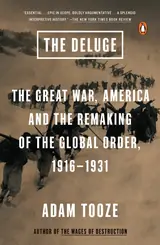 The DelugeAdam Tooze51% subject match
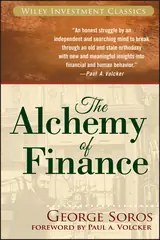 The Alchemy of FinanceGeorge Soros50% subject matchShares Economic Theory and Money & Monetary Policy
For younger readers: Big Money
Start with three books, and this one can be the first.
Members get a new edition every morning: a route out from their books to essays, research and talks, with the reason for each.
Sign upAbout this book
One of Time's 100 Most Important People of the Twentieth Century, John Maynard Keynes revolutionized economic thinking with The General Theory of Employment, Interest, and Money.Published following the Great Depression, this classic challenged the established classical economics, particularly the proposition that a market economy tends naturally to restore itself to full employment on its own.
Continue reading
More relevant than ever in the twenty-first century, the principles of the "Keynesian Revolution" continue to be debated in a world ravaged by inequitable economic circumstances. "[Keynes's] radical idea that governments should spend money they don't have may have saved capitalism."—Time
Publisher details
Publisher categories
- Macroeconomics
- Money & Monetary Policy
- Economic Theory
- Authors
- John Maynard Keynes
- Publisher
- HarperCollins
- Published
- May 12, 1965
- Format
- Paperback
- Reading lane
- Macroeconomics