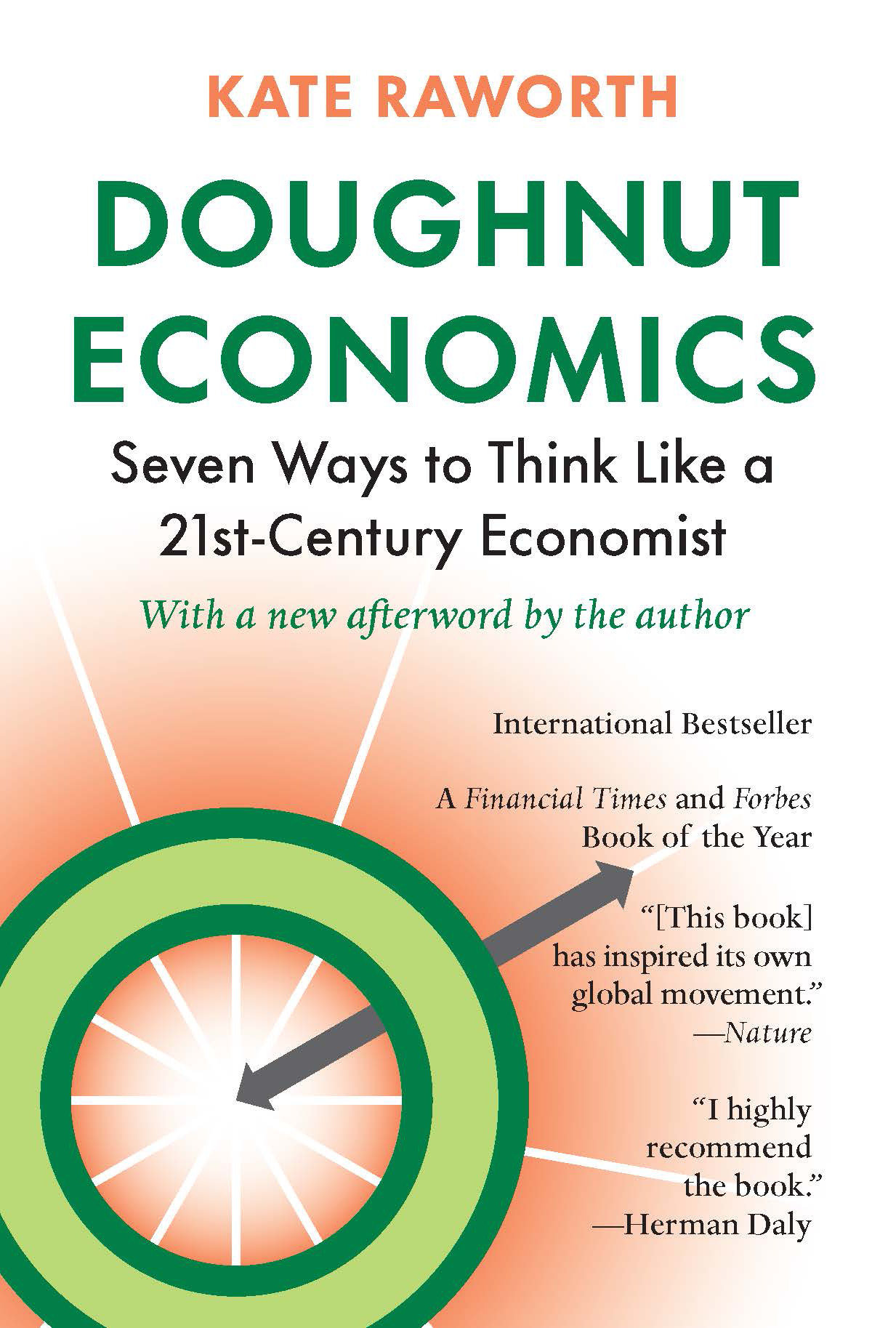
Doughnut Economics
Seven Ways to Think Like a 21st-century Economist
A readable rethink of how economics can explain growth, development, and what comes next.
Fresh Economic Lens
Come here for
- accessible rethink of growth and development
- clear, beginner-friendly economic framing
Expect
- short, idea-led chapters
- practical conceptual shift, not jargon
Where it sits
How strongly BookFrontier reads the book as belonging to each subject.
Nearest books
Matched by our semantic model. Ordered by what its readers also loved.
 The DivideJason Hickel54% subject match
 Poor EconomicsAbhijit V. Banerjee, Esther Duflo63% subject match
 Winners Take AllAnand Giridharadas54% subject match
For younger readers: Big Money, Eyes Wide Open: Going Behind the Environmental Headlines
Start with three books, and this one can be the first.
Members get a new edition every morning: a route out from their books to essays, research and talks, with the reason for each.
Sign upAbout this book
Sunday Times Bestseller
A Financial Times Book of the Year
A Forbes Book of the Year
An economist redefines economics for a world in crisis in this “brilliant, thrilling, and revolutionary” book that champions a more sustainable way forward—and sparked a global movement (Guardian).
Economics is the mother tongue of public policy.
Continue reading
It dominates our decision-making for the future, guides multi-billion-dollar investments, and shapes our responses to climate change, inequality, and other environmental and social challenges that define our times.
Pity then, or more like disaster, that its fundamental ideas are centuries out of date yet are still taught in college courses worldwide and still used to address critical issues in government and business alike.
That’s why it is time, says renegade economist Kate Raworth, to revise our economic thinking for the 21st century. In Doughnut Economics, she sets out 7 key ways to fundamentally reframe our understanding of what economics is and does. Along the way, she points out how we can break our addiction to growth; redesign money, finance, and business to be in service to people; and create economies that are regenerative and distributive by design.
Named after the now-iconic “doughnut” image that Raworth first drew to depict a sweet spot of human prosperity (an image that appealed to the Occupy Movement, the United Nations, eco-activists, and business leaders alike), Doughnut Economics offers a radically new compass for guiding global development, government policy, and corporate strategy, and sets new standards for what economic success looks like.
Raworth handpicks the best emergent ideas—from ecological, behavioral, feminist, and institutional economics to complexity thinking and Earth-systems science—to address this question: How can we turn economies that need to grow, whether or not they make us thrive, into economies that make us thrive, whether or not they grow?
Simple, playful, and eloquent, Doughnut Economics offers game-changing analysis and inspiration for a new generation of economic thinkers.
“‘Sustainability in all things’ should be our species’ philosophy; the Doughnut Model our compass for the journey.” —Sir David Attenborough
“Shows how to ensure dignity and prosperity for all people.” —Huffington Post
Publisher details
Publisher categories
- International Economics
- Sustainable Development
- Environmental Economics
- Authors
- Kate Raworth
- Publisher
- Rizzoli
- Published
- March 12, 2018
- Format
- Print & ebook
- Reading lane
- International Economics