
The Barbarous Years
The Peopling of British North America: the Conflict of Civilizations, 1600-1675
A measured history of British North America’s early collisions, useful for sustained reading or a quick.
Early Collisions
Come here for
- Civilization-on-civilization tension, handled with a historian’s steadiness
- A place to read in stretches or in spare, instructive dips
Expect
- Colonial and Stuart-era context, tightly framed
- Insightful explanation over scene-setting
Where it sits
How strongly BookFrontier reads the book as belonging to each subject.
Nearest books
Matched by our semantic model. Ordered by what its readers also loved.
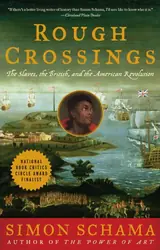 Rough CrossingsSimon Schama53% subject match
 Indigenous ContinentPekka Hämäläinen62% subject match
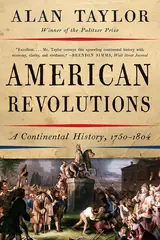 American RevolutionsAlan Taylor53% subject match
 Of Plymouth PlantationWilliam Bradford49% subject matchShares Colonial America (to 1775)
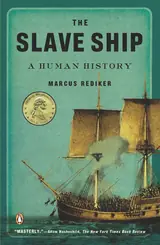 The Slave ShipMarcus Rediker50% subject match
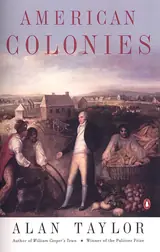 American ColoniesAlan Taylor68% subject matchShares Colonial America (to 1775)
 Shots Heard Round the WorldJohn Ferling54% subject match
For younger readers: Colonization and the Wampanoag Story, The New Americans, Coming to America: The Story of Immigration
Start with three books, and this one can be the first.
Members get a new edition every morning: a route out from their books to essays, research and talks, with the reason for each.
Sign upAbout this book
Bernard Bailyn gives us a compelling account of the first great transit of people from Britain, Europe, and Africa to British North America, their involvements with each other, and their struggles with the indigenous peoples of the eastern seaboard.
They were a mixed multitude—from England, the Netherlands, the German and Italian states, France, Africa, Sweden, and Finland.
Continue reading
They moved to the western hemisphere for different reasons, from different social backgrounds and cultures, and under different auspices and circumstances. Even the majority that came from England fit no distinct socioeconomic or cultural pattern. They came from all over the realm, from commercialized London and the southeast; from isolated farmlands in the north still close to their medieval origins; from towns in the Midlands, the south, and the west; from dales, fens, grasslands, and wolds. They represented the entire spectrum of religious communions from Counter-Reformation Catholicism to Puritan Calvinism and Quakerism.
They came hoping to re-create if not to improve these diverse lifeways in a remote and, to them, barbarous environment. But their stories are mostly of confusion, failure, violence, and the loss of civility as they sought to normalize abnormal situations and recapture lost worlds. And in the process they tore apart the normalities of the people whose world they had invaded.
Later generations, reading back into the past the outcomes they knew, often gentrified this passage in the peopling of British North America, but there was nothing genteel about it. Bailyn shows that it was a brutal encounter—brutal not only between the Europeans and native peoples and between Europeans and Africans, but among Europeans themselves. All, in their various ways, struggled for survival with outlandish aliens, rude people, uncultured people, and felt themselves threatened with descent into squalor and savagery. In these vivid stories of individual lives—some new, some familiar but rewritten with new details and contexts—Bailyn gives a fresh account of the history of the British North American population in its earliest, bitterly contested years.
Publisher details
Publisher categories
- North American History
- Colonial America (to 1775)
- 17th-Century History
- Authors
- Bernard Bailyn
- Publisher
- Knopf Doubleday Publishing Group
- Published
- November 6, 2012
- Format
- Print & ebook
- Reading lane
- North American History