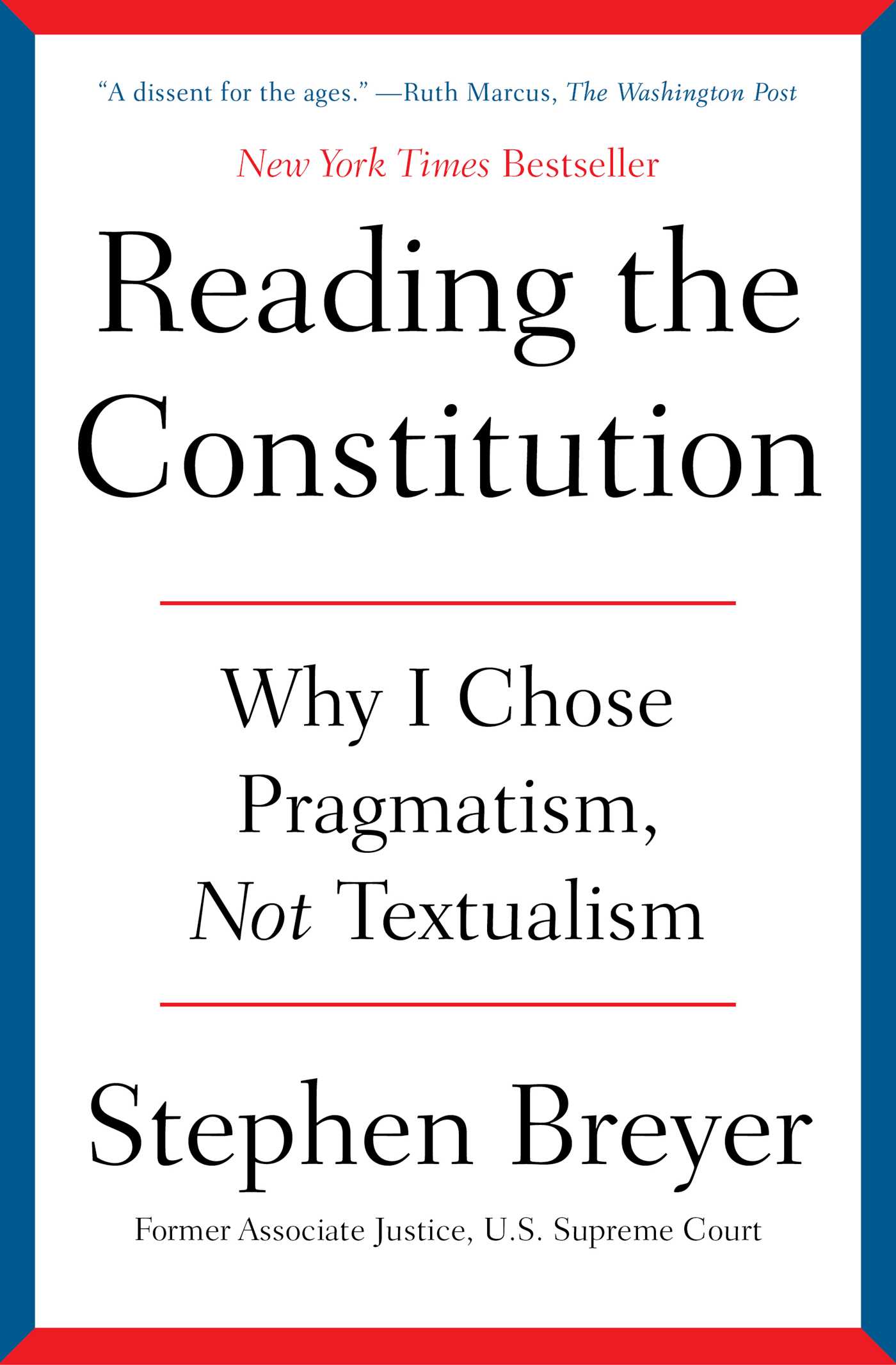
Reading the Constitution
Why I Chose Pragmatism, Not Textualism
A judge’s plainspoken case for pragmatic constitutional reading, with politics and philosophy in the frame.
A Different Lens
Come here for
- pragmatism over textualism
- court thinking with political and philosophical bite
Expect
- measured, argument-driven prose
- judicial perspective without the haze
Where it sits
How strongly BookFrontier reads the book as belonging to each subject.
Nearest books
Matched by our semantic model. Ordered by what its readers also loved. Most of these share its genres: Constitutional Law and Courts & the Judiciary.
 What Were We ThinkingCarlos Lozada51% subject match
 Nine Black RobesJoan Biskupic62% subject match
 Lovely OneKetanji Brown Jackson49% subject match
 The People's JusticeAmul Thapar58% subject match
 A Republic, If You Can Keep ItNeil Gorsuch65% subject match
For younger readers: Fault Lines in the Constitution
Start with three books, and this one can be the first.
Members get a new edition every morning: a route out from their books to essays, research and talks, with the reason for each.
Sign upAbout this book
New York Times Bestseller
In a provocative and brilliant analysis, retired Supreme Court Justice Stephen Breyer deconstructs the textualist philosophy of the current Supreme Court’s supermajority and makes the case for a more pragmatic approach of the Constitution.
“You will not read a more important legal work this election year.” —Bob Woodward, Washington Post reporter and author of fifteen #1 New York Times bestselling books
Continue reading
“A dissent for the ages.” —The Washington Post
“Breyer’s candor about the state of the court is refreshing and much needed.” —The Boston Globe
The relatively new judicial philosophy of textualism dominates the Supreme Court. Textualists claim that the right way to interpret the Constitution and statutes is to read the text carefully and examine the language as it was understood at the time the documents were written.
This, however, is not Justice Breyer’s philosophy nor has it been the traditional way to interpret the Constitution since the time of Chief Justice John Marshall. Justice Breyer recalls Marshall’s exhortation that the Constitution must be a workable set of principles to be interpreted by subsequent generations.
Most important in interpreting law, says Breyer, is to understand the statutes as well as the consequences of deciding a case one way or another. He illustrates these principles by examining some of the most important cases in the nation’s history, among them the Dobbs and Bruen decisions from 2022 that he argues were wrongly decided and have led to harmful results.
Publisher details
Publisher categories
- 21st-Century America
- Constitutional Law
- Courts & the Judiciary
- Authors
- Stephen Breyer
- Publisher
- Simon & Schuster
- Published
- June 10, 2025
- Format
- Print & ebook
- Reading lane
- 21st-Century America