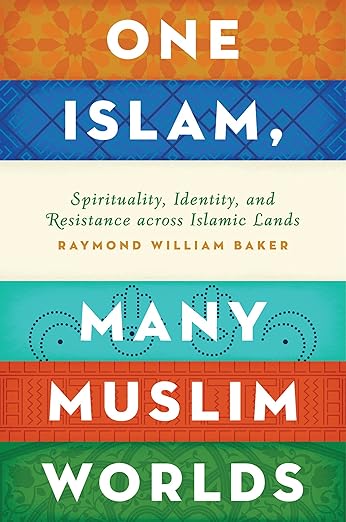
One Islam, Many Muslim Worlds
Spirituality, Identity, and Resistance Across Islamic Lands
Series: Religion and Global Politics
Raymond W. Baker examines how centrist renewal shapes Islamic identity amid material vulnerability and Western power.
Islamic Renewal
Come here for
- The Islamic Awakening as a resilient transnational force
- Centrists’ role in shaping a modern Islamic identity
Expect
- An argument distinguishing centrist renewal from violent extremism
- Discussion of Western policies and their consequences in Islamic lands
Where it sits
How strongly BookFrontier reads the book as belonging to each subject.
Nearest books
Matched by our semantic model. Ordered by what its readers also loved. Most of these share its genre: Islam - General.
 Aspects of IslamRon Geaves60% subject matchAlso shares Islamic Studies
 Sectarian MilieuJohn E. Wansbrough60% subject match
 The Islam BookDK, D.K. Publishing59% subject match
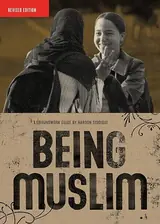 Being MuslimHaroon Siddiqui58% subject matchAlso shares Islamic Studies
For younger readers: The Genius of Islam, No god but God: The Origins and Evolution of Islam
Start with three books, and this one can be the first.
Members get a new edition every morning: a route out from their books to essays, research and talks, with the reason for each.
Sign upAbout this book
By all measures, the late twentieth century was a time of dramatic decline for the Islamic world, the Ummah, particularly its Arab heartland. Sober Muslim voices regularly describe their current state as the worst in the 1,400-year history of Islam. Yet, precisely at this time of unprecedented material vulnerability, Islam has emerged as a civilizational force strong enough to challenge the imposition of Western, particularly American, homogenizing power on Muslim peoples.
Continue reading
This is the central paradox of Islam today: at a time of such unprecedented weakness in one sense, how has the Islamic Awakening, a broad and diverse movement of contemporary Islamic renewal, emerged as such a resilient and powerful transnational force and what implications does it have for the West? In One Islam, Many Worlds of Muslims Raymond W. Baker addresses this question. Two things are clear, Baker argues: Islam's unexpected strength in recent decades does not originate from official political, economic, or religious institutions, nor can it be explained by focusing exclusively on the often-criminal assertions of violent, marginal groups. While extremists monopolize the international press and the scholarly journals, those who live and work in the Islamic world know that the vast majority of Muslims reject their reckless calls to violence and look elsewhere for guidance. Baker shows that extremists draw their energy and support not from contributions to the reinterpretation and revival of Islamic beliefs and practices, but from the hatreds engendered by misguided Western policies in Islamic lands. His persuasive analysis of the Islamic world identifies centrists as the revitalizing force of Islam, saying that they are responsible for constructing a modern, cohesive Islamic identity that is a force to be reckoned with.
Publisher details
Publisher categories
- Politics & Government
- Authors
- Raymond William Baker
- Publisher
- Oxford University Press
- Published
- August 13, 2015
- Format
- Print & ebook
- Reading lane
- Politics & Government