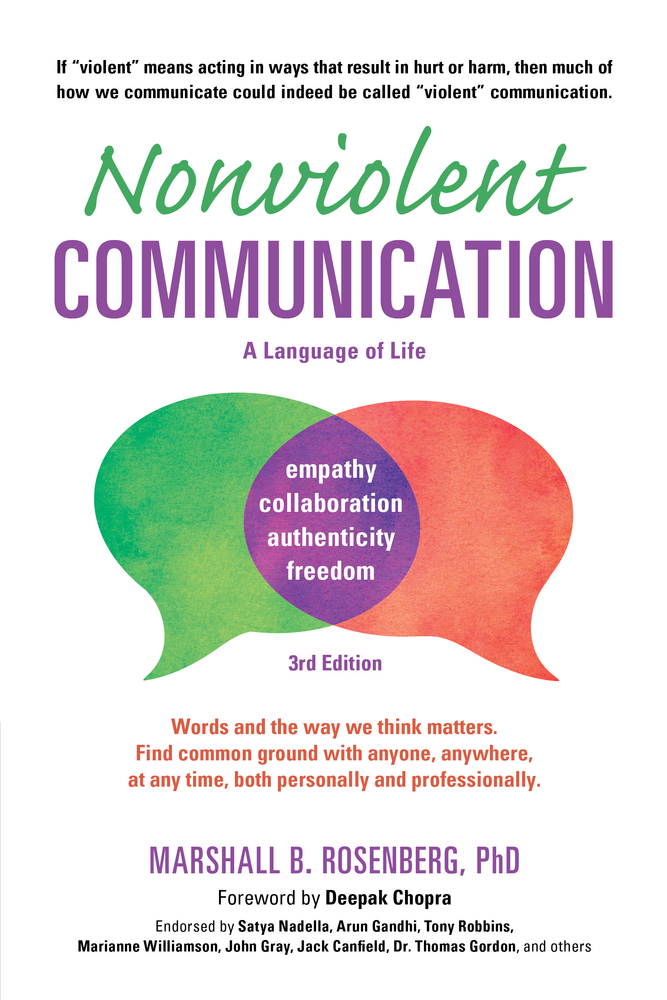
Nonviolent Communication: A Language of Life
Life-changing Tools for Healthy Relationships
Series: Nonviolent Communication Guides
Rosenberg links everyday language with the possibility of connection, collaboration, and solutions that work for all.
- Themes
- Empathic communication, Healthy relationships, Collaborative problem-solving
Words That Connect
Come here for
- A closer look at blame, judgment, and words that create distance
- Communication rooted in empathy, even when people disagree
Expect
- Principles for compassionate, authentic communication
- A focus on asking clearly, listening, and sharing power
Where it sits
How strongly BookFrontier reads the book as belonging to each subject.
Nearest books
Matched by our semantic model. Ordered by what its readers also loved.
 Eight DatesJohn Gottman, Julie Schwartz Gottman57% subject matchShares Better Communication
 Difficult ConversationsDouglas Stone, Bruce Patton53% subject matchShares Better Communication
 UsTerrence Real47% subject matchShares Family Conflict Resolution
 The New Rules of MarriageTerrence Real50% subject matchShares Family Conflict Resolution
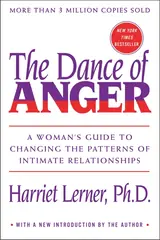 The Dance of AngerHarriet Lerner50% subject matchShares Family Conflict Resolution
 The Gifts of ImperfectionBrené Brown47% subject match
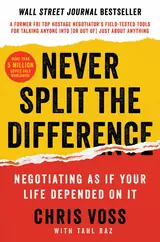 Never Split the DifferenceChris Voss, Tahl Raz54% subject matchShares Better Communication
For younger readers: What Can I Say?, Words Are Not for Hurting Board Book
Start with three books, and this one can be the first.
Members get a new edition every morning: a route out from their books to essays, research and talks, with the reason for each.
Sign upAbout this book
5,000,000 COPIES SOLD WORLDWIDE • TRANSLATED IN MORE THAN 35 LANGUAGES
What is Violent Communication?
Continue reading
If “violent” means acting in ways that result in hurt or harm, then much of how we communicate—judging others, bullying, having racial bias, blaming, finger pointing, discriminating, speaking without listening, criticizing others or ourselves, name-calling, reacting when angry, using political rhetoric, being defensive or judging who’s “good/bad” or what’s “right/wrong” with people—could indeed be called “violent communication.”
What is Nonviolent Communication?
Nonviolent Communication is the integration of four things:
• Consciousness: a set of principles that support living a life of compassion, collaboration, courage, and authenticity
• Language: understanding how words contribute to connection or distance
• Communication: knowing how to ask for what we want, how to hear others even in disagreement, and how to move toward solutions that work for all
• Means of influence: sharing “power with others” rather than using “power over others”
Nonviolent Communication serves our desire to do three things:
• Increase our ability to live with choice, meaning, and connection
• Connect empathically with self and others to have more satisfying relationships
• Sharing of resources so everyone is able to benefit
Publisher details
Publisher categories
- Relationships
- Personal Growth
- Authors
- Marshall B. Rosenberg
- Publisher
- PuddleDancer Press
- Published
- September 1, 2015
- Format
- Print & ebook
- Reading lane
- Relationships