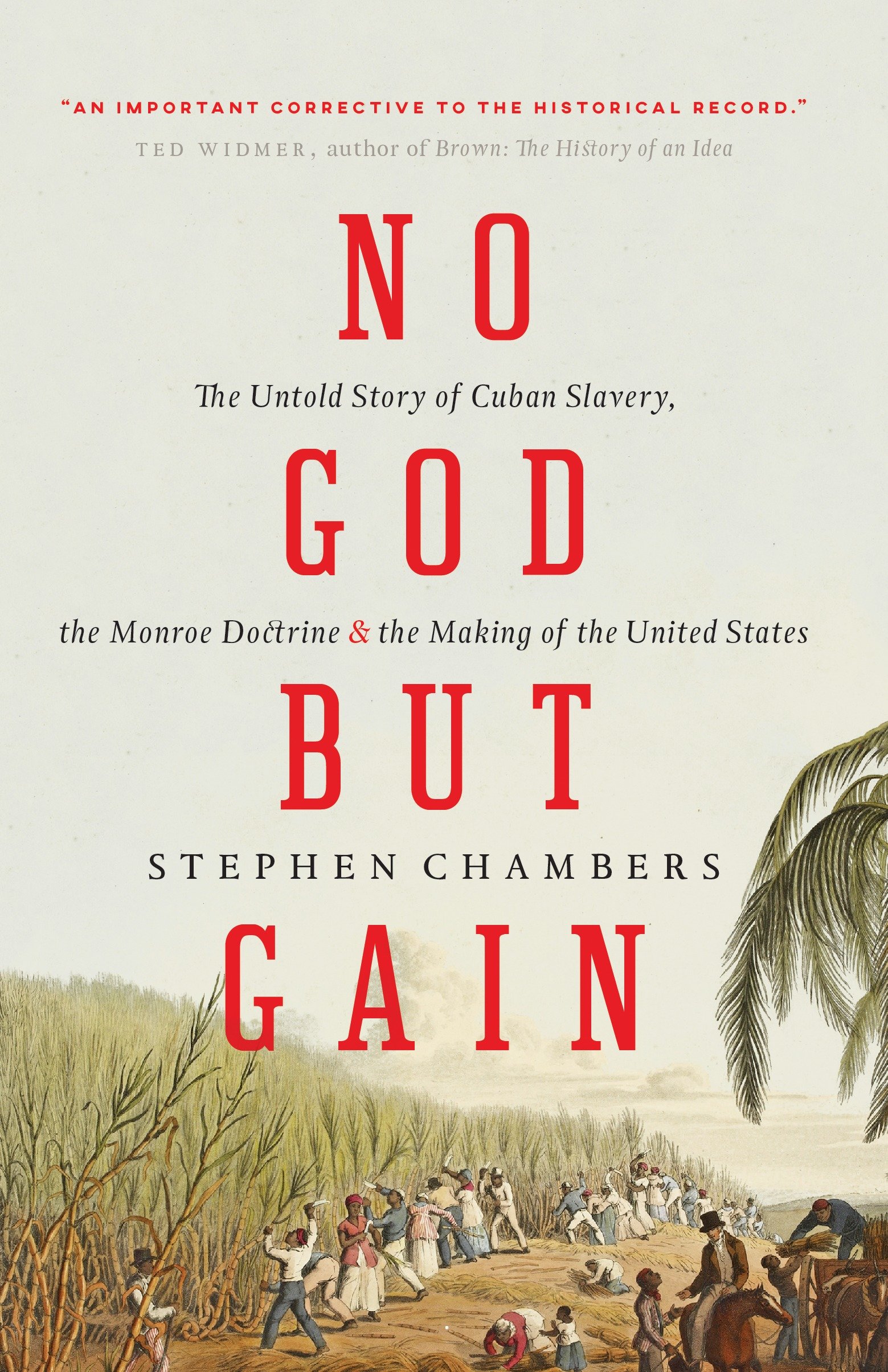
No God But Gain
The Untold Story of Cuban Slavery, the Monroe Doctrine, and the Making of the United States
- Who it’s for
- Readers interested in illegal slavery’s role in early US history and economic growth
- Themes
- Illegal slave trade, Early US economic development, Monroe Doctrine
Where it sits
How strongly BookFrontier reads the book as belonging to each subject.
Nearest books
Matched by our semantic model. Ordered by what its readers also loved.
 The Problem of Immigration in a Slaveholding RepublicKevin Kenny60% subject matchShares 19th-Century America
 The Monroe DoctrineJay Sexton65% subject matchShares 19th-Century America
 The War of Jenkins' EarRobert Gaudi54% subject match
 The Rise and Fall of the Second American RepublicManisha Sinha50% subject matchShares Black History
 Ages of American CapitalismJonathan Levy54% subject match
 A Fistful of ShellsToby Green55% subject matchShares Slavery Studies
 A Slave in the White HouseElizabeth Dowling Taylor50% subject matchShares 19th-Century America and Slavery Studies
 The Second FoundingEric Foner55% subject matchShares Black History
For younger readers: A Young People's History of the United States, Volume 1, Sugar Changed the World, A Young People's History of the United States
Start with three books, and this one can be the first.
Members get a new edition every morning: a route out from their books to essays, research and talks, with the reason for each.
Sign upAbout this book
From 1501 to 1867 more than 12.5 million Africans were brought to the Americas in chains, and many millions died as a result of the slave trade. The US constitution set a 20-year time limit on US participation in the trade, and on January 1, 1808, it was abolished.
Continue reading
And yet, despite the spread of abolitionism on both sides of the Atlantic, despite numerous laws and treaties passed to curb the slave trade, and despite the dispatch of naval squadrons to patrol the coasts of Africa and the Americas, the slave trade did not end in 1808. Fully 25 percent of all the enslaved Africans to arrive in the Americas were brought after the US ban – 3.2 million people.
This breakthrough history, based on years of research into private correspondence; shipping manifests; bills of laden; port, diplomatic, and court records; and periodical literature, makes undeniably clear how decisive illegal slavery was to the making of the United States. US economic development and westward expansion, as well as the growth and wealth of the North, not just the South, was a direct result and driver of illegal slavery. The Monroe Doctrine was created to protect the illegal slave trade.
In an engrossing, elegant, enjoyably readable narrative, Stephen M. Chambers not only shows how illegal slavery has been wholly overlooked in histories of the early Republic, he reveals the crucial role the slave trade played in the lives and fortunes of figures like John Quincy Adams and the “generation of 1815,” the post-revolution cohort that shaped US foreign policy. This is a landmark history that will forever revise the way the early Republic and American economic development is seen.
Publisher details
Publisher categories
- 19th-Century America
- Cuban History
- Slavery Studies
- Authors
- Stephen Chambers
- Publisher
- Verso Books
- Published
- July 4, 2017
- Format
- Print & ebook
- Reading lane
- 19th-Century America