
Murder Most Modern
Detective Fiction and Japanese Culture
Sari Kawana examines how interwar Japanese detective fiction engaged with modernity, ethics, and national identity.
- Themes
- Detective fiction and modernity, Privacy and urbanization, Censorship and social critique
Interwar Detective Fiction
Come here for
- Interwar Japanese detective fiction alongside Poe, Hammett, and Christie
- Discussion of urbanization, privacy, sexuality, scientific research, and total war
Expect
- Comparisons between Japanese writers and English-language detective fiction
- Attention to social issues and government censorship
Where it sits
How strongly BookFrontier reads the book as belonging to each subject.
Nearest books
Matched by our semantic model. Ordered by what its readers also loved.
 Tokyo ExpressSeicho Matsumoto66% subject match
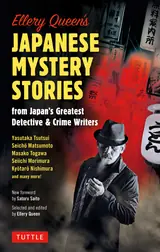 Ellery Queen's Japanese Mystery StoriesEllery Queen, Yasutaka Tsutsui66% subject match
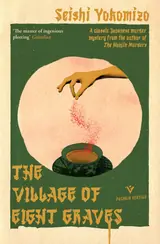 The Village of Eight GravesSeishi Yokomizo62% subject match
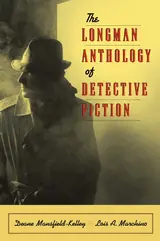 The Longman Anthology of Detective FictionDeane Mansfield-Kelley, Lois A. Marchino61% subject match
Start with three books, and this one can be the first.
Members get a new edition every morning: a route out from their books to essays, research and talks, with the reason for each.
Sign upAbout this book
The quintessential international genre, detective fiction often works under the guise of popular entertainment to expose its extensive readership to complex moral questions and timely ethical dilemmas. The first book-length study of interwar Japanese detective fiction, Murder Most Modern considers the important role of detective fiction in defining the country’s emergence as a modern nation-state.
Continue reading
Kawana explores the interactions between the popular genre and broader discourses of modernity, nation, and ethics that circulated at this pivotal moment in Japanese history. The author contrasts Japanese works by Edogawa Ranpo, Unno Juza, Oguri Mushitaro, and others with English-language works by Edgar Allan Poe, Dashiell Hammett, and Agatha Christie to show how Japanese writers of detective fiction used the genre to disseminate their ideas on some of the most startling aspects of modern life: the growth of urbanization, the protection and violation of privacy, the criminalization of abnormal sexuality, the dehumanization of scientific research, and the horrors of total war.
Kawana’s comparative approach reveals how Japanese authors of the genre emphasized the vital social issues that captured the attention of thrill-seeking readers-while eluding the eyes of government censors.
Sari Kawana is assistant professor of Japanese at the University of Massachusetts, Boston.
Publisher details
Publisher categories
- Mystery & Crime Crit
- Japanese Literary Criticism
- Authors
- Sari Kawana
- Publisher
- University of Minnesota Press
- Published
- March 28, 2008
- Format
- Print & ebook
- Reading lane
- Mystery & Crime Crit