
Math Without Numbers
- Themes
- Abstract mathematics, Patterns and symmetry, Infinity and mathematical truth
Who it’s for
- Readers curious about abstract math beyond numbers
- Readers seeking an accessible, creative introduction to mathematical ideas
Where it sits
How strongly BookFrontier reads the book as belonging to each subject.
Nearest books
Matched by our semantic model. Ordered by what its readers also loved.
 HelgolandCarlo Rovelli50% subject match
 Fermat's EnigmaSimon Singh54% subject match
 Everything Is PredictableTom Chivers48% subject match
 Humble PiMatt Parker64% subject matchShares Mathematics
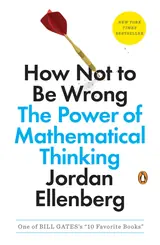 How Not to Be WrongJordan Ellenberg67% subject match
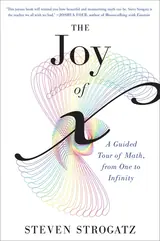 The Joy Of XSteven Strogatz71% subject matchShares Mathematics
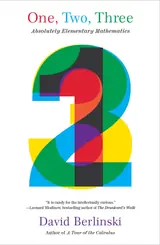 One, Two, ThreeDavid Berlinski70% subject matchShares Mathematics
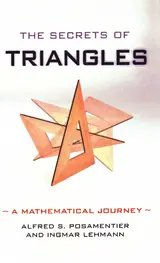 Secrets of TrianglesAlfred S. Posamentier, Ingmar Lehmann65% subject match
For younger readers: Anno's Counting Book, Basher Science: Algebra and Geometry, Math Made Simple
Start with three books, and this one can be the first.
Members get a new edition every morning: a route out from their books to essays, research and talks, with the reason for each.
Sign upAbout this book
An illustrated tour of the structures and patterns we call "math"
The only numbers in this book are the page numbers.
Math Without Numbers is a vivid, conversational, and wholly original guide to the three main branches of abstract math—topology, analysis, and algebra—which turn out to be surprisingly easy to grasp.
Continue reading
This book upends the conventional approach to math, inviting you to think creatively about shape and dimension, the infinite and infinitesimal, symmetries, proofs, and how these concepts all fit together. What awaits readers is a freewheeling tour of the inimitable joys and unsolved mysteries of this curiously powerful subject.
Like the classic math allegory Flatland, first published over a century ago, or Douglas Hofstadter's Godel, Escher, Bach forty years ago, there has never been a math book quite like Math Without Numbers. So many popularizations of math have dwelt on numbers like pi or zero or infinity. This book goes well beyond to questions such as: How many shapes are there? Is anything bigger than infinity? And is math even true? Milo Beckman shows why math is mostly just pattern recognition and how it keeps on surprising us with unexpected, useful connections to the real world.
The ambitions of this book take a special kind of author. An inventive, original thinker pursuing his calling with jubilant passion. A prodigy. Milo Beckman completed the graduate-level course sequence in mathematics at age sixteen, when he was a sophomore at Harvard; while writing this book, he was studying the philosophical foundations of physics at Columbia under Brian Greene, among others.
Publisher details
Publisher categories
- Abstract Algebra
- Mathematical Analysis
- Mathematics Essays
- Authors
- Milo Beckman
- Publisher
- Penguin Publishing Group
- Published
- January 11, 2022
- Format
- Paperback
- Reading lane
- Abstract Algebra