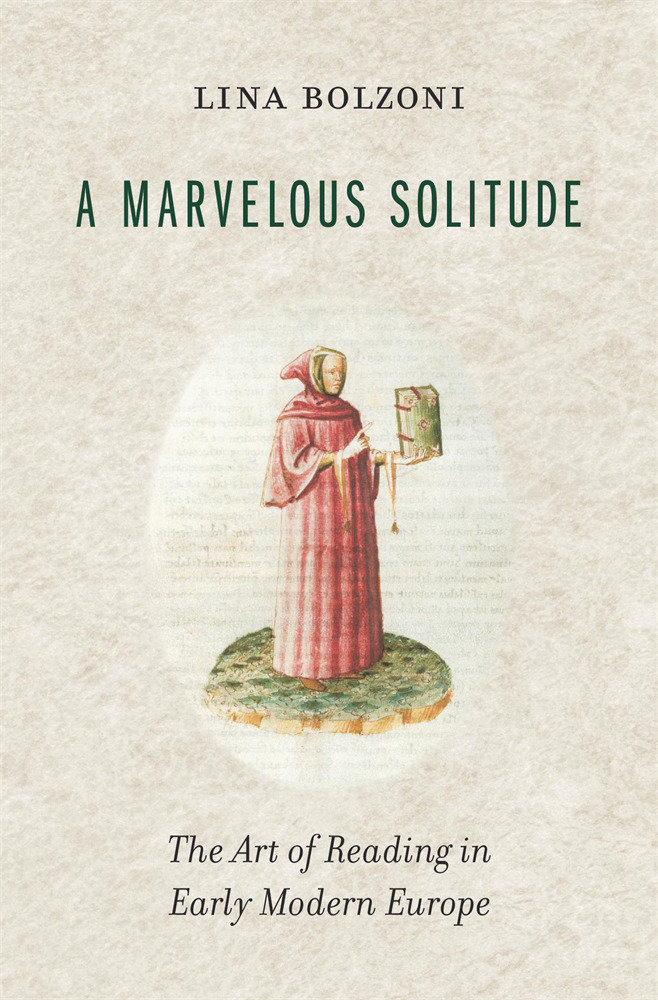
Marvelous Solitude
The Art of Reading in Early Modern Europe
Series: The Bernard Berenson Lectures on the Italian Renaissance Delivered at Villa I Tatti
Lina Bolzoni traces how early modern writers imagined reading as dialogue and self-fashioning.
Renaissance Reading
Come here for
- Petrarch, Boccaccio, Machiavelli, Montaigne, and Tasso on reading
- Books as mirrors of authors and private encounters
Expect
- Fourteenth- to sixteenth-century European ideas about books
- Letters, author portraits, and reading across time
Where it sits
How strongly BookFrontier reads the book as belonging to each subject.
Nearest books
Matched by our semantic model. Ordered by what its readers also loved. Most of these share its genre: Renaissance History.
 The SwerveStephen Greenblatt66% subject match
 Hollow MenSusan Gaylard61% subject matchAlso shares Renaissance Literary Criticism
 My Roman HistoryAlizah Holstein61% subject match
 Botticelli's SecretJoseph Luzzi60% subject match
 The Renaissance: A Very Short IntroductionJerry Brotton60% subject match
For younger readers: The Renaissance in Europe, What Was the Renaissance?, Da Vinci's Tiger
Start with three books, and this one can be the first.
Members get a new edition every morning: a route out from their books to essays, research and talks, with the reason for each.
Sign upAbout this book
A Times Literary Supplement Best Book of the Year
A preeminent Renaissance scholar illuminates early modern encounters with books, in which literature became a portal to self-awareness and miraculous communion between author and reader.
The experience of reading is often presented as personal and transformative—a journey of self-discovery and, perhaps, renewal. In A Marvelous Solitude, Lina Bolzoni examines the early modern roots of this attitude toward the readerly act.
Continue reading
Between the fourteenth and sixteenth centuries, European men of letters increasingly came to see books as something more than compendia of knowledge: they could also help readers understand the human condition. As Bolzoni shows, Petrarch, Boccaccio, Machiavelli, Montaigne, and Tasso all presented reading as a private encounter and a dialogue with the author.
For many Renaissance intellectuals, reading was instrumental to the construction of the self, which was enriched by contact with other learned men. These readers imagined the book as a mirror image of its author, with whom they held a secret affinity. In their letters to one another, humanists described the book as a body, reflecting the notion that reading literature placed its author in the room with oneself. Reading the work of a deceased author became akin to a necromantic rite, as the writers of bygone times were resurrected and placed in contemporary conversation. The vogue for hanging portraits of authors in libraries and studios ensured that the image of the creator was never far from his words, cementing bonds of friendship across barriers of time.
These myths—charming, fragile, and powerful—invested the readerly encounter with miraculous properties that lingered in the hearts of the Romantics. And something of those wonders persists today, in the intimate feeling that reading yet provokes.
Publisher details
Publisher categories
- Italian Literary Criticism
- Renaissance Literary Criticism
- 16th-Century Literary Criticism
- Authors
- Lina Bolzoni
- Publisher
- WW Norton
- Published
- December 5, 2023
- Format
- Print & ebook
- Reading lane
- Italian Literary Criticism