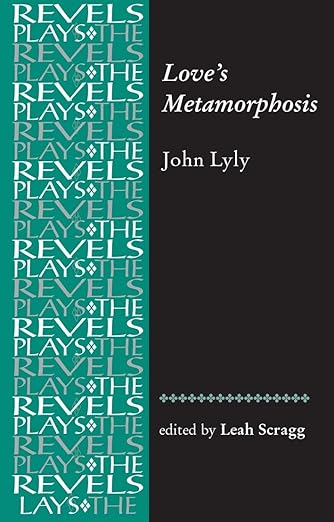
John Lyly’s comedy connects Ovidian myth, ideas about Cupid, and women’s resistance to authority.
Cupid and Resistance
Come here for
- Cupid’s power and a network of ideas about love
- Women’s resistance to lovers and authority figures
Expect
- Protea’s significance in feminist criticism
- A new edition based on the sole early witness, the 1601 quarto
Where it sits
How strongly BookFrontier reads the book as belonging to each subject.
Nearest books
Matched by our semantic model. Ordered by what its readers also loved.
 GalateaJohn Lyly, Leah Scragg65% subject matchShares British & Irish Plays
 PhedreJean Racine59% subject match
 Epicene, or The Silent WomanRichard Dutton55% subject matchShares British & Irish Plays
 As You Like ItWilliam Shakespeare54% subject matchShares British & Irish Plays
 MetamorphosesOvid54% subject match
 Closeted Writing and Lesbian and Gay LiteratureDavid M. Robinson52% subject match
 Bartholomew FairSuzanne Gossett52% subject matchShares British & Irish Plays
 Prometheus BoundAeschylus, James Scully51% subject match
For younger readers: Lit for Little Hands: A Midsummer Night's Dream, Ophelia, Troy
Start with three books, and this one can be the first.
Members get a new edition every morning: a route out from their books to essays, research and talks, with the reason for each.
Sign upAbout this book
First performed in the 1580s, Love's Metamorphosis is widely regarded as the most elegantly structured of Lyly's plays. The plot looks back to the account of Erisichthon's punishment for the desecration of Ceres' grove in Ovid's Metamorphosis, but the Ovidian story is woven into a wider network of interests turning upon aspects of love.
Continue reading
A series of allusions to earlier Lylian compositions allows the play to be viewed in terms of a continuum of work, exploring the status of Cupid and the nature and extent of his power. The play is notable for the articulate resistance offered by the female characters towards the desires of their lovers and the wishes of authority figures, while Protea, is of particular interest to feminist criticism as a striking example of a woman empowered rather than marginalised by the loss of her virgin state. Revived towards the close of the sixteenth century, the play is of importance to theatre historians in that it is the only one of Lyly's comedies known to have passed from Paul's to a different troupe. It is newly edited here from the sole early witness, the quarto of 1601.
Publisher details
Publisher categories
- Renaissance Literary Criticism
- 16th-Century Literary Criticism
- Authors
- Leah Scragg
- Publisher
- Manchester University Press
- Published
- June 1, 2015
- Format
- Print & ebook
- Reading lane
- Renaissance Literary Criticism