
Lost Worlds
How Humans Tried, Failed, Succeeded, and Built Our World
See how experiments and setbacks shaped societies from the Ice Age through Bronze Age.
After the Ice Age
Come here for
- The non-linear history of farming and settled life
- Ancient societies’ fits, false starts, and collapses
Expect
- Archaeological evidence, including ancient human DNA
- A focus on individuals and societies across humanity’s deep past
Where it sits
How strongly BookFrontier reads the book as belonging to each subject.
Nearest books
Matched by our semantic model. Ordered by what its readers also loved. Most of these share its genre: Civilizations.
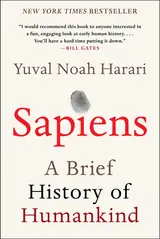 SapiensYuval Noah Harari67% subject match
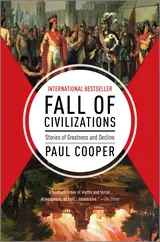 Fall of CivilizationsPaul Cooper66% subject matchAlso shares Ancient History
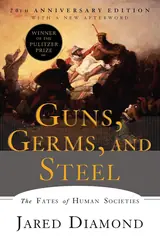 Guns, Germs, and SteelJared Diamond66% subject match
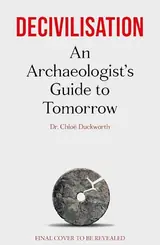 De-civilisationDr. Chloë N. Duckworth65% subject matchAlso shares Archaeology
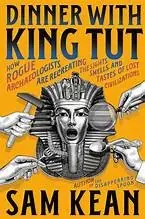 Dinner with King TutSam Kean65% subject matchAlso shares Archaeology
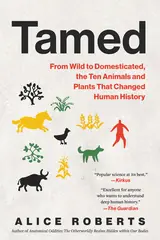 TamedAlice Roberts64% subject match
 A History of the World in 100 ObjectsNeil MacGregor64% subject matchAlso shares Archaeology
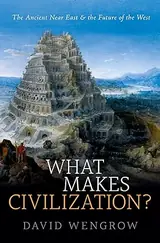 What Makes Civilization?David Wengrow63% subject matchAlso shares Archaeology
For younger readers: Unstoppable Us, Volume 2: Why the World Isn't Fair, Unstoppable Us, Volume 1: How Humans Took Over the World, The History of We
Start with three books, and this one can be the first.
Members get a new edition every morning: a route out from their books to essays, research and talks, with the reason for each.
Sign upAbout this book
The creator of the hit podcast Tides of History offers a new look at humanity’s deep past, showing us how our world was built not by inevitability, but by trial and error on a global scale.
There’s a familiar story about us humans: we went from hunting and gathering to farming, wandering bands to villages and cities, clans and chieftains to states and kings. But Lost Worlds offers a new narrative of humanity’s deep history.
Continue reading
Here beloved podcast host Patrick Wyman focuses on the 10,000-year span between the end of the Ice Age and the decline of the Bronze Age—the period when civilization as we understand it emerged, introducing social hierarchies, urbanism, complex political organizations, and the written word.
But instead of being an arc of progress, this period of immense change was not linear; it was littered with fits and false starts, failures, disasters, and the complete collapse of complex societies. With the recent explosion in available archaeological evidence, including ancient human DNA, we can now understand long-past people in unprecedented detail. By focusing on lost worlds of individuals and societies, we see that to be human is to try and fail. But it is also to endure.
In this nuanced retelling, human progress is no longer a straight march from caves to cities: Farming didn’t always replace foraging, villages didn’t automatically spark agriculture, and cities didn’t necessitate rigid hierarchies. For thousands of years, humans merely improvised. By the end of the Bronze Age, the world had become unrecognizable: mammoths and giant sloths replaced by cattle and sheep, scattered nomadic bands replaced by millions living in cities, and farming on nearly every continent. Wyman argues that the rise of states and steady food production wasn’t inevitable, but rather, the outcome of countless choices that reshaped the planet and made us who we are today.
Sweeping, accessible, and filled with colorful detail, Lost Worlds is the story of how humanity built the world we live in—not by destiny, but by experiment.
Publisher details
Publisher categories
- Ancient History
- Historiography
- World History
- Civilizations
Show all 8 publisher categories
- Social History
- History of Science
- How Cultures Work
- Archaeology
- Authors
- Patrick Wyman
- Publisher
- HarperCollins
- Published
- Forthcoming
- Format
- Print & ebook
- Reading lane
- Ancient History